Water → 2-cyclopropyl-4-nitro-2H-1,2,3-triazole
Reaction equation

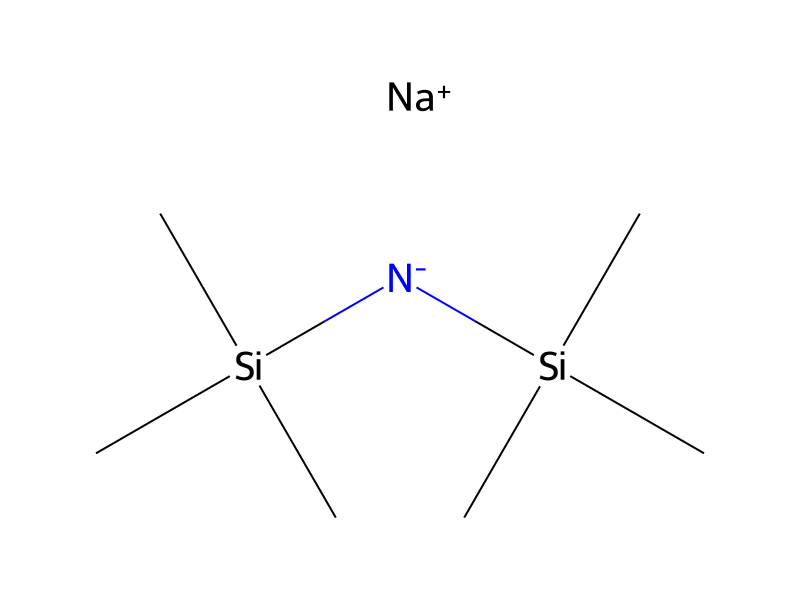
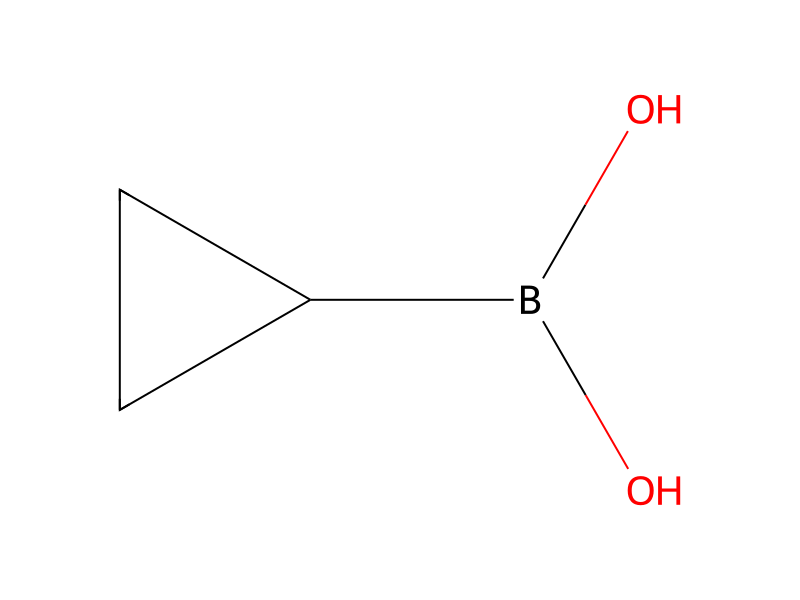
[N+:1]([C:4]1[CH:8]=[N:7][NH:6][N:5]=1)([O-:3])=[O:2].[CH:9]1(B(O)O)[CH2:11][CH2:10]1.C[Si](C)(C)[N-][Si](C)(C)C.[Na+].O>CN(C)C1C=CN=CC=1.C1(C)C=CC=CC=1.C([O-])(=O)C.[Cu+2].C([O-])(=O)C>[CH:9]1([N:6]2[N:5]=[C:4]([N+:1]([O-:3])=[O:2])[CH:8]=[N:7]2)[CH2:11][CH2:10]1Participants
Reactant 4


Product 1

Reagents, catalysts & solvents 3



Conditions
- Temperature
- 95 °C
Procedure
To a solution of 4-nitro-2H-1,2,3-triazole (1.0 g, 8.77 mmol), cyclopropylboronic acid (1.51 g, 17.5 mmol), copper (II) acetate (1.59 g, 8.77 mmol) and N,N-dimethylpyridin-4-amine (3.21 g, 26.3 mmol) in toluene (20 ml) was added sodium 1,1,1,3,3,3-hexamethyldisilazan-2-id (14.6 ml, 0.6M toluene solution) under oxygen atmosphere, and the mixture was stirred at 95° C. for 2 days. The reaction solution was cooled to room temperature, water was then added, the mixture was extracted with chloroform, then dried over anhydrous sodium sulfate, and concentrated under reduced pressure. The resultant residue was purified by silica gel column chromatography (Biotage, hexane:ethyl acetate=5:1 to 3:1) to give 2-cyclopropyl-4-nitro-2H-1,2,3-triazole (249 mg, yield: 18%) as a yellow oily substance.
Workup
- temperatureThe reaction solution was cooled to room temperature
- extractionthe mixture was extracted with chloroform
- dry with materialdried over anhydrous sodium sulfate
- concentrationconcentrated under reduced pressure
- customThe resultant residue was purified by silica gel column chromatography (Biotage, hexane:ethyl acetate=5:1 to 3:1)
Sources & evidence
- ORD record
- ord-3b901f5c63054eb5aac89482a07a4040
- Source dataset
- uspto-grants-2012_07
- Patent number
- US08232284B2
Reaction notes
Loading…