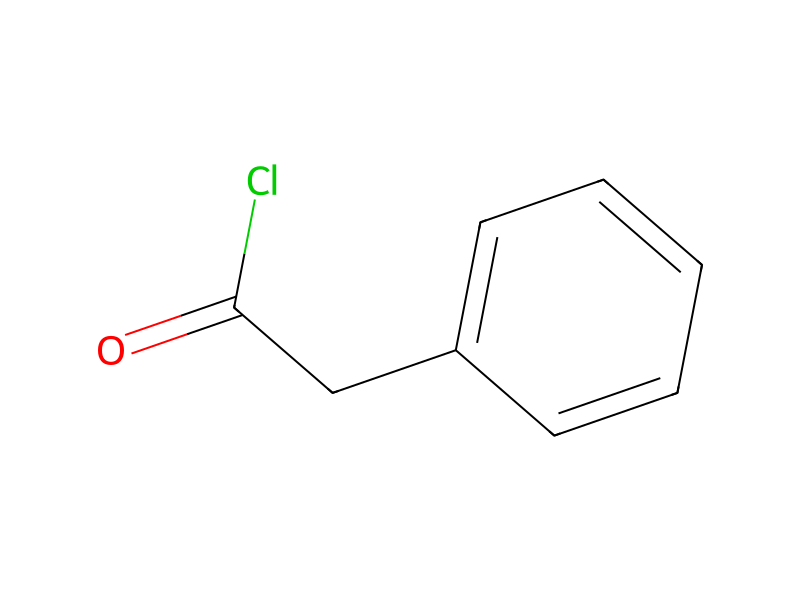
Phenylacetyl chloride → 1-(5-Nitro-indol-1-yl)-2-phenyl-ethanone
Reaction equation

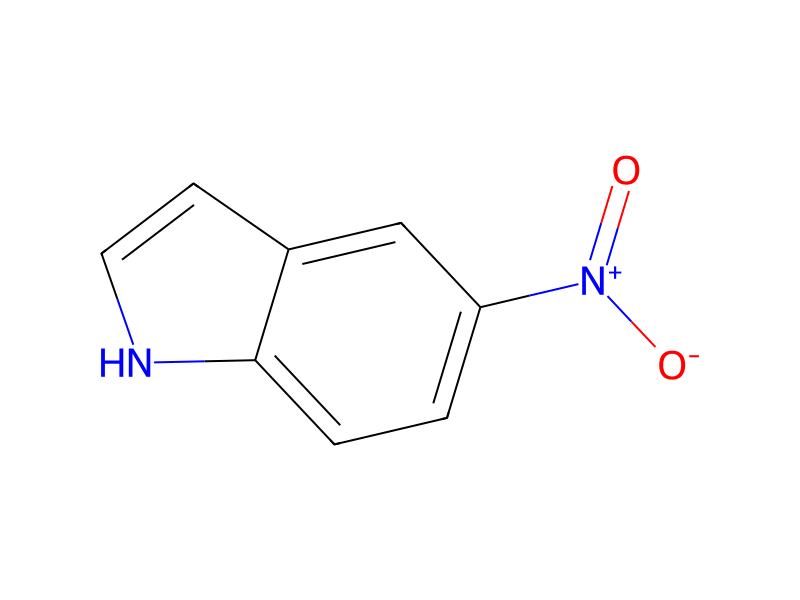
[N+:1]([C:4]1[CH:5]=[C:6]2[C:10](=[CH:11][CH:12]=1)[NH:9][CH:8]=[CH:7]2)([O-:3])=[O:2].[H-].[Na+].[C:15]1([CH2:21][C:22](Cl)=[O:23])[CH:20]=[CH:19][CH:18]=[CH:17][CH:16]=1.[Cl-].[NH4+]>O1CCCC1.C(OCC)(=O)C>[N+:1]([C:4]1[CH:5]=[C:6]2[C:10](=[CH:11][CH:12]=1)[N:9]([C:22](=[O:23])[CH2:21][C:15]1[CH:20]=[CH:19][CH:18]=[CH:17][CH:16]=1)[CH:8]=[CH:7]2)([O-:3])=[O:2]Participants
7





Procedure
300 mg 5-nitroindole are dissolved in 10 ml of tetrahydrofuran. 81 mg sodium hydride (60% in mineral oil) are added and the mixture is stirred for 1 hour at ambient temperature. Then 294 μl phenylacetic acid chloride are added dropwise and the mixture is stirred for another 3 hours. It is divided between saturated ammonium chloride solution and ethyl acetate. The aqueous phase is extracted with ethyl acetate and the combined organic phases are dried on magnesium sulphate. The solvents are eliminated in vacuo and the residue is chromatographed on silica gel (cyclohexane/ethyl acetate 10:1 to 1:3).
Workup
- stirringthe mixture is stirred for another 3 hours
- extractionThe aqueous phase is extracted with ethyl acetate
- customthe combined organic phases are dried on magnesium sulphate
- customthe residue is chromatographed on silica gel (cyclohexane/ethyl acetate 10:1 to 1:3)
Sources & evidence
- ORD record
- ord-b65deb02a7914a9597000053f2ca916a
- Source dataset
- uspto-grants-2012_07
- Patent number
- US08232312B2
Reaction notes
Loading…