Hydrochloric Acid → HCID 59335068, compound
Reaction equation

[CH:1]1[C:13]2[NH:12][C:11]3[C:6](=[CH:7][CH:8]=[CH:9][CH:10]=3)[C:5]=2[CH:4]=[CH:3][CH:2]=1.[C:14]1([S:20]([CH:23]=[CH2:24])(=[O:22])=[O:21])[CH:19]=[CH:18][CH:17]=[CH:16][CH:15]=1.[OH-].C([N+](C)(C)C)C1C=CC=CC=1.Cl>O1CCCC1.C(OCC)(=O)C>[C:14]1([S:20]([CH2:23][CH2:24][N:12]2[C:11]3[CH:10]=[CH:9][CH:8]=[CH:7][C:6]=3[C:5]3[C:13]2=[CH:1][CH:2]=[CH:3][CH:4]=3)(=[O:22])=[O:21])[CH:19]=[CH:18][CH:17]=[CH:16][CH:15]=1Participants
7






Conditions
- Temperature
- 0 °C
Procedure
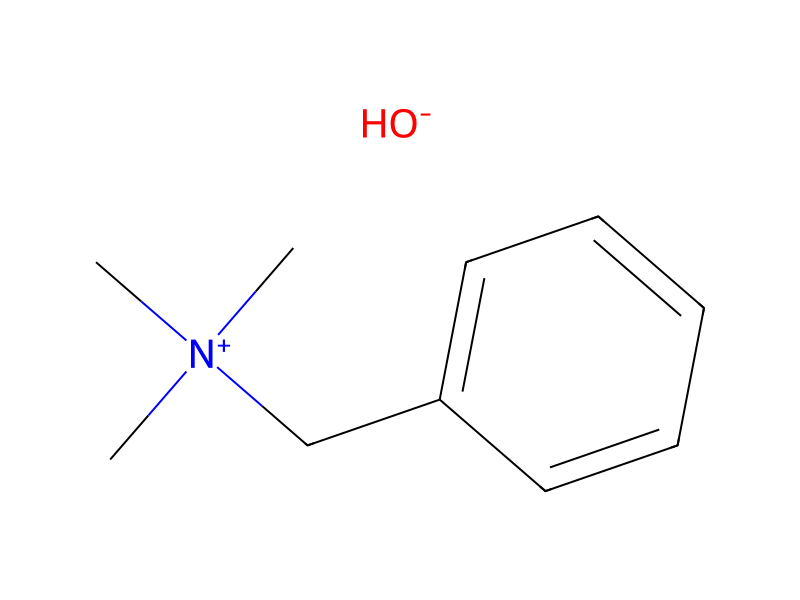
1.8 g 9H-carbazole and 9.8 g phenylvinylsulphone are suspended in 3 ml of tetrahydrofuran, cooled to 0° C., combined with 60 μl benzyltrimethylammonium hydroxide (40% solution in water) and stirred for 20 minutes. Then the mixture is heated to 115° C. for 7 hours. Then it is divided between ethyl acetate and 1 N hydrochloric acid, the organic phase is dried on magnesium sulphate and the solvent is eliminated in vacuo. The residue is chromatographed on silica gel (cyclohexane/ethyl acetate 2:1).
Workup
- temperatureThen the mixture is heated to 115° C. for 7 hours
- customthe organic phase is dried on magnesium sulphate
- customThe residue is chromatographed on silica gel (cyclohexane/ethyl acetate 2:1)
Sources & evidence
- ORD record
- ord-e64660b2334c430285a1bdbb22c47f04
- Source dataset
- uspto-grants-2012_07
- Patent number
- US08232312B2
Reaction notes
Loading…