Triethylamine → 2-Chloro-6-methylpyridine-4-carboxamide
Reaction equation

[Cl:1][C:2]1[CH:7]=[C:6]([C:8](O)=[O:9])[CH:5]=[C:4]([CH3:11])[N:3]=1.[Cl-].[NH4+].C([N:16](CC)CC)C.Cl.CN(C)CCCN=C=NCC.ON1C2C=CC=CC=2N=N1>CN(C)C=O>[Cl:1][C:2]1[CH:7]=[C:6]([C:8]([NH2:16])=[O:9])[CH:5]=[C:4]([CH3:11])[N:3]=1Participants
Reactant 5



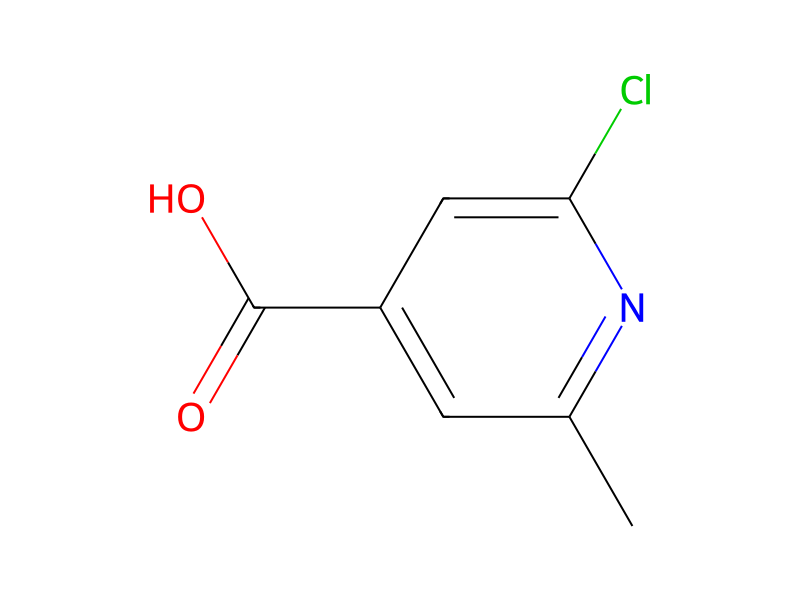

Product 1

Reagents, catalysts & solvents 1

Procedure
A mixture of 2-chloro-6-methylpyridine-4-carboxylic acid (9.6 g, 56 mmol), ammonium chloride (8.9 g, 170 mmol), triethylamine (23 mL, 170 mmol), N-[3-(dimethylamino)propyl]-N′-ethylcarbodiimide hydrochloride (13 g, 67 mmol), 1-hydroxybenzotriazole (9.1 g, 67 mmol) and N,N-dimethylformamide (100 mL) was stirred at room temperature for 1 day. The reaction mixture was concentrated under reduced pressure, aqueous sodium bicarbonate solution was added to the obtained residue, and the mixture was extracted with ethyl acetate. The combined organic layer was washed with saturated brine and dried over anhydrous magnesium sulfate, and the insoluble material was filtered off. The obtained residue was washed with diisopropyl ether to give the title compound (5.6 g, 59%) as a pale-brown solid.
Workup
- concentrationThe reaction mixture was concentrated under reduced pressure, aqueous sodium bicarbonate solution
- additionwas added to the obtained residue
- extractionthe mixture was extracted with ethyl acetate
- washThe combined organic layer was washed with saturated brine
- dry with materialdried over anhydrous magnesium sulfate
- filtrationthe insoluble material was filtered off
- washThe obtained residue was washed with diisopropyl ether
Sources & evidence
- ORD record
- ord-7ecf8dfd66c14b7b9d46762d6d11fbae
- Source dataset
- uspto-grants-2015_07
- Patent number
- US09090601B2
Reaction notes
Loading…