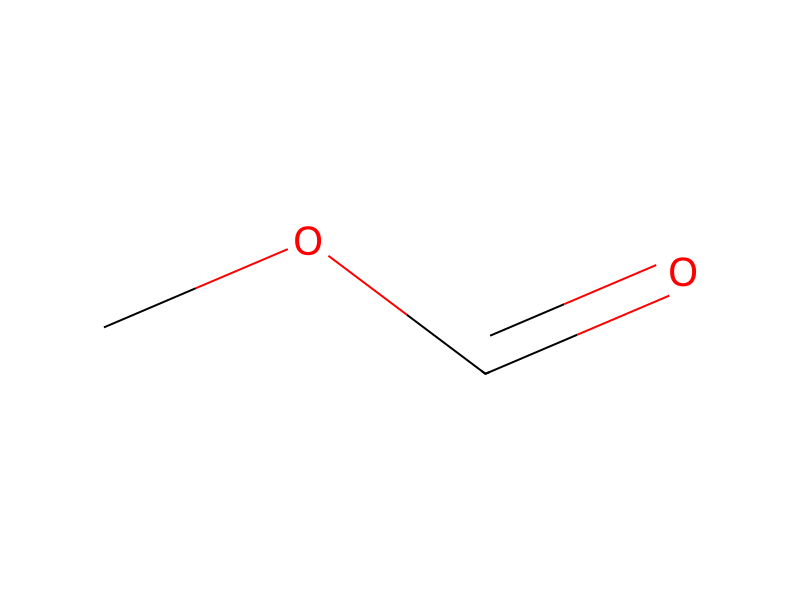
Methyl formate → HCID 67826908, compound
Reaction equation

[H-].[Na+].[C:3]1([C:9]2[N:13]([CH2:14][C:15]([O:17][CH3:18])=[O:16])[N:12]=[CH:11][N:10]=2)[CH:8]=[CH:7][CH:6]=[CH:5][CH:4]=1.[CH:19](OC)=[O:20].C(=O)([O-])[O-].[K+].[K+]>CN(C=O)C>[OH:20][CH:19]=[C:14]([N:13]1[C:9]([C:3]2[CH:4]=[CH:5][CH:6]=[CH:7][CH:8]=2)=[N:10][CH:11]=[N:12]1)[C:15]([O:17][CH3:18])=[O:16]Participants





Procedure
Sodium hydride (0.88 g, 0.018 mol, 50% dispersion in oil) was washed with dry petrol 40°-60° and suspended in DMF (15 ml). A mixture of methyl [5-phenyl-1,2,4-triazol1-yl]-acetate (2.0 Og, 0.009 mol) and methyl formate (11.4 ml, 0.18 mol) in DMF (15 ml) was added at room temperature with stirring over 10 minutes. After 2 hours aqueous potassium carbonate (200 ml, 10%) was added and the aqueous layer extracted with diethyl ether (2×100 ml), then the aqueous layer was neutralised with concentrated hydrochloric acid and then extracted with ethyl acetate (3×150 ml). The ethyl acetate extract was washed with brine and dried then evaporated under reduced pressure to give methyl 3-hydroxy-2-[5-phenyl-1,2,4-triazol-1-yl]acrylate (2.2 g) as a yellow oil.
Workup
- additionwas added at room temperature
- extractionthe aqueous layer extracted with diethyl ether (2×100 ml)
- extractionextracted with ethyl acetate (3×150 ml)
- extractionThe ethyl acetate extract
- washwas washed with brine
- customdried
- customthen evaporated under reduced pressure
Sources & evidence
- ORD record
- ord-eb552b7b08f744e8b108ceef7a8b5ef4
- Source dataset
- uspto-grants-1992_02
- Patent number
- US05091407
Reaction notes
Loading…