Potassium Carbonate → 1-Chloro-4-nitro-2-propoxybenzene
Reaction equation

[Cl:1][C:2]1[CH:7]=[CH:6][C:5]([N+:8]([O-:10])=[O:9])=[CH:4][C:3]=1[OH:11].[CH2:12](I)[CH2:13][CH3:14].C(=O)([O-])[O-].[K+].[K+]>CC(C)=O>[Cl:1][C:2]1[CH:7]=[CH:6][C:5]([N+:8]([O-:10])=[O:9])=[CH:4][C:3]=1[O:11][CH2:12][CH2:13][CH3:14]Participants
5
Reactant 3

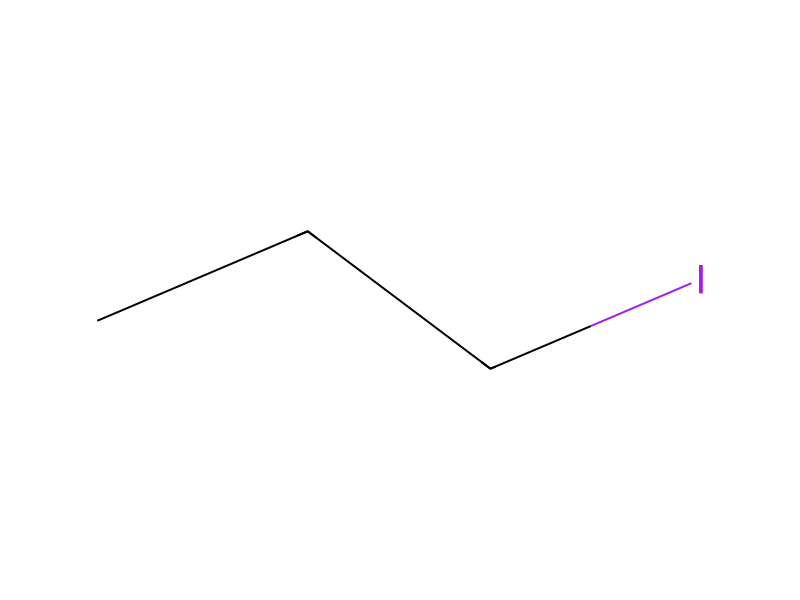

Product 1

Reagents, catalysts & solvents 1

Procedure
A mixture of 3.47 g. of 2-chloro-5-nitrophenol, 3.74 g. of propyl iodide, 3.04 g. of anhydrous potassium carbonate and 20 ml. of acetone was refluxed with stirring for 6 hours to obtain 3.80 g of 4-chloro-3-propoxynitrobenzene having a melting point of 52° to 53° C.
Workup
- additionA mixture of 3.47 g
Sources & evidence
- ORD record
- ord-5ee5c368d31a4c66add490e96a5908aa
- Source dataset
- uspto-grants-1981_09
- Patent number
- US04292070
Reaction notes
Loading…