Pyruvic Acid → Levoglucosan
Reaktionsgleichung

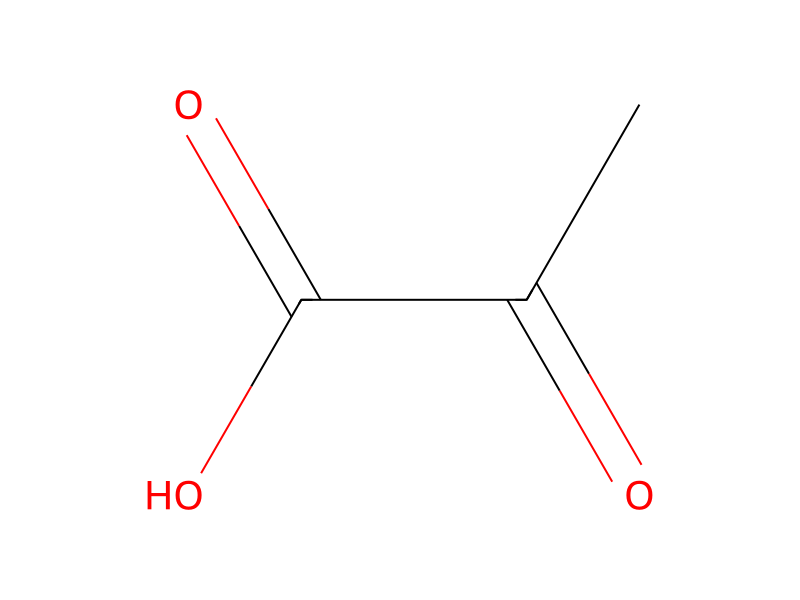
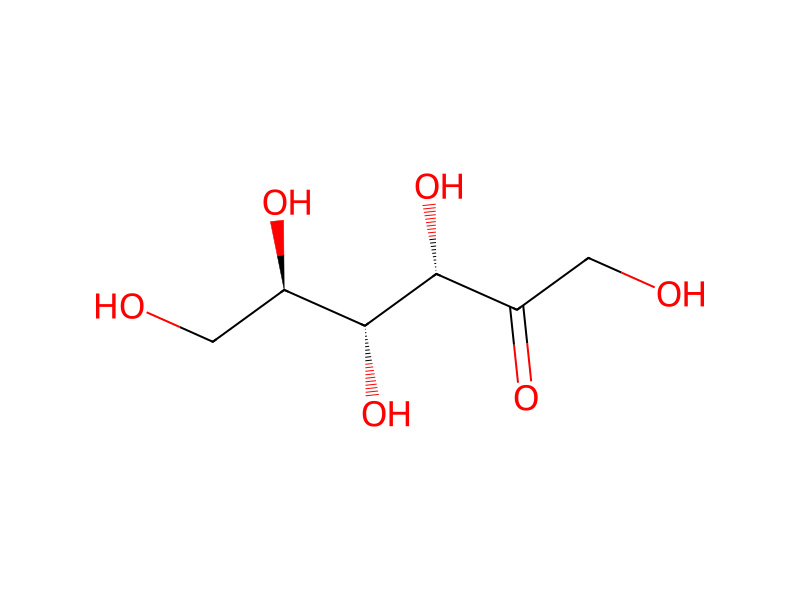
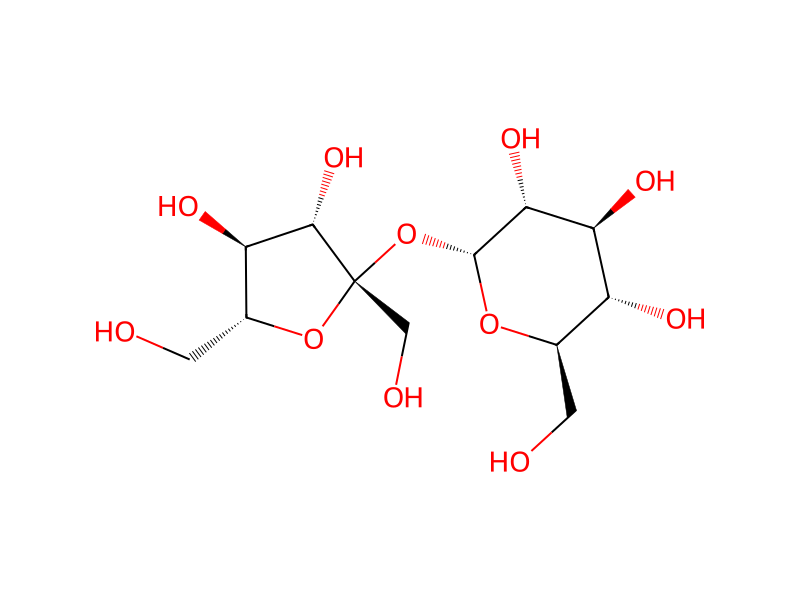
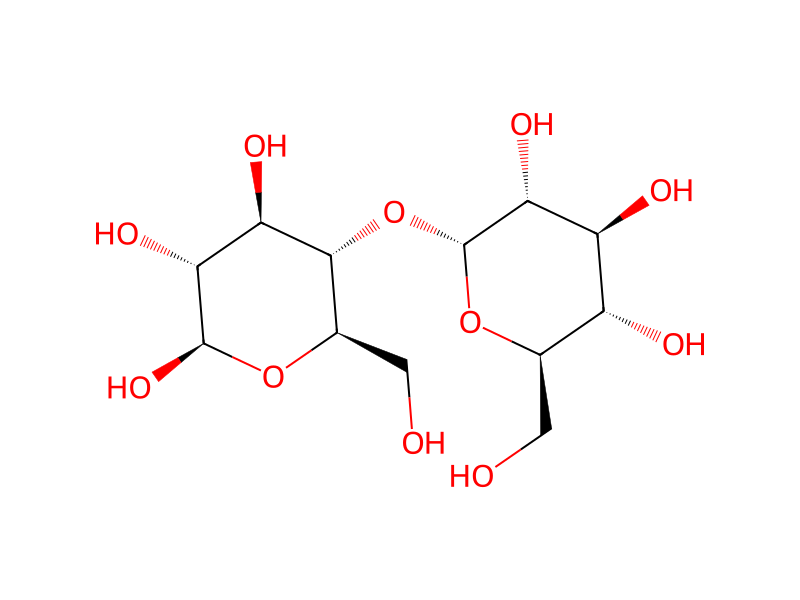
O=[CH:2][C@@H:3]([C@H:5]([C@@H:7]([C@@H:9]([CH2:11][OH:12])[OH:10])[OH:8])[OH:6])[OH:4].C(O)[C@H]1O[C@H](O[C@]2(CO)O[C@H](CO)[C@@H](O)[C@@H]2O)[C@H](O)[C@@H](O)[C@@H]1O.OCC([C@H]([C@@H]([C@@H](CO)O)O)O)=O.C(O)[C@H]1O[C@H](O[C@H]2[C@H](O)[C@@H](O)[C@H](O)O[C@@H]2CO)[C@H](O)[C@@H](O)[C@@H]1O.OC1O[C@H](CO)[C@@H](O[C@@H]2O[C@H](CO)[C@H](O)[C@H](O)[C@H]2O)[C@H](O)[C@H]1O.O=C[C@@H]([C@H]([C@H]([C@@H](CO)O)O)O)O.O=C[C@H]([C@H]([C@@H]([C@@H](CO)O)O)O)O.[K].[Na].C(O)(=O)C(C)=O>O>[CH2:11]1[O:12][C@@H:2]2[O:10][C@H:9]1[C@@H:7]([OH:8])[C@H:5]([OH:6])[C@H:3]2[OH:4]Komponenten
Edukt 10
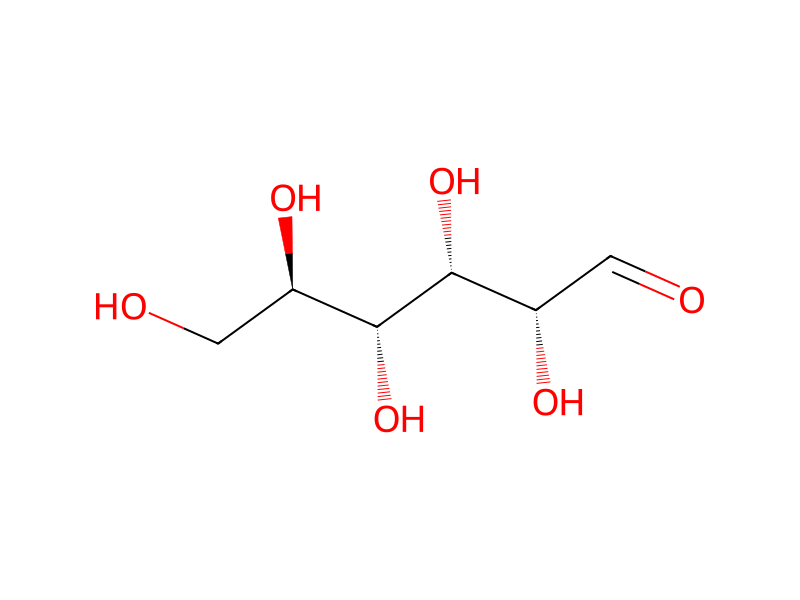


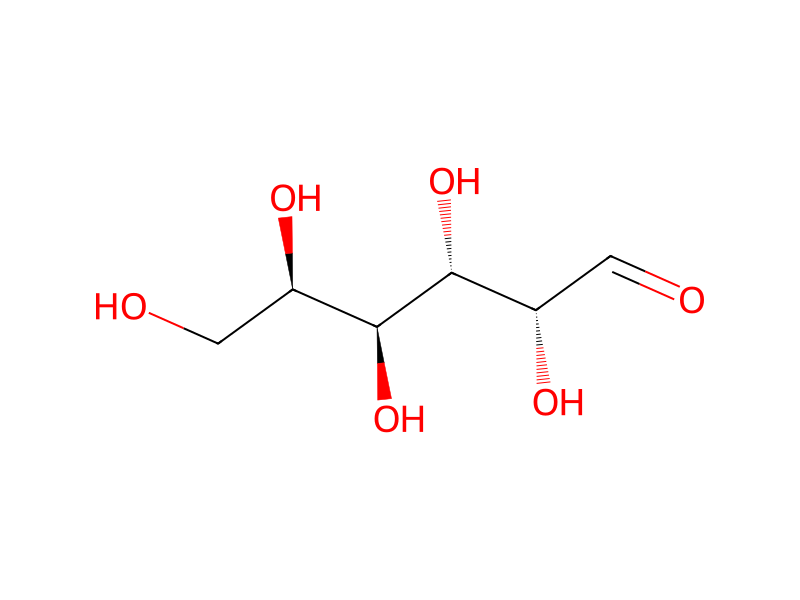
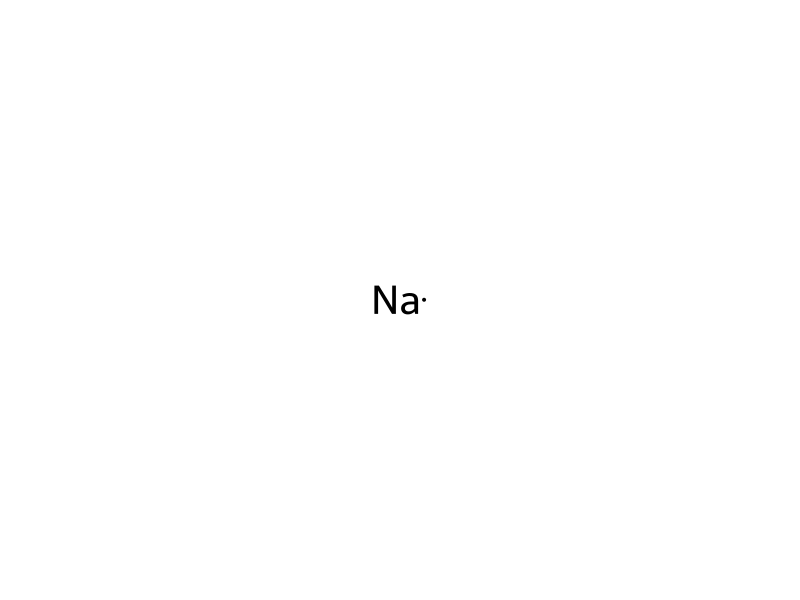
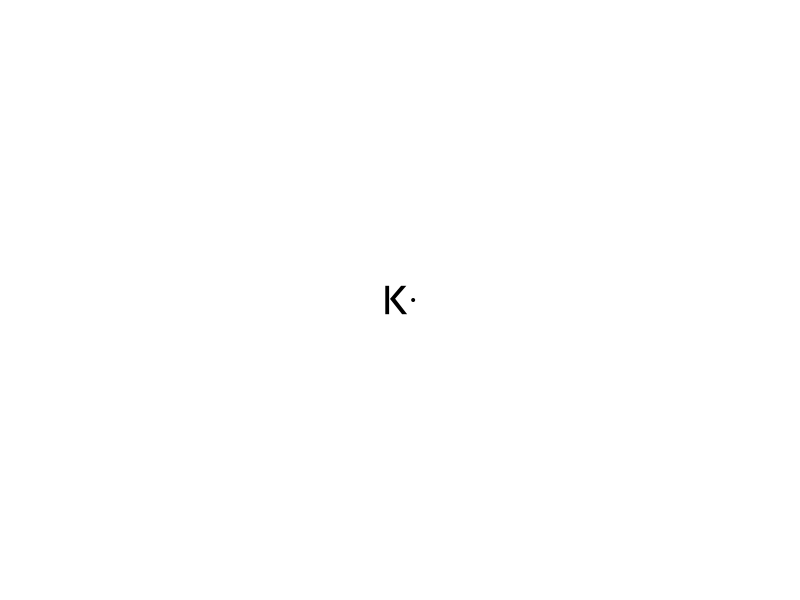
Produkt 1

Reagenzien, Katalysatoren, Lösungsmittel 1
Versuchsvorschrift
Galactomannans constitute one of the industrially important classes of gums, of which locust bean gum and guar gum are the most important members. Other suitable galactomannan gums which may be mentioned include those from the endosperms of seeds of other leguminous plants such as the sennas, brazilwood, tara, honey locust, paloverde, and rattlebox, alfalfa gum, clover gum, and fenugreek gum. In present commerce, however, the most important galactomannan gums are locust bean gum and guar gum. Locust beam gum is milled endosperm of the seeds of the leguminous plant, Ceratonia siliqua. It is marketed under a variety of other names, including Carob gum, gum Gatto, gum Hevo, Jandagum, Lakoegum, Rubigum, Iupogum, Luposol, gum Tragon, Trafarab, and Tragasol. Guar gum, on the other hand, generally is identified as such. It is milled endosperm from the seeds of the plant Cyamopsis tetragonolobus, also of the family Leguminosa. In addition to these natural gums referred to above certain other synthetic gums suitable for the preparation of water bearing gels have become available recently. From amongst such synthetic gums there may be mentioned the so-called biopolymeric materials or xanthan gums which are produced by a process comprising the microbial transformation of carbohydrate material. These xanthan gums may be prepared for example by reacting a carbohydrate with a microorganism to obtain a polymeric material which differs fundamentally from the parent polymeric material in respect of composition, properties and structure. Suitable carbohydrates include sugars such as pentoses or hexoses, for example glucose, sucrose, fructose, maltose, lactose, galactose, and starches, for example soluble starch, corn starch and the like. Since such carbohydrates need not be in a refined state, many crude products having a high carbohydrate concentration may be utilized. Amongst suitable materials there may be mentioned raw sugar, crude molasses and the like. Microorganisms suitable for effecting the microbial transformation of carbohydrates may be for example plant pathogenic bacteria such as plant pathogens which produce exudates at the site of lesions on infected plants. Typical of such microorganisms are the species of the genus Xanthomonas. Thus for example a heteropolysaccharide may be prepared from glucose by the plant pathogen Xanthomonas campestris to give a product comprising D-mannose, D-glucose and D-glucoronic acid as the potassium or sodium salt. Similarly extracellular polysaccharides of a similar structure to the above may be prepared from glucose or sucrose by the plant pathogenic microorganisms Xanthomonas oryzae or Xanthomonas phaseoli. It is of interest to note that the polysaccharide from X. oryzae resembles that from X. campestris since both contain combined pyruvic acid. Although the structural significance of the pyruvic acid in these polysaccharides is obscure, it appears to be present as a ketal group, as in the case of red seaweed polysaccharides. Amongst other species of organisms of the genus Xanthomonas from which suitable biopolymers may be prepared there may be mentioned X. malvacearum; X. translucens f. sp. hordeiavenae; X. translucens f. sp. undulosa; X. carotae; X. hederae; X. papavericola; X. incannae; X. vesicatoria; X. begoniae and X. vasculorium. Biopolymers may also be produced from organisms other than those of the genus Xanthomonas. Thus there may be mentioned amongst the bacterial polysaccharides the dextran produced by Leuconostoc mesenteroides and related species, and the glucosan produced by Agrobacterium tumefaciens. A biopolymer or xanthan gum typical of those suitable for use as a gellable gum is the material known as "Biopolymer" XB23 (Registered Trade Mark) available commercially from General Mills Inc. of Minneapolis, Minn., U.S.A. This material comprises a biopolymeric material derived from a polymer which has been reacted with X. campestris. Another suitable material is the water soluble polymer known as XC polymer available commercially from Esso Production Research Co. of Houston, Tex., U.S.A. This polymer is produced by the action of bacteria of the genus Xanthomonas on carbohydrates to give a biopolymer of a very complex chemical structure. These naturally occurring gums and biopolymeric materials have a high tolerance for dissolved electrolytes and produce high-viscosity systems in water and in salt solutions, but gelation of solutions or sols of such gums occurs only at relatively high concentrations of galactomannan. As a consequence, crosslinking agents are used to hasten the formation of gels, to form gels at relatively low gum concentrations, and to form gels having properties not obtainable by the use of gums alone. Thus it has been proposed to crosslink gums by means of certain oxidizing agents for example sodium dichromate and it has been proposed also to crosslink gums by means of redox systems formed from oxidizer and reducer materials for example sodium dichromate and soluble bismuth or antimony salts. Whilst such systems have been reasonably satisfactory they have suffered from certain deficiencies. Thus in instances wherein a solid phase is present in the system it has been observed that segregation of the solid phase occurs particularly when bismuth salts have been used as part of the crosslinking system. It has also been observed when bismuth salts have been used in a redox system that the rate of gelation is often comparatively slow and thus applications for this type of redox system are comparatively specialized. By contrast when antimony salts are used in a redox crosslinking system the initial rate of gelation is fast and the degree of gelation increases with the passage of time. Whilst this property has been useful for many purposes it suffers from the disadvantage that the water bearing gel becomes intractable and it has been found difficult to pump such gels after they have aged for about a day and this condition has been found to persist on longer storage, for example after ageing for a week.
Aufarbeitung
- customis milled endosperm of the seeds of the leguminous plant, Ceratonia siliqua
- customIt is milled endosperm from the seeds of the plant Cyamopsis tetragonolobus
- additionIn addition to these natural gums
- customare produced by a process
- customto obtain a polymeric material which
- concentrationa high carbohydrate concentration
- customproduce exudates at the site of lesions on infected plants
- customto give a product
- customAmongst other species of organisms of the genus Xanthomonas from which suitable biopolymers may be prepared there
- customBiopolymers may also be produced from organisms other than those of the genus Xanthomonas
- customproduced by Leuconostoc mesenteroides and related species
Quellen und Nachweise
- ORD-Eintrag
- ord-02a2547f765d4c8dbfb69a3c42a28139
- Quelldatensatz
- uspto-grants-1976_02
- Patentnummer
- US03940297
Notizen zur Reaktion
Wird geladen…