Grundinformationen
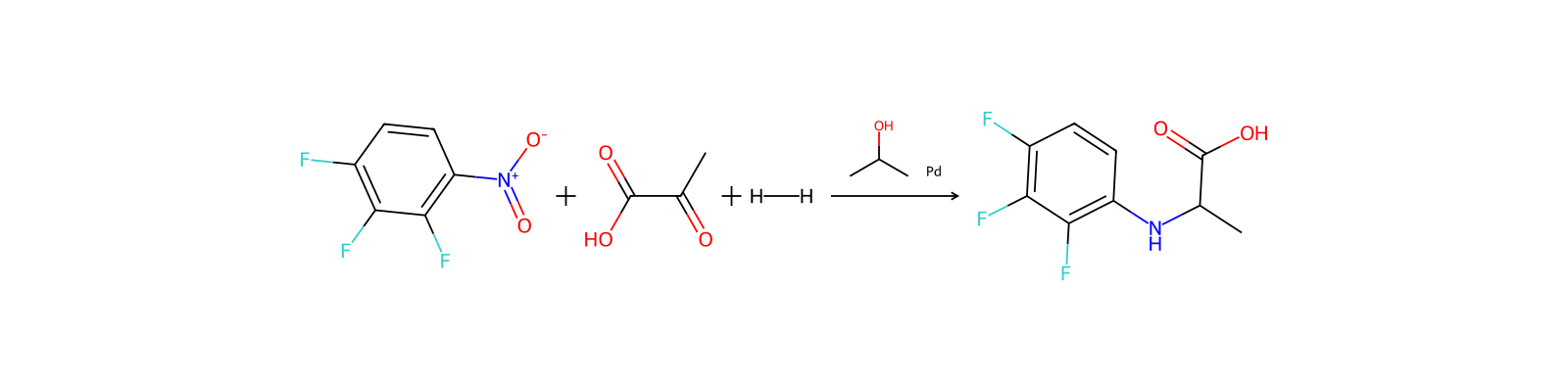
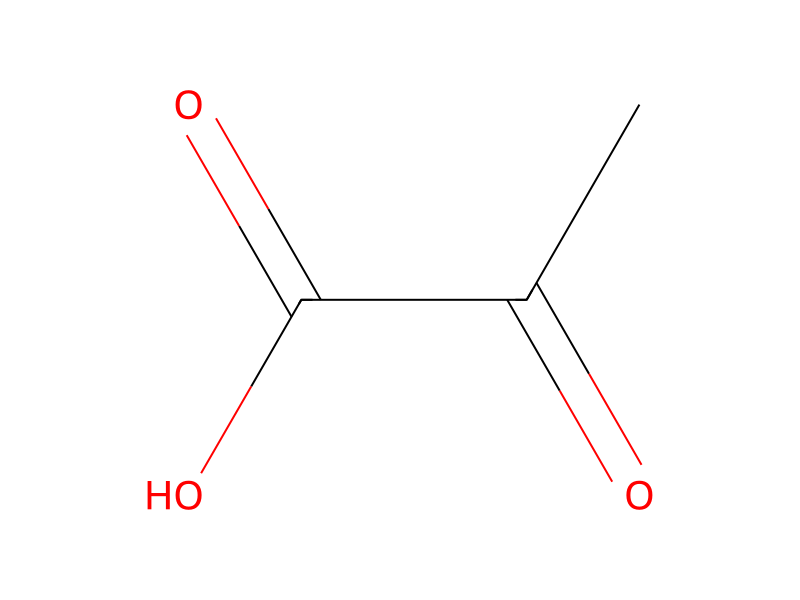
- Standard-SMILES
CC(=O)C(=O)O- InChIKey
LCTONWCANYUPML-UHFFFAOYSA-N- Summenformel
- C3H4O3
- Durchschnittliche Molmasse
- 88,06 g/mol
- Monoisotopische Masse
- 88,01604399
Überblick
Pyruvic acid is a 2-oxo monocarboxylic acid that is the 2-keto derivative of propionic acid. It is a metabolite obtained during glycolysis. It has a role as a cofactor and a fundamental metabolite. It is functionally related to a propionic acid. It is a conjugate acid of a pyruvate.
Namen und Bezeichner
- Bevorzugter Name
- Pyruvic Acid
- IUPAC
- 2-oxopropanoic acid
- Lokaler Name
- Brenztraubensure
- Englischer Name
- Pyruvic acid
- Summenformel
- C3H4O3
- Molmasse
- 88.06
Namen und Synonyme
Pyruvic acid2-Oxopropanoic acid127-17-3acetylformic acidPyroracemic acid2-Oxopropionic acidPropanoic acid, 2-oxo-alpha-ketopropionic acid2-Ketopropionic acid2-Oxopropansaeure2-Oxopropionsaeurealpha-Oxopropionsaeure
Weitere Namen anzeigen
pyruvicFEMA 29702-oxo-propanoicaciNSC 179Pyruvia AcidACID PYRUVATE
2-oxo-propionic acidacide pyruviquea-Ketopropionic acidCH3COCOOHFEMA No. 2970BrenztraubensaeureDTXSID2021650NSC-179
Datenbank-Bezeichner
- CAS
127-17-3- PubChem CID
- 1060
- DTXSID
DTXSID2021650- ChEBI
CHEBI:32816- UNII
- 8558G7RUTR
- EC Number
- 204-824-3
- Nikkaji
- J2.015J
Eigenschaften
Berechnete Struktureigenschaften
- XLogP
- -0,3
- Polarare Oberfläche (TPSA)
- 54,4 Ų
- H-Brücken-Donoren
- 1
- H-Brücken-Akzeptoren
- 3
- Frei drehbare Bindungen
- 1
- Schwere Atome
- 6
- Formalladung
- 0
- Komplexität
- 84
Experimentelle und physikochemische Eigenschaften
Chemical ClassesBiological Agents -> Other Biomolecules
DrugsPharmaceuticals -> Listed in ZINC15
LipidsFatty Acyls [FA] -> Fatty Acids and Conjugates [FA01] -> Oxo fatty acids [FA0106]
SpringerMaterials PropertiesCoriolis coupling
FragrancesFragrance Ingredient (Pyruvic acid) -> IFRA transparency List
Food AdditivesFLAVORING AGENT OR ADJUVANT -> FDA Substance added to food
Density1.260-1.281
Flavoring AgentsEU Flavoring substances
Solubility
1000.0 mg/mL
miscible with water; soluble in organic solvents, oils
miscible at room temperature (in ethanol)
Boiling Point164 °C
Melting Point13.8 °C
Vapor Pressure1.29 [mmHg]
Physikochemische Eigenschaften
- Schmelzpunkt
- 11 · 11-12 °C (lit.)
- Siedepunkt
- 165 °C · 165 °C (lit.)
- Dichte
- 1.267 g/mL · 1.267 g/mL at 25 °C (lit.)
- Dampfdruck
- 1.72 hPa · 1.72hPa at 25℃
- FEMA
- 2970 · 2970 | PYRUVIC ACID
- Brechungsindex
- 20 · n20/D 1.428(lit.)
- Flammpunkt
- 183 °F · 183 °F
- storage temp.
- 2 · 2-8°C
- Löslichkeit
- Miscible with chloroform and methanol.
- pka
- 2.39 · 2.39(at 25℃)
- Aggregatzustand
- Liquid
- Farbe
- Clear colorless to light yellow or amber
- Geruch (Odor)
- 1 % · at 1.00 % in propylene glycol. sharp sour acetic caramellic
- PH
- 3.11 · 3.11(1 mM solution);2.38(10 mM solution);1.79(100 mM solution);
- Geruchsart
- acidic
- Biologische Quelle
- synthetic
- Wasserlöslichkeit
- 2 O: · H2O: misciblealcohol: misciblediethyl ether: miscible
- JECFA Number
- 936 · 936
- Merck
- 14 · 14,8021
- BRN
- 506211 · 506211
- Henry's Law Constant
- 3.1 · 3.1×103 mol/(m3Pa) at 25℃, Burkholder et al. (2019)
- Stabilität
- Stable. Combustible. Incompatible with strong oxidizing agents, strong bases. Refrigerate.
- Major Application
- flavors and fragrances
- Kosmetik-Inhaltsstoffe Funktionen
- FRAGRANCE
- InChI
- 1S/C3H4O3/c1-2(4)3(5)6/h1H3,(H,5,6)
- InChIKey
- LCTONWCANYUPML-UHFFFAOYSA-N
- SMILES
- CC(=O)C(O)=O
- LogP
- -1.24 · -1.24
- CAS Datenbank
- 127 · 127-17-3(CAS DataBase Reference)
- NIST chemische Informationen
- Pyruvic acid(127-17-3)
- EPA chemische Informationen
- 2 · Propanoic acid, 2-oxo- (127-17-3)
Sicherheit und Regulatorisches
GHS-Klassifizierung
GHS Classification
Danger
H314 (100%): Causes severe skin burns and eye damage [Danger Skin corrosion/irritation]
P260, P264, P264+P265, P280, P301+P330+P331, P302+P361+P354, P304+P340, P305+P354+P338, P316, P317, P321, P363, P405, and P501 (click each P-code to see the statement)
Aggregated GHS information provided per 1823 reports by companies from 11 notifications to the ECHA C&L Inventory. Each notification may be associated with multiple companies.
Gefahrenhinweise
Regulatory Information
Chemical: Propanoic acid, 2-oxo-
Commission Regulation (EC) No 1565/2000 (Repealed by Com. Implementing Reg. (EU) No 872/2012)
Status: Active Update: 13-04-2018 https://echa.europa.eu/registration-dossier/-/registered-dossier/23815
Pyruvic acid: Does not have an individual approval but may be used under an appropriate group standard
Other Safety InformationEvaluation - Chemicals that are unlikely to require further regulation to manage risks to environment
Hazards Summary
Causes degenerative changes to brain in acute cerebral studies of rats; [RTECS] Polymerizes and decomposes on standing unless pure and stored in airtight container; [Merck Index] Safe when used as a flavoring agent in food; [JECFA] Causes burns; Inhalation may cause corrosive injuries to upper respiratory tract and lungs; [Sigma-Aldrich MSDS]
Hazard Classes and CategoriesSkin Corr. 1B (100%)
Toxikologische Informationen
Adverse EffectsDermatotoxin - Skin burns.
Exposure RoutesPyruvate is absorbed from the gastrointestinal tract from whence it is transported to the liver via the portal circulation.
Toxicity Summary
Pyruvate serves as a biological fuel by being converted to acetyl coenzyme A, which enters the tricarboxylic acid or Krebs cycle where it is metabolized to produce ATP aerobically. Energy can also be obtained anaerobically from pyruvate via its conversion to lactate. Pyruvate injections or perfusions increase contractile function of hearts when metabolizing glucose or fatty acids. This inotropic effect is striking in hearts stunned by ischemia/reperfusion. The inotropic effect of pyruvate requires intracoronary infusion. Among possible mechanisms for this effect are increased generation of ATP and an increase in ATP phosphorylation potential. Another is activation of pyruvate dehydrogenase, promoting its own oxidation by inhibiting pyruvate dehydrogenase kinase. Pyruvate dehydrogenase is inactivated in ischemia myocardium. Yet another is reduction of cytosolic inorganic phosphate concentration. Pyruvate, as an antioxidant, is known to scavenge such reactive oxygen species as hydrogen peroxide and lipid peroxides. Indirectly, supraphysiological levels of pyruvate may increase cellular reduced glutathione.
Carcinogen ClassificationNo indication of carcinogenicity to humans (not listed by IARC).
Sicherheitsdaten
- wgk
- 3
- tsca
- TSCA listed
- ridadr
- UN 3265 8/PG 2
- hs_code
- 29335995
- RTECS-Nr.
- UZ0829800
- risk_code
- 34
- hazard_code
- C
- safety_code
- 26-36/37/39-45-25-27
- hazard_class
- 8
- packing_group
- II
- Speicherklasse
- 8A - Combustible corrosive hazardous materials
- Hazard Classifications
- Eye Dam. 1Skin Corr. 1C
- Selbstentzündungstemperatur
- 305 °C
Chemie und Industrie
Pharmakologische Informationen
Pharmacodynamics
Pyruvic acid or pyruvate is a key intermediate in the glycolytic and pyruvate dehydrogenase pathways, which are involved in biological energy production. Pyruvate is widely found in living organisms. It is not an essential nutrient since it can be synthesized in the cells of the body. Certain fruits and vegetables are rich in pyruvate. For example, an average-size red apple contains approximately 450 milligrams. Dark beer and red wine are also rich sources of pyruvate. Recent research suggests that pyruvate in high concentrations may have a role in cardiovascular therapy, as an inotropic agent. Supplements of this dietary substance may also have bariatric and ergogenic applications.
Mechanism of Action
Pyruvate serves as a biological fuel by being converted to acetyl coenzyme A, which enters the tricarboxylic acid or Krebs cycle where it is metabolized to produce ATP aerobically. Energy can also be obtained anaerobically from pyruvate via its conversion to lactate. Pyruvate injections or perfusions increase contractile function of hearts when metabolizing glucose or fatty acids. This inotropic effect is striking in hearts stunned by ischemia/reperfusion. The inotropic effect of pyruvate requires intracoronary infusion. Among possible mechanisms for this effect are increased generation of ATP and an increase in ATP phosphorylation potential. Another is activation of pyruvate dehydrogenase, promoting its own oxidation by inhibiting pyruvate dehydrogenase kinase. Pyruvate dehydrogenase is inactivated in ischemia myocardium. Yet another is reduction of cytosolic inorganic phosphate concentration. Pyruvate, as an antioxidant, is known to scavenge such reactive oxygen species as hydrogen peroxide and lipid peroxides. Indirectly, supraphysiological levels of pyruvate may increase cellular reduced glutathione.
Metabolism/Metabolites
In the liver, pyruvate is metabolized via several pathways.
In the liver, pyruvate is metabolized via several pathways.
Absorption, Distribution and ExcretionPyruvate is absorbed from the gastrointestinal tract from whence it is transported to the liver via the portal circulation.
Tissue LocationsAdipose Tissue
Cellular LocationsExtracellular
Metabolite Pathways2-Hydroxyglutric Aciduria (D And L Form)
Verwendung und Herstellung
Uses
Intermediate in sugar metabolism and alcoholic fermentation; [Merck Index] Used as flavoring agent or adjuvant; [FDA]
For nutritional supplementation, also for treating dietary shortage or imbalance
Use Classification
Fragrance Ingredients
Flavouring Agent -> FLAVOURING_AGENT -> JECFA Functional Classes
Flavoring Agents -> JECFA Flavorings Index
Flavouring Agent -> FLAVOURING_AGENT -> JECFA Functional Classes
Flavouring Agent -> FLAVOURING_AGENT -> JECFA Functional Classes
Flavouring Agent -> FLAVOURING_AGENT -> JECFA Functional Classes
General Manufacturing InformationPropanoic acid, 2-oxo-: ACTIVE
Anwendungen
OccurrenceIsolated from cane sugar fermentation broth and from a few plants; also reported found in peppermint, raw asparagus, leaves and stalk of celery, onion, rutabaga, milk, cream, buttermilk, wheaten bread, blue cheeses, cheddar cheese, cottage cheese, provolone cheese, yogurt, beef, Virginia tobacco, beer, white wine, botrytised wine, cocoa and sake.
Verwendenpyruvic acid is an alpha hydroxy acid that can be irritating and is considered difficult to work with. It has a larger molecular size than the most commonly used AHAs. Sodium pyruvate is more commonly used, and is an organic salt.
Darstellung
synthetischeBy distillation of tartaric acid in the presence of potassium acid sulfate as a dehydrating agent; from acetyl chloride and potassium cyanide to yield the nitrile, which is subsequently acid hydrolyzed to the acid; pyruvic acid must be rectified under vacuum.
Vor- und nachgelagerte Produkte
Vorgelagerte Rohstoffe
Nachgelagerte Produkte
Anbieter50 Anbieter
国药集团化学试剂有限公司86-21-63210123 · [email protected]
梯希爱(上海)化成工业发展有限公司021-67121386 · [email protected]
衢州润东化工有限公司0570-8789886 18892685668 · [email protected]
上海阿拉丁生化科技股份有限公司400-6206333 13167063860 · [email protected]
韶远科技(上海)有限公司021-50795510 4000665055 · [email protected]
科瑞迪化学400-821-5857 021-64326257 · [email protected]
上海将来实业股份有限公司400-0066400 13621662912 · [email protected]
Syntechem Co.,Ltd[email protected]
上海迈瑞尔生化科技有限公司4006356688 18621169109 · [email protected]
大连美仑生物技术有限公司0411-62910999 13889544652 · [email protected]
阿法埃莎(中国)化学有限公司400-6106006 · [email protected]
安耐吉化学&3A(安徽泽升科技股份有限公司)400-0056266 · [email protected]
上海瀚鸿科技股份有限公司021-54306202 13764082696 · [email protected]
上海柯维化学技术有限公司021-64609169 18901607656 · [email protected]
吉良化学21-62165282 · [email protected]
上海景颜化工科技有限公司13817811078 · [email protected]
嘉兴市艾森化工有限公司0573-85285100 18627885956 · [email protected]
上海泰坦科技股份有限公司400-6009262 15618770481 · [email protected]
武汉丰泰威远科技有限公司027-87465837 19945049750 · [email protected]
孝感深远化工有限公司15527621225; 15527621225 · [email protected]
山东西亚化学有限公司13355009207 13355009207 · [email protected]
玛雅试剂+86 (573) 82222445 (0)18006601000 452520369 · [email protected]
四川库利南科技有限公司400-1166-196 18981987031 · [email protected]
南京维奥化工有限公司Please Send Email 18652950785 · [email protected]
斯百全化学(上海)有限公司021-021-021-67601398-809-809-809 15221380277 · [email protected]
北京泰亚杰科技有限公司021-33690831-8001 13552411790;18616022633 · [email protected]
上海源叶生物科技有限公司13636370518 · [email protected]
艾科试剂4008-755-333 18080918076 · [email protected]
上海思域化工科技有限公司86-21-34053660 · [email protected]
赛默飞世尔科技(中国)有限公司800-810-5118 · [email protected]
北京伊诺凯科技有限公司400-810-7969 010-59572699 · [email protected]
江苏艾康生物医药研发有限公司025-66113011 13913916777 · [email protected]
TCI AMERICA800-4238616 · [email protected]
TOKYO CHEMICAL INDUSTRY CO., LTD.03-36680489 · [email protected]
TCI Europe320-37350700 · [email protected]
上海贤鼎生物科技有限公司4009209199 · [email protected]
深圳振强药物研发有限公司0755-66853366 13670046396 · [email protected]
越林试剂021-62960152 · [email protected]
南京杜莱生物技术有限公司025-84699383-8003;025-846993838003-8003 18013301590 · [email protected]
上海陶素生化科技有限公司021-33632979 · [email protected]
上海将来实业股份有限公司400-0066400 13621662912 · [email protected]
日照力德士化工有限公司010-51268198 · [email protected]
美岚实业(上海)有限公司021-58958189 · [email protected]
上海石洋化工有限公司021-56795766 · [email protected]
上海爱蝶实业有限公司021-58957966 18930537195 · [email protected]
四川省维克奇生物科技有限公司028-81700200 18116577057 · [email protected]
成都零六生物科技有限公司400-1166-196 13458535857 · [email protected]
广拓化学(上海)有限公司021-60899189-8001 18918189673 · [email protected]
上海御略医药科技有限公司021-60345187 13671753212 · [email protected]
上海德榜化工有限公司021-61531158 · [email protected]
Ergänzende Hinweise
DefinitionPyruvic acid is an important organic chemical intermediate, an intermediate compound in the metabolism of carbohydrates, proteins, and fats, and is used in a variety of fields, including the pharmaceutical, cosmetic, food, and chemical industries. It has roles as a basic metabolite and cofactor. In thiamine deficiency, its oxidation is retarded and it tends to accumulate in neurostructural tissues causing neurological damage. In vitro studies have shown that pyruvic acid modulates cardiac function at physiological or low doses, but can cause cardiomyocyte damage at high doses.
Zugehörige Reaktionen
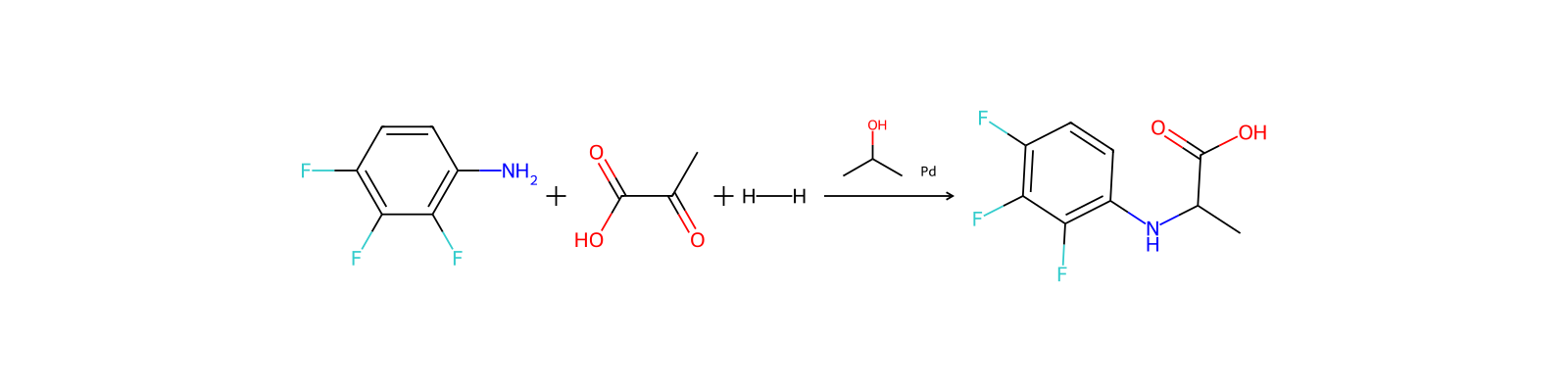
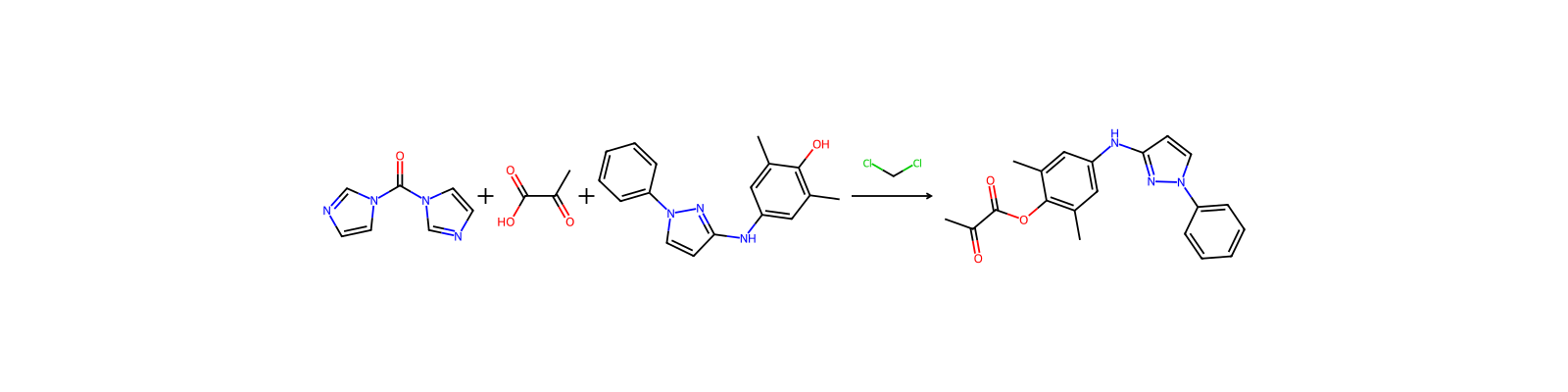
267





Verknüpfte Notizen
Wird geladen…