1-Bromo-3-chloropropane → HCID 10753354, compound
Reaction equation

C(N(CC)CC)C.[CH3:8][C:9]1[CH:14]=[CH:13][C:12]([N:15]2[CH2:20][CH2:19][NH:18][CH2:17][CH2:16]2)=[CH:11][CH:10]=1.[Cl:21][CH2:22][CH2:23][CH2:24]Br>O1CCCC1>[Cl:21][CH2:22][CH2:23][CH2:24][N:18]1[CH2:19][CH2:20][N:15]([C:12]2[CH:11]=[CH:10][C:9]([CH3:8])=[CH:14][CH:13]=2)[CH2:16][CH2:17]1Participants
5
Reactant 3


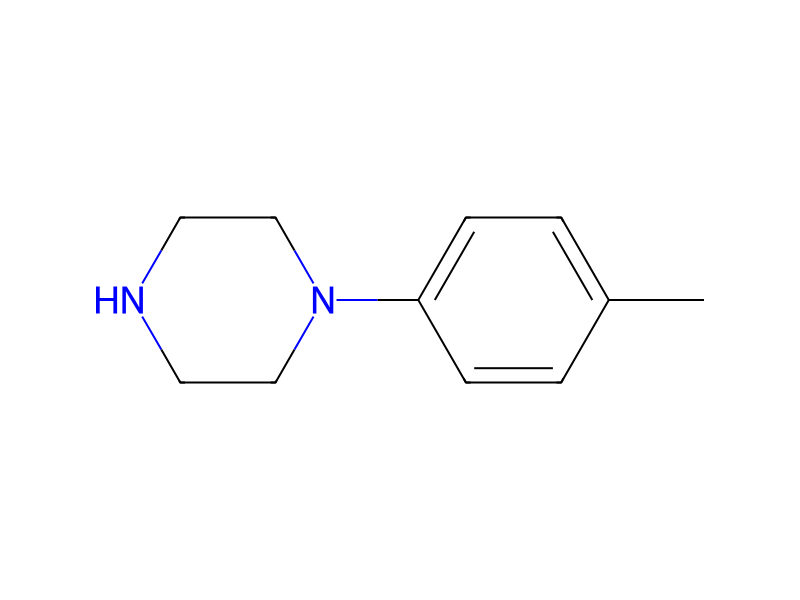
Product 1

Reagents, catalysts & solvents 1

Procedure
55.4 ml (0.4 mol) triethylamine were added to a solution of 35.2 g (0.2 mol) 1-(4-methylphenyl)-piperazine and 31.5 g (0.2 mol) 1-chloro-3-bromopropane in 41 ml anhydrous tetrahydrofuran and the reaction mixture then stirred for six hours at 60°-65°C. Thereafter, the crystals which had precipitated out were filtered off with suction and the filtrate was evaporated in a vacuum. There was obtained a quantitative yield of crude 1-(3-chloropropyl)-4-(4-methylphenyl)-piperazine which was purified by rapid distillation at an efficient oil pump vacuum. The yield was 41.23 g (80% of theory); b.p. 147°-150°C/0.05 mm HG; m.p. 34°-36°C.
Workup
- customThereafter, the crystals which had precipitated out
- filtrationwere filtered off with suction
- customthe filtrate was evaporated in a vacuum
Sources & evidence
- ORD record
- ord-e3fc16773b5244158b793ee39179b2ab
- Source dataset
- uspto-grants-1976_01
- Patent number
- US03932411
Reaction notes
Loading…