Ammonia → 3-[7-Methyl-6-(2-phenylethyl)-6-azabicyclo[3.2.1]octan-1-yl]phenol--hydrogen chloride (1/1)
Reaction equation

[C:1]1([CH2:7][C:8]([Cl:10])=O)[CH:6]=[CH:5][CH:4]=[CH:3][CH:2]=1.[OH:11][C:12]1[CH:13]=[C:14]([C:18]23[CH2:26][CH:22]([NH:23][CH:24]2[CH3:25])[CH2:21][CH2:20][CH2:19]3)[CH:15]=[CH:16][CH:17]=1.[H-].[Al+3].[Li+].[H-].[H-].[H-].Cl.N>O1CCCC1.C(Cl)Cl.C(N(CC)CC)C>[ClH:10].[OH:11][C:12]1[CH:13]=[C:14]([C:18]23[CH2:26][CH:22]([N:23]([CH2:8][CH2:7][C:1]4[CH:6]=[CH:5][CH:4]=[CH:3][CH:2]=4)[CH:24]2[CH3:25])[CH2:21][CH2:20][CH2:19]3)[CH:15]=[CH:16][CH:17]=1Participants
Reactant 5


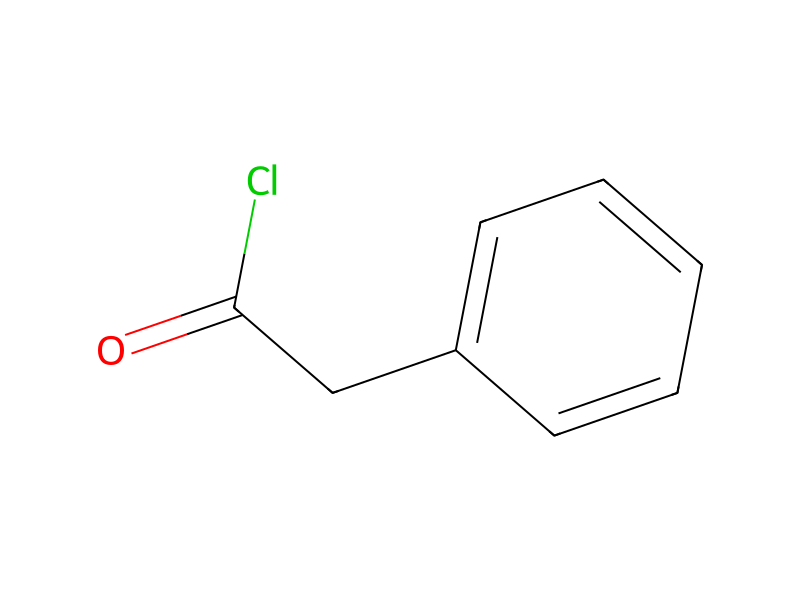


Product 1

Reagents, catalysts & solvents 3



Procedure
0.62 g of phenylacetyl chloride is added dropwise under ice-cooling to a mixture of 0.35 g of 1-(3-hydroxyphenyl)7-methyl-6-azabicyclo[3,2,1]octane, 1 ml of triethylamine and 7 ml of methylenedichloride. The mixture is stirred at room temperature for 20 hours. Then, the mixture is concentrated under reduced pressure. Water is added to the residue, and the aqueous mixture is extracted with benzene. The benzene extract is washed with diluted hydrochloric acid, water, aqueous sodium bicarbonate and water, successively. The benzene extract is dried and evaporated to remove solvent. The residue thus obtained is dissolved in 12 ml of tetrahydrofuran. 0.6 g of lithium aluminium hydride is added to the tetrahydrofuran solution, and said solution is refluxed for 1.5 hours. After cooling, diluted hydrochloric acid is added to the reaction solution to decompose lithium aluminium hydride. Then, the reaction solution is made alkaline with aqueous ammonia and extracted with chloroform. The chloroform extract is washed with water, dried and then evaporated to remove solvent. The residue is dissolved in 5 ml of chloroform. The chloroform solution is poured onto a column of 20 g of silica gel. Then, the column is eluted with a mixture of 300 ml of chloroform and 50 ml of methanol, and the effluent is evaporated to remove solvent. Methanolic hydrogen chloride is added to the residue in ether, and the crystalline precipitate is collected by filtration. The precipitate is recrystallized from acetone. 0.09 g of 1-(3-hydroxyphenyl)-6-phenethyl- 7-methyl-6-azabicyclo[3,2,1]octane hydrochloride is obtained. M.p. 231°-233°C.
Workup
- concentrationThen, the mixture is concentrated under reduced pressure
- additionWater is added to the residue
- extractionthe aqueous mixture is extracted with benzene
- extractionThe benzene extract
- washis washed with diluted hydrochloric acid, water, aqueous sodium bicarbonate and water
- extractionThe benzene extract
- customis dried
- customevaporated
- customto remove solvent
- customThe residue thus obtained
- temperatureis refluxed for 1.5 hours
- temperatureAfter cooling
- extractionextracted with chloroform
- extractionThe chloroform extract
- washis washed with water
- customdried
- customevaporated
- customto remove solvent
- dissolutionThe residue is dissolved in 5 ml of chloroform
- additionThe chloroform solution is poured onto a column of 20 g of silica gel
- washThen, the column is eluted with a mixture of 300 ml of chloroform and 50 ml of methanol
- customthe effluent is evaporated
- customto remove solvent
- additionMethanolic hydrogen chloride is added to the residue in ether
- filtrationthe crystalline precipitate is collected by filtration
- customThe precipitate is recrystallized from acetone
Sources & evidence
- ORD record
- ord-fb6a9d92cae8479281878ed9ebe52f1a
- Source dataset
- uspto-grants-1976_01
- Patent number
- US03932429
Reaction notes
Loading…