Methanol → HCID 131709915, compound
Reaction equation

C(O[CH2:5][C:6]1[CH:11]([C:12]([OH:14])=[O:13])[N:10]2[C:15](=[O:27])[CH:16]([NH:17][C:18](=[O:26])[CH2:19][C:20]3[CH:25]=[CH:24][CH:23]=[CH:22][CH:21]=3)[C@H:9]2[S:8][CH:7]=1)(=O)C.[C:28]1([O:34][CH3:35])[CH:33]=[CH:32][CH:31]=[CH:30][CH:29]=1.C(OC(=O)C)C.CO>FC(F)(F)C(O)=O>[CH3:35][O:34][C:28]1[CH:33]=[CH:32][C:31]([CH2:5][C:6]2[CH:11]([C:12]([OH:14])=[O:13])[N:10]3[C:15](=[O:27])[CH:16]([NH:17][C:18](=[O:26])[CH2:19][C:20]4[CH:21]=[CH:22][CH:23]=[CH:24][CH:25]=4)[C@H:9]3[S:8][CH:7]=2)=[CH:30][CH:29]=1Participants
Reactant 4

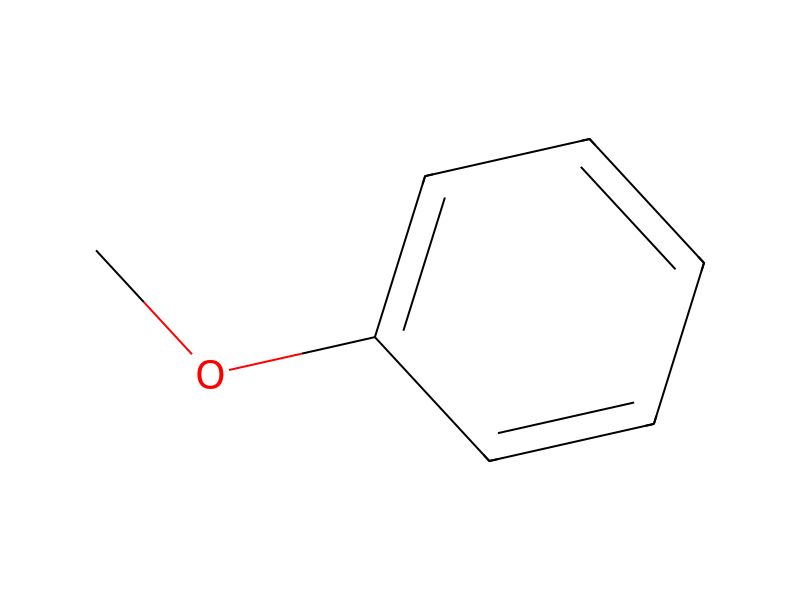


Product 1

Reagents, catalysts & solvents 1

Procedure
A mixture of 5 g of 3-acetoxymethyl-7(N-phenylacetyl-amino)-ceph-2-em-4ξ-carboxylic acid and 10 ml of absolute anisole is dissolved in 40 ml of trifluoracetic acid and the clear solution is evaporated to dryness under a water pump vacuum and with repeated addition of toluene. The residue is dissolved in acetone, and the solution is mixed with about 30 g of silica gel and evaporated to dryness. The residue is suspended in methylene chloride and the suspension is applied to a column (diameter: 35 mm) of 150 g of silica gel. Elution is carried out with methylene chloride and mixtures of methylene chloride and acetic acid ethyl ester (fractions of 400 ml). Unreacted anisole is eluted with 2 fractions of pure methylene chloride. 3-(4-Methoxybenzyl)-7-(N-phenylacetyl-amino)-ceph-2-em-4ξ-carboxylic acid mixed with 3-(2-methoxy-benzyl)-7-(N-phenylacetyl-amino)-ceph-2-em-4ξ-carboxylic acid, is obtained by elution with 6:1 to 1:1 mixtures of methylene chloride and acetic acid ethyl ester. Additional, impure material is obtained with acetic acid ethyl ester and with acetic acid ethyl ester containing 5% of methanol. The pure product is crystallised from a mixture of acetic acid ethyl ester and cyclohexane and melts at 181.5°-182°C (uncorrected); [α]D20 = +379° ± 1° (c = 0.989 in dioxane); thin layer chromatogram (silica gel G): Rf = 0.61 (system n-butanol/acetic acid/water, 75:7.5:21), Rf = 0.72 (system acetic acid ethyl ester/pyridine/acetic acid/water, 62:21:6:11) and Rf = 0.63 (system n-butanol/pyridine/acetic acid/water, 38:24:8:30); ultraviolet absorption spectrum (in 95% strength ethanol), λmax = 224 mμ(ε = 19200), and shoulder at about 255 mμ (ε = 7200) and at about 279 mμ (ε = 3000); infrared absorption spectrum (in mineral oil): characteristic bands at 3.02μ, 3.19μ (shoulder), 3.30μ, 5.67μ, 5.77μ, 6.05μ, 6.23μ, 6.54μ, 6.61μ, 6.69μ, 7.07μ, 7.49μ, 7.99μ, 8.24μ, 8.52μ, 9.71μ, 13.31μ, 14.41μ and 15.05μ. Further recrystallisation from a mixture of acetone, methylene chloride and cyclohexane results in enrichment of 3-(4-methoxy-benzyl)-7-(N-phenylacetyl-amino)-ceph-2-em-4ξ-carboxylic acid, with the melting point rising to 188°C.
Workup
- customthe clear solution is evaporated to dryness under a water pump vacuum
- additionaddition of toluene
- dissolutionThe residue is dissolved in acetone
- additionthe solution is mixed with about 30 g of silica gel
- customevaporated to dryness
- washElution
- washUnreacted anisole is eluted with 2 fractions of pure methylene chloride
- addition3-(4-Methoxybenzyl)-7-(N-phenylacetyl-amino)-ceph-2-em-4ξ-carboxylic acid mixed with 3-(2-methoxy-benzyl)-7-(N-phenylacetyl-amino)-ceph-2-em-4ξ-carboxylic acid
- customis obtained by elution with 6:1 to 1:1 mixtures of methylene chloride and acetic acid ethyl ester
- customThe pure product is crystallised from a mixture of acetic acid ethyl ester and cyclohexane and melts at 181.5°-182°C (uncorrected)
- customultraviolet absorption spectrum (in 95% strength ethanol), λmax = 224 mμ(ε = 19200), and shoulder at about 255 mμ (ε = 7200)
- customabsorption spectrum (in mineral oil)
- customFurther recrystallisation
- additionfrom a mixture of acetone, methylene chloride and cyclohexane
Sources & evidence
- ORD record
- ord-b773148a848a49eeaf8021d58cad28c2
- Source dataset
- uspto-grants-1976_01
- Patent number
- US03932465
Reaction notes
Loading…