4-Chlorobenzylamine → HCID 22722034, compound
Reaction equation

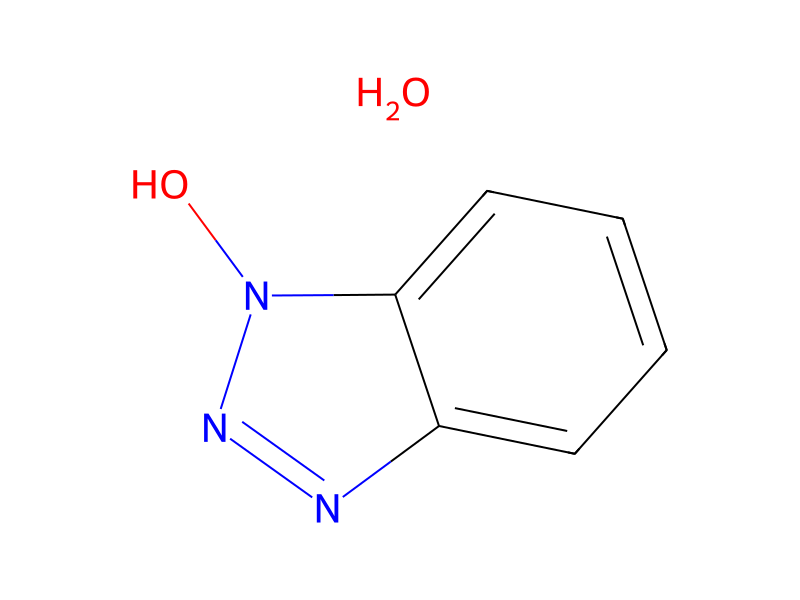
[Br:1][C:2]1[CH:3]=[C:4]2[C:9](=[CH:10][CH:11]=1)[CH:8]=[N:7][C:6]([C:12]([OH:14])=O)=[C:5]2[OH:15].[Cl:16][C:17]1[CH:24]=[CH:23][C:20]([CH2:21][NH2:22])=[CH:19][CH:18]=1.Cl.CN(C)CCCN=C=NCC.O.ON1C2C=CC=CC=2N=N1>CN(C=O)C>[Br:1][C:2]1[CH:3]=[C:4]2[C:9](=[CH:10][CH:11]=1)[CH:8]=[N:7][C:6]([C:12]([NH:22][CH2:21][C:20]1[CH:23]=[CH:24][C:17]([Cl:16])=[CH:18][CH:19]=1)=[O:14])=[C:5]2[OH:15]Participants
6
Reactant 4



Product 1

Reagents, catalysts & solvents 1

Procedure
A mixture of 6-bromo-4-hydroxyisoquinoline-3-carboxylic acid (Preparation 8, 0.4 g), 4-chlorobenzylamine (0.219 g), 1-(3-dimethylaminopropyl)-3-ethylcarbodiimide hydrochloride (0.305 g) and 1-hydroxybenzotriazole monohydrate (0.217 g) in DMF (20 mL) is stirred at room temperature until judged complete. The solution is then poured into ice water and the resulting solid collected and dried.
Workup
- customthe resulting solid collected
- customdried
Sources & evidence
- ORD record
- ord-127e6fb516f144a4b614727e02d002c7
- Source dataset
- uspto-grants-2004_05
- Patent number
- US06730682B2
Reaction notes
Loading…