Anisole → 4'-Methoxyacetophenone
Reaction equation

[C:1]1([O:7][CH3:8])[CH:6]=[CH:5][CH:4]=[CH:3][CH:2]=1.F[C:10](F)(F)[C:11](OC(=O)C(F)(F)F)=[O:12].C(=O)([O-])O.[Na+]>C(O)(=O)C>[CH3:8][O:7][C:1]1[CH:6]=[CH:5][C:4]([C:11](=[O:12])[CH3:10])=[CH:3][CH:2]=1Participants
Reactant 3
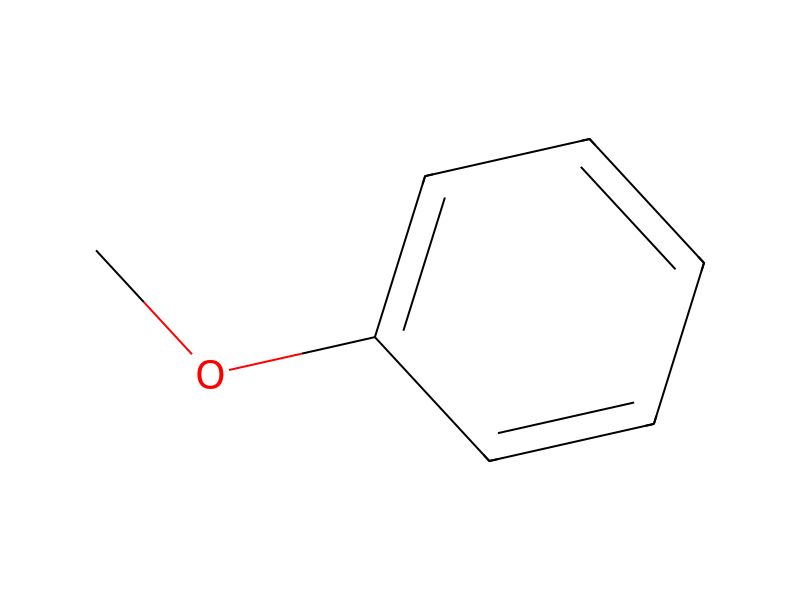


Product 1

Reagents, catalysts & solvents 1

Procedure
Reference is made to the work of H. Burton and P. F. G. Praill (Journal of Chemical Society, April-1950, pp-1203-1206) wherein it is reported that Acetyl perchlorate formed in-situ from silver perchlorates and acetyl chloride, is an effective acylating agent and will convert anisole into p-methoxyacetophenone in about 70% yield. However, this process has disadvantages of using perchlorates which is hazardous chemical. Reference is made to the work of E. J, Bourne, et al. (Journal of Chemical Society, March-1951, pp-718-720) wherein trifluoroacetic anhydride catalyst is shown to promote, the condensation between suitably activated aromatic compound and carboxylic acid or sulphonic acid to give ketones or sulphones, respectively. In this process, reaction was done at room temperature. Anisole was added to a mixture of trifluroacetic anhydride and acetic acid. After three hours the solution was poured into the excess of sodium hydrogen carbonate solution and then extracted by chloroform The extract were dried, filtered and evaporated to dry syrup. After crystallization it gave 78% of p-methoxyacetophenone.
Workup
- customIn this process, reaction
- customwas done at room temperature
- extractionextracted by chloroform The extract
- customwere dried
- filtrationfiltered
- customevaporated
- customto dry syrup
- customAfter crystallization it
Sources & evidence
- ORD record
- ord-91b1dbdc8f31462183c5599c52a5d07e
- Source dataset
- uspto-grants-2004_05
- Patent number
- US06730814B1
Reaction notes
Loading…