Hydroquinone → HCID 22103871, compound
Reaction equation

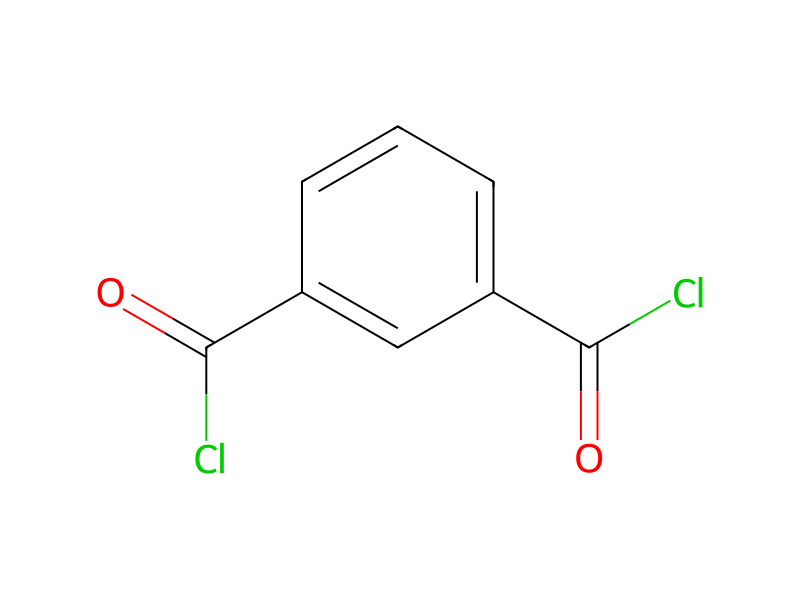
[C:1]1([CH:8]=[CH:7][C:5]([OH:6])=[CH:4][CH:3]=1)[OH:2].[OH:9][C:10]1[CH:15]=[CH:14][C:13]([C:16]2[CH:21]=[CH:20][C:19]([OH:22])=[CH:18][CH:17]=2)=[CH:12][CH:11]=1.C(Cl)(=O)C1C=CC=C(C(Cl)=O)C=1>>[C:1]1([CH:8]=[CH:7][C:5]([OH:6])=[CH:4][CH:3]=1)[OH:2].[OH:9][C:10]1[CH:11]=[CH:12][C:13]([C:16]2[CH:21]=[CH:20][C:19]([OH:22])=[CH:18][CH:17]=2)=[CH:14][CH:15]=1Participants



Procedure
The above U.S. Pat. No. 3,036,991 discloses in Example 1 that polymers having a melting point of 360° to 370° C. are obtained by polycondensation of a mixture containing 0.04 mole of hydroquinone, 0.01 mole of 4,4'-dihydroxybiphenyl and 0.05 mole of isophthaloyl chloride in pentachlorobiphenyls. This patent also discloses in Example 2 that polymers having a melting point of 388° to 394° C., 362° to 379° C., 355° to 372° C. and 355° to 374° C., respectively, are obtained by a similar acid chloride method when the hydroquinone/4,4'-dihydroxybiphenyl molar ratio is 90/10, 80/20, 70/30 and 60/40. Further, in Example 3, it discloses a method of polycondensation of p-phenylene diacetate (0.082 mole), 4,4'-diacetoxybiphenyl (0.020 mole) and isophthalic acid (0.100 mole) in trichlorobiphenyls.
Workup
- customare obtained by polycondensation of a mixture
- customa melting point of 388° to 394° C., 362° to 379° C., 355° to 372° C. and 355° to 374° C.
Sources & evidence
- ORD record
- ord-e46a0f3b8d1e4580b0492c2a35be47d0
- Source dataset
- uspto-grants-1993_06
- Patent number
- US05216109
Reaction notes
Loading…