Tryptamine → HCID 11242389, compound
Reaction equation

C1(P(N=[N+]=[N-])(C2C=CC=CC=2)=O)C=CC=CC=1.C(N(CC)CC)C.[NH2:25][CH2:26][CH2:27][C:28]1[C:36]2[C:31](=[CH:32][CH:33]=[CH:34][CH:35]=2)[NH:30][CH:29]=1.[C:37]([NH:40][CH2:41][C:42](O)=[O:43])(=[O:39])[CH3:38]>CN(C=O)C>[C:37]([NH:40][CH2:41][C:42]([NH:25][CH2:26][CH2:27][C:28]1[C:36]2[C:31](=[CH:32][CH:33]=[CH:34][CH:35]=2)[NH:30][CH:29]=1)=[O:43])(=[O:39])[CH3:38]Participants
6
Reactant 4
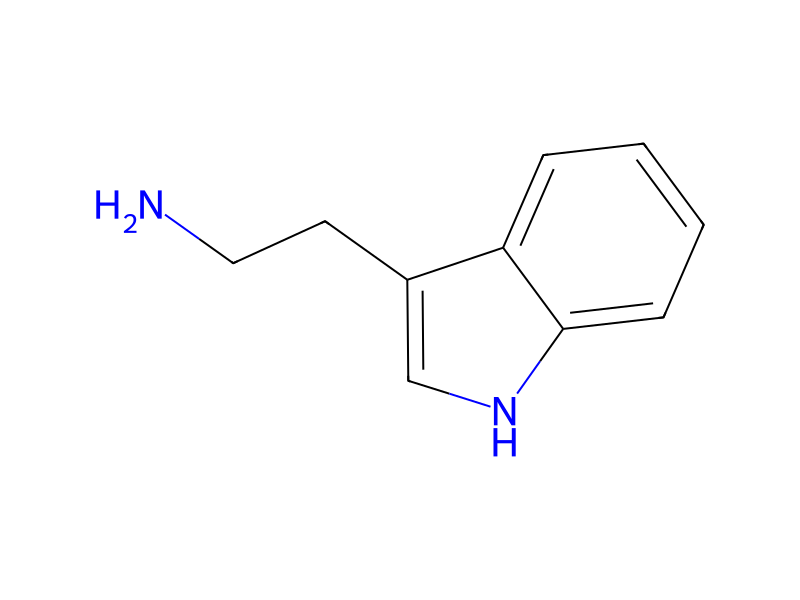



Product 1

Reagents, catalysts & solvents 1

Conditions
- Temperature
- 0 °C
Procedure
Diphenylphosphorylazide (5.8 ml, 27.5 ml) and triethylamine (3.85 ml, 27.5 ml) were added in succession to a mixture of tryptamine (4.32 g, 27 mmol) and N-acetylglycine (3.3 g, 28 mmol) in DMF (100 ml) cooled to 0° C. The mixture was stirred under nitrogen at ambient temperature for 12 h, then the solvent was eliminated under reduced pressure. The residue obtained was flash chromatographed on silica gel to produce the expected product (m=5.5 g, 21 mmol), giving a yield of 78%.
Workup
- customThe residue obtained
- customchromatographed on silica gel
Sources & evidence
- ORD record
- ord-ae2574ab53e94c1987a5b532049724f5
- Source dataset
- uspto-grants-2007_11
- Patent number
- US07291627B2
Reaction notes
Loading…