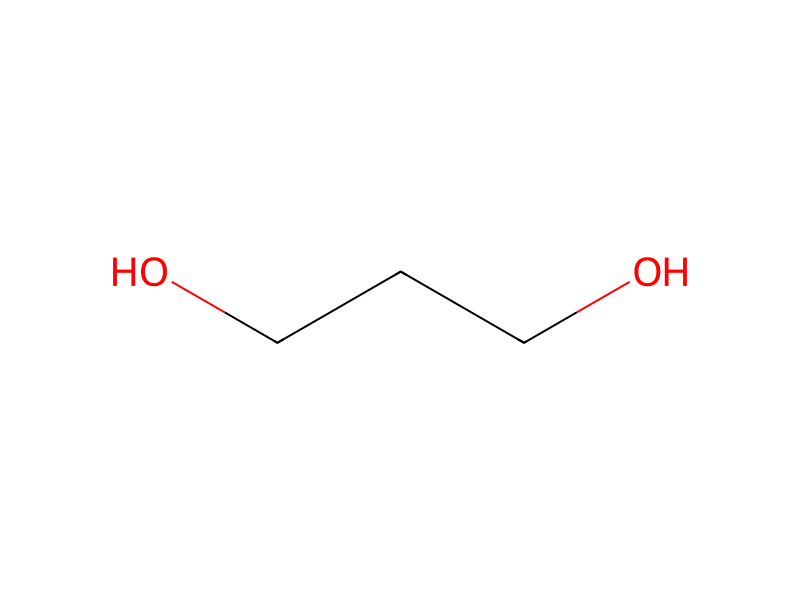
1,3-Propanediol → Ammonia
Reaction equation

Br[C:2]1[N:7]=[N:6][C:5]([N:8]2[CH2:13][C@@H:12]3[CH2:14][C@H:9]2[CH2:10][N:11]3[C:15]([O:17][C:18]([CH3:21])([CH3:20])[CH3:19])=[O:16])=[CH:4][CH:3]=1.[S:22]1[CH:26]=[CH:25][C:24](B(O)O)=[CH:23]1.C(P(C(C)(C)C)C(C)(C)C)(C)(C)C.C(=O)([O-])[O-].[K+].[K+].C(O)CCO>C([O-])(=O)C.[Pd+2].C([O-])(=O)C.O1CCOCC1>[NH3:6].[S:22]1[CH:26]=[CH:25][C:24]([C:2]2[N:7]=[N:6][C:5]([N:8]3[CH2:13][C@@H:12]4[CH2:14][C@H:9]3[CH2:10][N:11]4[C:15]([O:17][C:18]([CH3:21])([CH3:20])[CH3:19])=[O:16])=[CH:4][CH:3]=2)=[CH:23]1Participants
9
Reactant 5



Product 2


Reagents, catalysts & solvents 2


Conditions
- Temperature
- 100 °C
Procedure
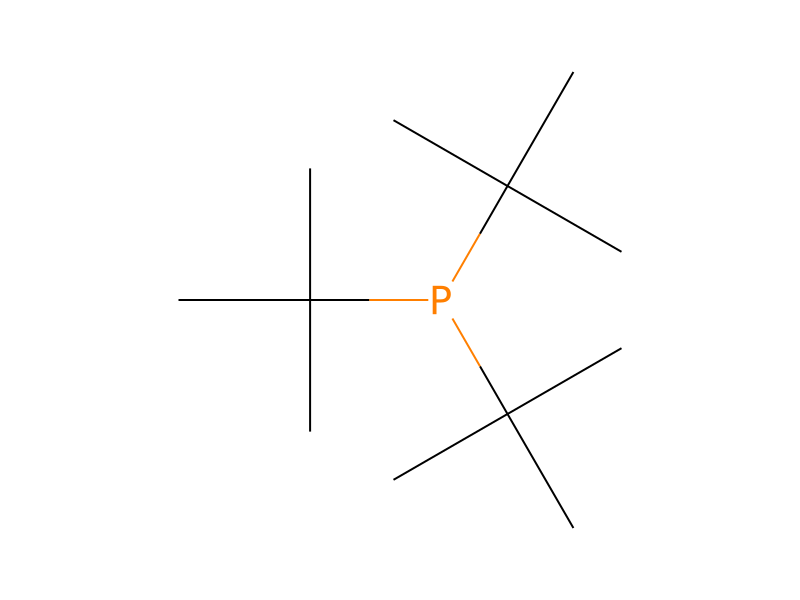
A mixture of 2-[6-bromo-3-pyridazinyl]-(1S,4S)-5-tert-butoxycarbonyl-2,5-diazabicyclo-[2.2.1]-heptane (1.65 g, 4.64 mmol), thiophene-3-boronic acid (0.89 g, 6.97 mmol), palladium acetate (42 mg, 0.19 mmol), tri-tert-butylphosphine (38 mg, 0.19 mmol), palladacycle (87 mg, 0.10 mmol), aqueous potassium carbonate (13.9 mmol, 2M), 1,3-propanediol (1.0 ml, 13.9 mmol) and dioxane (50 ml) was stirred at 100° C. for eleven days. The mixture was evaporated, aqueous sodium hydroxide (50 ml, 1 M) was added and the mixture was extracted with ethyl acetate (3×50 ml). Chromatography on silica gel with dichloromethane, methanol and conc. ammonia (89:10:1) gave the title compound as free base. Yield 0.68 g (41%).
Workup
- customThe mixture was evaporated
- additionaqueous sodium hydroxide (50 ml, 1 M) was added
- extractionthe mixture was extracted with ethyl acetate (3×50 ml)
Sources & evidence
- ORD record
- ord-feca344106f843d2a0a88182bc832113
- Source dataset
- uspto-grants-2007_11
- Patent number
- US07300933B2
Reaction notes
Loading…