2,6-Lutidine → HCID 18923997, compound
Reaction equation

[O:1]1[C:5]2([CH2:10][CH2:9][S:8](=O)[CH2:7][CH2:6]2)[O:4][CH2:3][CH2:2]1.CC(OCC1C2C(=CC=CC=2)C(COC(C)=O)=C2C=1C=CC=C2)=[O:14].N1C(C)=CC=CC=1C>C(OCC)(=O)C>[O:1]1[C:5]2([CH2:10][CH2:9][S:8][CH:7]([OH:14])[CH2:6]2)[O:4][CH2:3][CH2:2]1Participants
5

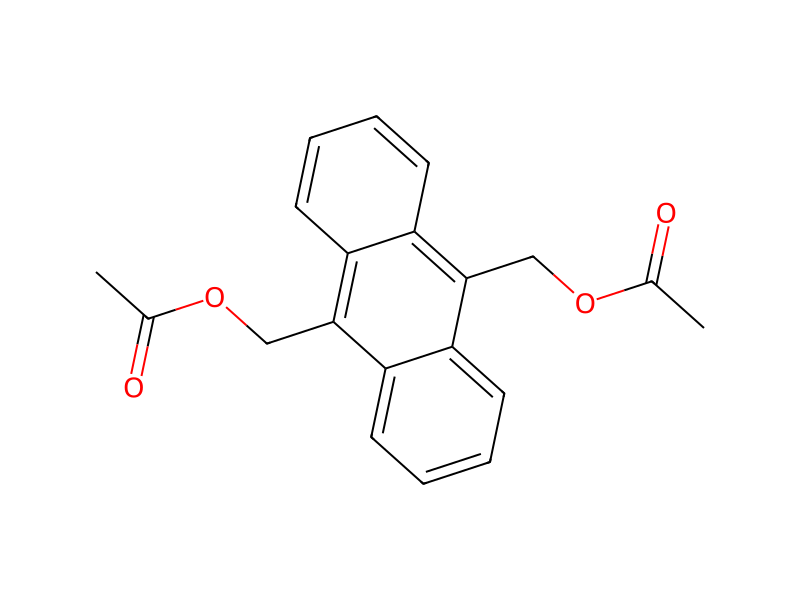



Conditions
- Temperature
- 150 °C
Procedure
A mixture of 0.88 g of product from Example 393, 5.0 ml of acetic anhydrideand 2.0 ml of lutidine is heated at 110°-115° C. for 2.5 hours, followed by increasing the temperature to 150° C. and then heated for 3 hours. The reaction mixture is diluted with ethyl acetate, washed 2 X with 1N hydrochloric acid, water, saturated sodium chloride, dried and concentrated in vacuo. The residue is dissolved in methylene chloride, filtered through a pad of hydrous magnesium silicate and reconcentrated in vacuo to give 0.569 g of the desired product.
Workup
- temperatureis heated at 110°-115° C. for 2.5 hours
- temperatureheated for 3 hours
- washwashed 2 X with 1N hydrochloric acid, water, saturated sodium chloride
- customdried
- concentrationconcentrated in vacuo
- dissolutionThe residue is dissolved in methylene chloride
- filtrationfiltered through a pad of hydrous magnesium silicate
Sources & evidence
- ORD record
- ord-af2eb8983c2b4a768ca8a7a1a5f60dc1
- Source dataset
- uspto-grants-1998_04
- Patent number
- US05744465
Reaction notes
Loading…