Benzonitrile, 4-chloro-3-nitro- → 3-Amino-4-chlorobenzonitrile
Reaction equation

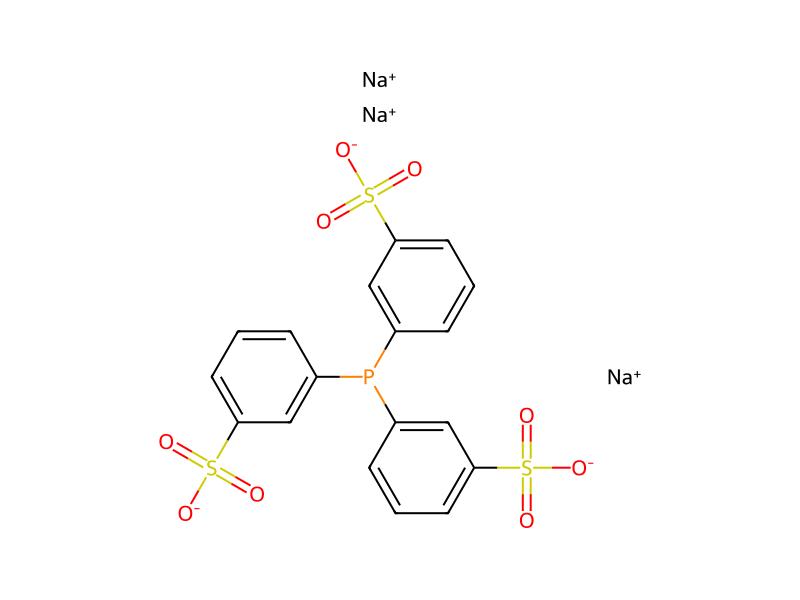
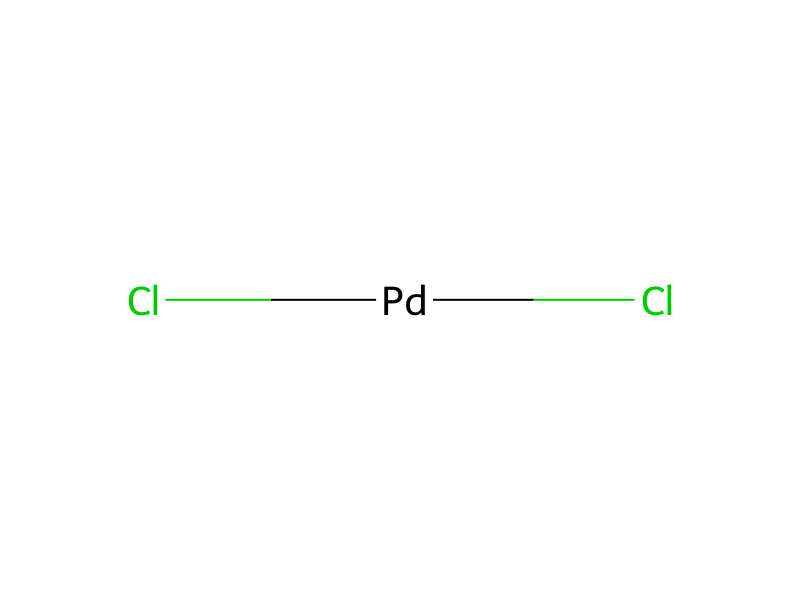
[Cl:1][C:2]1[CH:9]=[CH:8][C:5]([C:6]#[N:7])=[CH:4][C:3]=1[N+:10]([O-])=O.C1C=C(S([O-])(=O)=O)C=C(P(C2C=CC=C(S([O-])(=O)=O)C=2)C2C=CC=C(S([O-])(=O)=O)C=2)C=1.[Na+].[Na+].[Na+].P.[OH-].[Na+]>Cl[Pd]Cl.O.C1(C)C(C)=CC=CC=1>[Cl:1][C:2]1[CH:9]=[CH:8][C:5]([C:6]#[N:7])=[CH:4][C:3]=1[NH2:10]Participants
8
Reactant 4



Product 1

Reagents, catalysts & solvents 3


Procedure
A degassed solution of 40 mmol of 4-chloro-3-nitrobenzonitrile (starting material) and 40 ml of xylene are placed in an autoclave (volume: 200 ml).5.0 mmol of TPPTS (in the form of 9.2 g of an aqueous solution containing 0.546 mol of TPPTS/kg of solution) as phosphine and 2.4 g (60 mmol) of NaOH, 23.8 ml of H2O and 1.0 mmol of PdCl2 are added. The pH isfrom 10.5 to 11.0.
Workup
- additionare added
Sources & evidence
- ORD record
- ord-e5d7b1495f414d6689cfe3e2ff5eb883
- Source dataset
- uspto-grants-1998_04
- Patent number
- US05744643
Reaction notes
Loading…