Triethylamine → 4-Benzyl-1-[2-(2-fluorophenyl)propanoyl]piperazine
Reaction equation

[F:1][C:2]1[CH:7]=[CH:6][CH:5]=[CH:4][C:3]=1[CH:8]([CH3:12])[C:9]([OH:11])=O.[CH2:13]([N:20]1[CH2:25][CH2:24][NH:23][CH2:22][CH2:21]1)[C:14]1[CH:19]=[CH:18][CH:17]=[CH:16][CH:15]=1.C(N(CC)CC)C.Cl.CN(C)CCCN=C=NCC>ClCCl>[CH2:13]([N:20]1[CH2:25][CH2:24][N:23]([C:9](=[O:11])[CH:8]([C:3]2[CH:4]=[CH:5][CH:6]=[CH:7][C:2]=2[F:1])[CH3:12])[CH2:22][CH2:21]1)[C:14]1[CH:15]=[CH:16][CH:17]=[CH:18][CH:19]=1Participants
6
Reactant 4

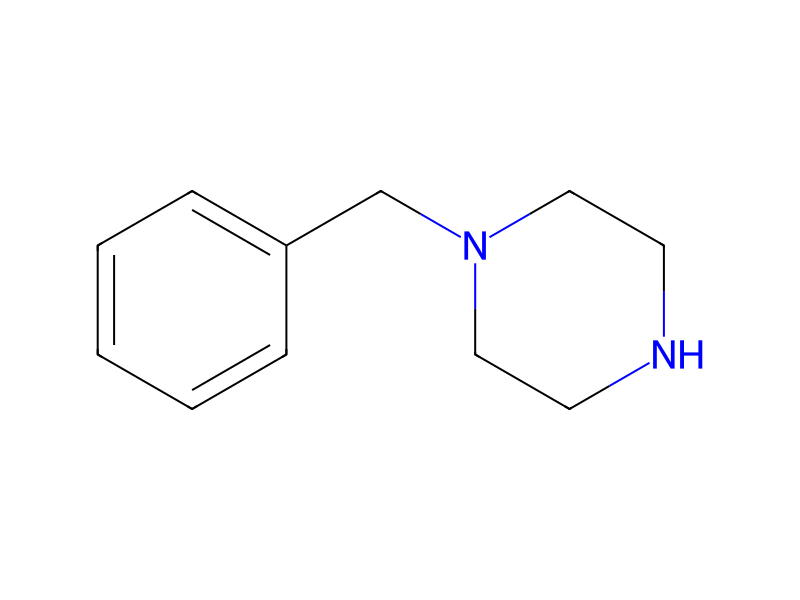


Product 1

Reagents, catalysts & solvents 1

Procedure
2-(2-Fluorophenyl)propanoic acid (7.7 g, 0.046 mol), 1-benzylpiperazine (8.0 g, 0.045 mol), triethylamine (4.6 g, 0.046 mol) and 1-(3-dimethylaminopropyl)-3-ethyl carbodiimide hydrochloride (9.6 g, 0.050 mol) were dissolved in dichloromethane (150 ml) and stirred at room temperature for 18 h. The solution was evaporated and the residue diluted with water and extracted with brine, dried and evaporated. Chromatography on silica gel with dichloromethane-methanol (97:3) yielded 4-benzyl-1-[2-(2-fluorophenyl)propanoyl]piperazine (5.54 g, 38%) as an oil.
Workup
- customThe solution was evaporated
- additionthe residue diluted with water
- extractionextracted with brine
- customdried
- customevaporated
Sources & evidence
- ORD record
- ord-170de012ad3c4b81969daf35188024b9
- Source dataset
- uspto-grants-1999_11
- Patent number
- US05977116
Reaction notes
Loading…