Triethylamine → Cyclopropane carboxylic acid [3-(5-chloro-2,3-dihydro-benzofuran-4-yl)propyl]-amide
Reaction equation

Cl.[Cl:2][C:3]1[CH:4]=[CH:5][C:6]2[O:10][CH2:9][CH2:8][C:7]=2[C:11]=1[CH2:12][CH2:13][CH2:14][NH2:15].C(N(CC)CC)C.[CH:23]1([C:26](Cl)=[O:27])[CH2:25][CH2:24]1>CN(C)C=O.ClCCl>[Cl:2][C:3]1[CH:4]=[CH:5][C:6]2[O:10][CH2:9][CH2:8][C:7]=2[C:11]=1[CH2:12][CH2:13][CH2:14][NH:15][C:26]([CH:23]1[CH2:25][CH2:24]1)=[O:27]Participants
6
Reactant 3

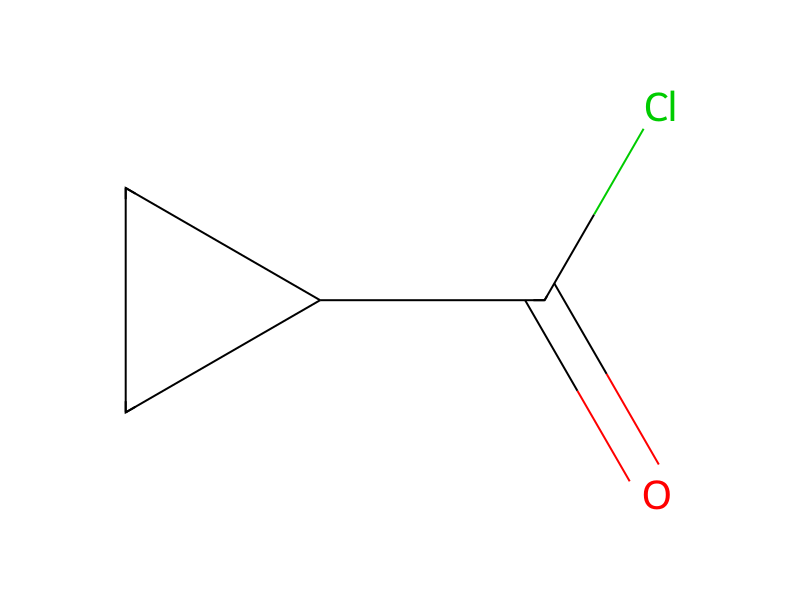

Product 1

Reagents, catalysts & solvents 2


Procedure
A mixture of 3-(5-chloro-2,3-dihydro-benzofuran-4-yl)-propylamine hydrochloride (142 mg), dimethylformamide (5 drops), triethylamine (0.64 ml) and dichloromethane (5 ml) was stirred in ice for 20 minutes. Cyclopropanecarbonyl chloride (66 mg) was added and stirring continued for 5 hours. The mixture was purified by chromatography on silica eluting with ethyl acetate/hexane (1:1) to give the title compound as a white solid (80 mg).
Workup
- stirringstirring
- waitcontinued for 5 hours
- customThe mixture was purified by chromatography on silica eluting with ethyl acetate/hexane (1:1)
Sources & evidence
- ORD record
- ord-7822fb39f01a40358320921f4a1202ae
- Source dataset
- uspto-grants-1999_11
- Patent number
- US05981572
Reaction notes
Loading…