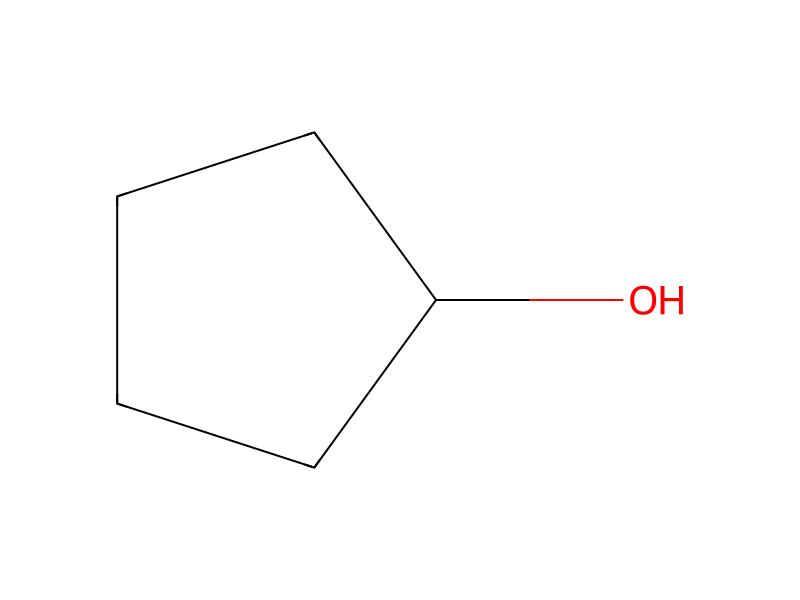
Cyclopentanol → HCID 10859381, compound
Reaction equation

[CH:1]1([OH:6])[CH2:5][CH2:4][CH2:3][CH2:2]1.[Na].O1CCCC1.[Cl:13][C:14]1[C:18]([F:20])([F:19])[C:17]([F:22])([F:21])[C:16]([F:24])([F:23])[C:15]=1Cl>CCOCC>[CH:1]1([O:6][C:15]2[C:16]([F:24])([F:23])[C:17]([F:21])([F:22])[C:18]([F:19])([F:20])[C:14]=2[Cl:13])[CH2:5][CH2:4][CH2:3][CH2:2]1Participants
Reactant 4



Product 1

Reagents, catalysts & solvents 1

Procedure
Cyclopentanol (23 g, 0.27 mol) and sodium metal (5.6 g, 0.24 mol) were refluxed with 25 ml dry tetrahydrofuran (THF) overnight. The reaction mixture was diluted with 200 ml of dry ether and then added to 1,2-dichlorohexafluorocyclopentene (49 g, 0.2 mol) in 100 ml of dry ether at room temperature with stirring over 20 minutes. After the completion of the addition, the reaction mixture was heated to reflux for 2 hours. The reaction mixture was poured into ice water (150 ml) and the organic layer was separated. Then the aqueous layer was extracted with 4 portions of 100 ml of ether. Next, the organic layer and the ether extracts were combined and dried over CaCl2 overnight. Thereafter, the solvent was distilled out at atmospheric pressure. That which remained was distilled under reduced pressure to give the desired 2-chlorohexafluorocyclopentenyl cyclopentyl ether in 79% yield based on the 1,2-dichlorohexafluorocyclopentene used.
Workup
- additionAfter the completion of the addition
- temperaturethe reaction mixture was heated
- temperatureto reflux for 2 hours
- customthe organic layer was separated
- extractionThen the aqueous layer was extracted with 4 portions of 100 ml of ether
- dry with materialdried over CaCl2 overnight
- distillationThereafter, the solvent was distilled out at atmospheric pressure
- distillationThat which remained was distilled under reduced pressure
Sources & evidence
- ORD record
- ord-8364dbb6bc73478687b95e179fee7aeb
- Source dataset
- uspto-grants-1989_09
- Patent number
- US04868318
Reaction notes
Loading…