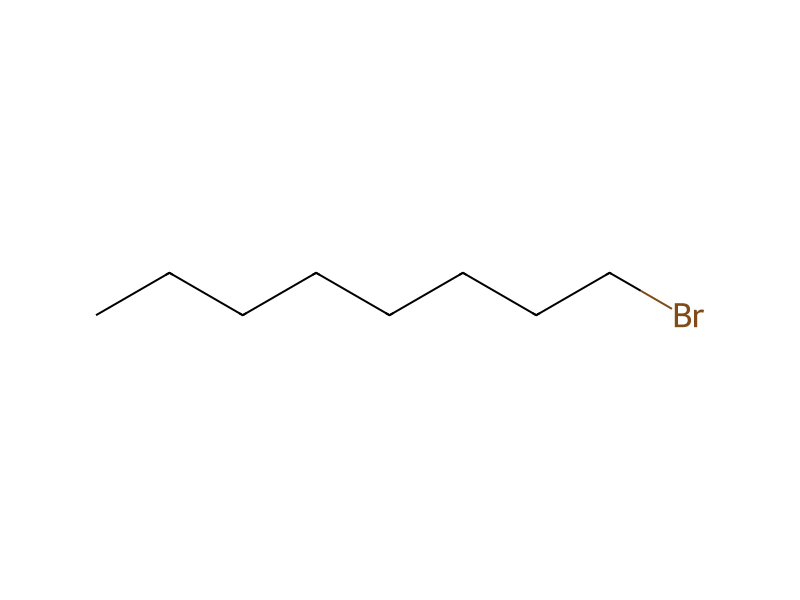
1-Bromooctane → 2,7-Dibromo-9,9-di-n-octylfluorene
Reaction equation

[Br:1][C:2]1[CH:14]=[CH:13][C:12]2[C:11]3[C:6](=[CH:7][C:8]([Br:15])=[CH:9][CH:10]=3)[CH2:5][C:4]=2[CH:3]=1.[CH2:16](Br)[CH2:17][CH2:18][CH2:19][CH2:20][CH2:21][CH2:22][CH3:23].[OH-].[Na+]>[Br-].C([N+](CCCC)(CCCC)CCCC)CCC.C1(C)C=CC=CC=1.O>[CH2:16]([C:5]1([CH2:13][CH2:14][CH2:2][CH2:3][CH2:4][CH2:12][CH2:11][CH3:10])[C:4]2[CH:3]=[C:2]([Br:1])[CH:14]=[CH:13][C:12]=2[C:11]2[C:6]1=[CH:7][C:8]([Br:15])=[CH:9][CH:10]=2)[CH2:17][CH2:18][CH2:19][CH2:20][CH2:21][CH2:22][CH3:23]Participants
7






Procedure
1.25 g (3.85 mmol) of tetrabutyl ammonium bromide (TBAB) was added to a solution of 25 g (77 mmol) of 2,7-dibromofluorene and 36 g (185 mmol) of n-octylbromide in 100 mL of toluene, and a solution of 31 g (770 mmol) of NaOH in 50 mL of water was added and refluxed for 2 days.
Workup
- temperaturerefluxed for 2 days
Sources & evidence
- ORD record
- ord-050bbce432964e12a2db3400b1b0b10f
- Source dataset
- uspto-grants-2006_01
- Patent number
- US06984461B2
Reaction notes
Loading…