Indole → 1-Octyl-1H-indole
Reaction equation

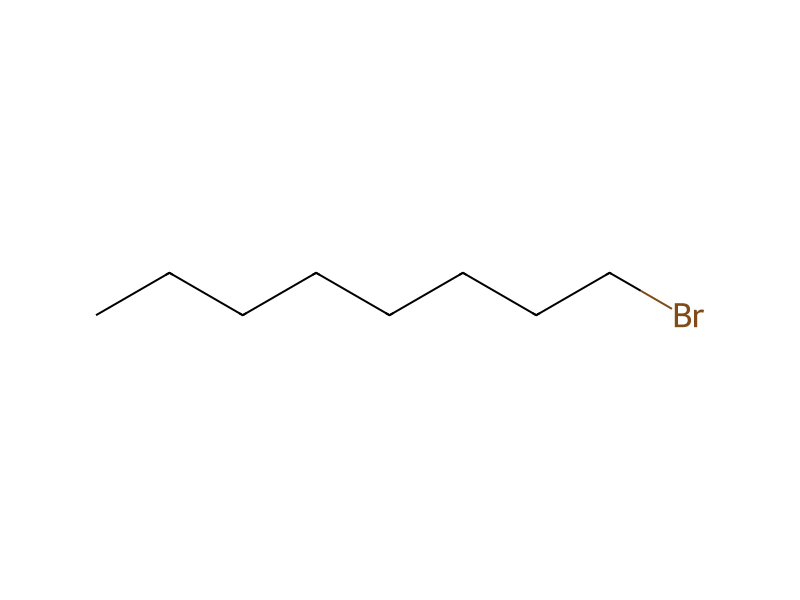
[NH:1]1[C:9]2[C:4](=[CH:5][CH:6]=[CH:7][CH:8]=2)[CH:3]=[CH:2]1.[H-].[Na+].[CH2:12](Br)[CH2:13][CH2:14][CH2:15][CH2:16][CH2:17][CH2:18][CH3:19].O>CS(C)=O>[CH2:12]([N:1]1[C:9]2[C:4](=[CH:5][CH:6]=[CH:7][CH:8]=2)[CH:3]=[CH:2]1)[CH2:13][CH2:14][CH2:15][CH2:16][CH2:17][CH2:18][CH3:19]Participants
6
Reactant 4



Product 1

Reagents, catalysts & solvents 1

Conditions
- Temperature
- 60 °C
Procedure
A solution of indole (1.0 g) in dry DMSO (1 ml) is dropped into a suspension of sodium hydride (60% suspension in mineral oil; 0.37 g) in dry DMSO (20 ml), heating to 60° C. for 1 h. After cooling at room temperature, the resulting solution is added dropwise with a solution of n-octyl bromide (2.82 ml) in dry DMSO (2.8 ml). After a night at room temperature, the reaction mixture is poured into water (200 ml) and extracted with ethyl acetate (2×50 ml). The combined organic phases are washed with a NaCl saturated solution, dried and evaporated to dryness. The resulting residue is purified by column chromatography (silica gel; eluent n-hexane) to obtain 1.86 g of 1-(n-octyl)indole as oil.
Workup
- temperatureAfter cooling at room temperature
- waitAfter a night at room temperature
- extractionextracted with ethyl acetate (2×50 ml)
- washThe combined organic phases are washed with a NaCl saturated solution
- customdried
- customevaporated to dryness
- customThe resulting residue is purified by column chromatography (silica gel; eluent n-hexane)
Sources & evidence
- ORD record
- ord-047f1d28e35649159ae8b1dc2377d6b9
- Source dataset
- uspto-grants-2006_01
- Patent number
- US06987122B2
Reaction notes
Loading…