Benzyl Bromide → 4-Benzyl 1-tert-butyl piperidine-1,4-dicarboxylate
Reaction equation

[C:1]([O:5][C:6]([N:8]1[CH2:13][CH2:12][CH:11]([C:14]([OH:16])=[O:15])[CH2:10][CH2:9]1)=[O:7])([CH3:4])([CH3:3])[CH3:2].C(=O)([O-])[O-].[K+].[K+].[CH2:23](Br)[C:24]1[CH:29]=[CH:28][CH:27]=[CH:26][CH:25]=1>CN(C=O)C>[CH2:23]([O:15][C:14]([CH:11]1[CH2:12][CH2:13][N:8]([C:6]([O:5][C:1]([CH3:4])([CH3:2])[CH3:3])=[O:7])[CH2:9][CH2:10]1)=[O:16])[C:24]1[CH:29]=[CH:28][CH:27]=[CH:26][CH:25]=1Participants
5




Procedure
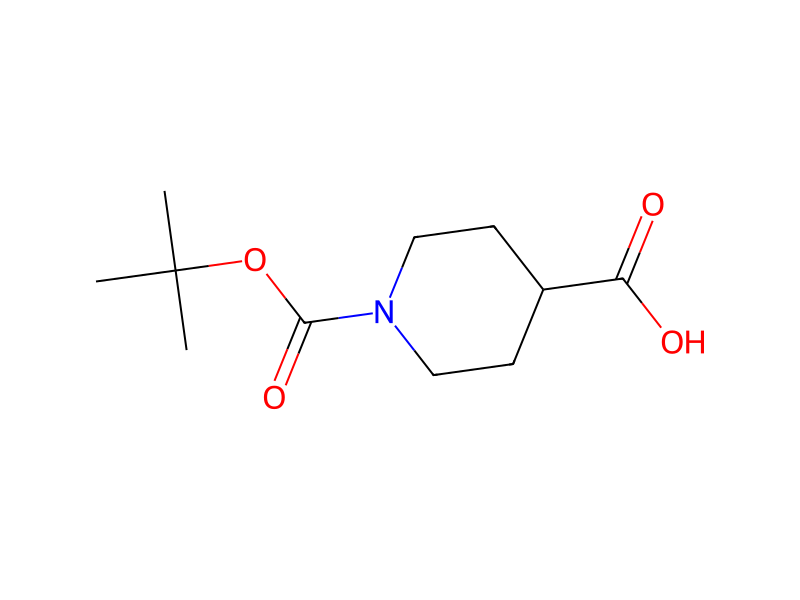
A solution of 1-tert-butoxycarbonyl-piperidine-4-carboxylic acid (20 g) in DMF (100 ml) was treated with anhydrous potassium carbonate (60 g) and then benzyl bromide (16.43 g) and the mixture was stirred at room temperature for 72 hours. It was filtered, evaporated to dryness, dissolved in ethyl acetate, washed with sodium carbonate solution and water and dried over sodium sulfate. The product was evaporated to give an oil (29 g).
Workup
- filtrationIt was filtered
- customevaporated to dryness
- dissolutiondissolved in ethyl acetate
- washwashed with sodium carbonate solution and water
- dry with materialdried over sodium sulfate
- customThe product was evaporated
Sources & evidence
- ORD record
- ord-2160915f63a74c17a07eb2965f8c71a2
- Source dataset
- uspto-grants-2006_01
- Patent number
- US06989447B2
Reaction notes
Loading…