4-Bromobenzaldehyde → 4-Cyclopropylbenzaldehyde
Reaction equation

Br[C:2]1[CH:9]=[CH:8][C:5]([CH:6]=[O:7])=[CH:4][CH:3]=1.[F-].[K+].[CH:12]1(B(O)O)[CH2:14][CH2:13]1>C1(C)C=CC=CC=1.Cl[Pd](Cl)([P](C1C=CC=CC=1)(C1C=CC=CC=1)C1C=CC=CC=1)[P](C1C=CC=CC=1)(C1C=CC=CC=1)C1C=CC=CC=1>[CH:12]1([C:2]2[CH:9]=[CH:8][C:5]([CH:6]=[O:7])=[CH:4][CH:3]=2)[CH2:14][CH2:13]1Participants
6
Reactant 3
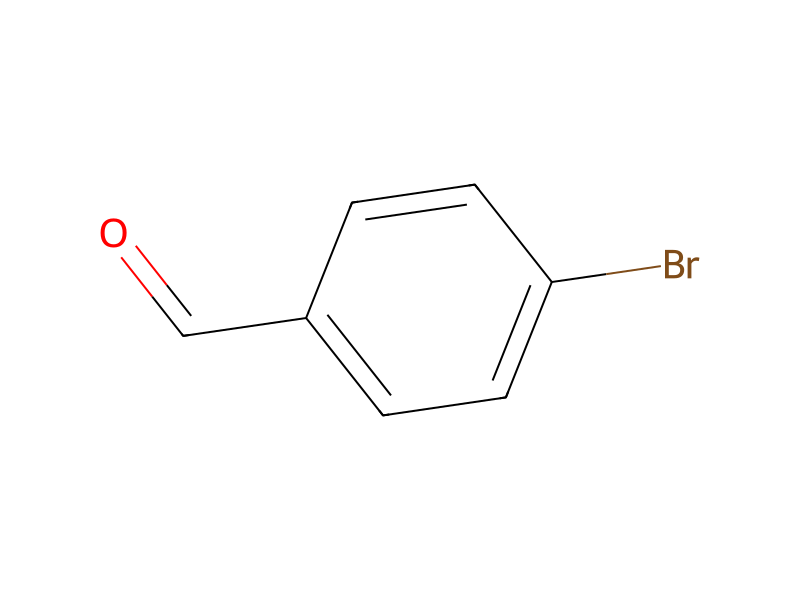

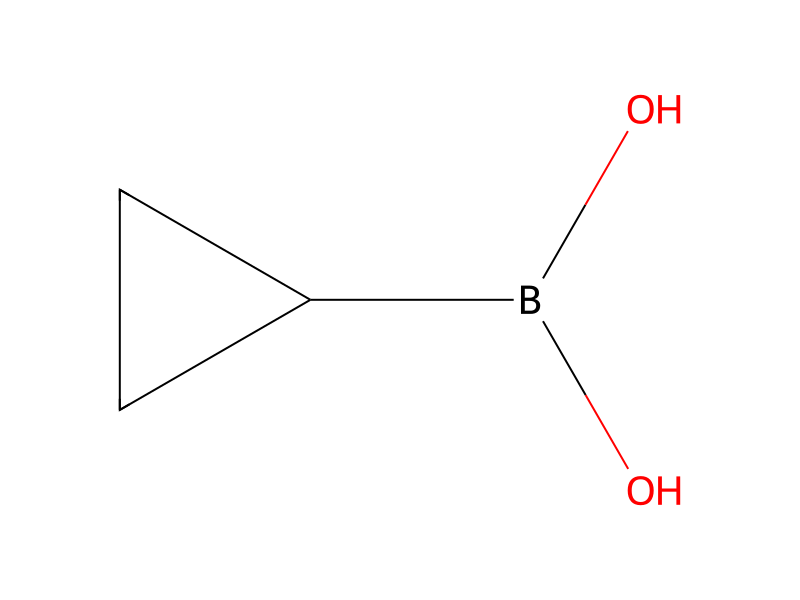
Product 1

Reagents, catalysts & solvents 2


Conditions
- Temperature
- 110 °C
Procedure
To a solution of 4-bromobenzaldehyde (94 g) in toluene (470 mL) were added potassium fluoride (95 g), cyclo-propylboronic acid (48 g) and bis(triphenylphosphine)-palladium (II) dichloride (3.6 g) under nitrogen atmosphere. The reaction mixture was stirred at 110° C. for 24 hr under nitrogen atmosphere. The reaction mixture was filtered using Celite. The filtrate was concentrated in vacuo to give the crude title compound.
Workup
- filtrationThe reaction mixture was filtered
- concentrationThe filtrate was concentrated in vacuo
Sources & evidence
- ORD record
- ord-a9d6cd9c69b344318c3d1711033f21af
- Source dataset
- uspto-grants-2014_07
- Patent number
- US08765739B2
Reaction notes
Loading…