Hydrochloric Acid → 3-(Difluoromethoxy)benzeneboronic acid
Reaction equation

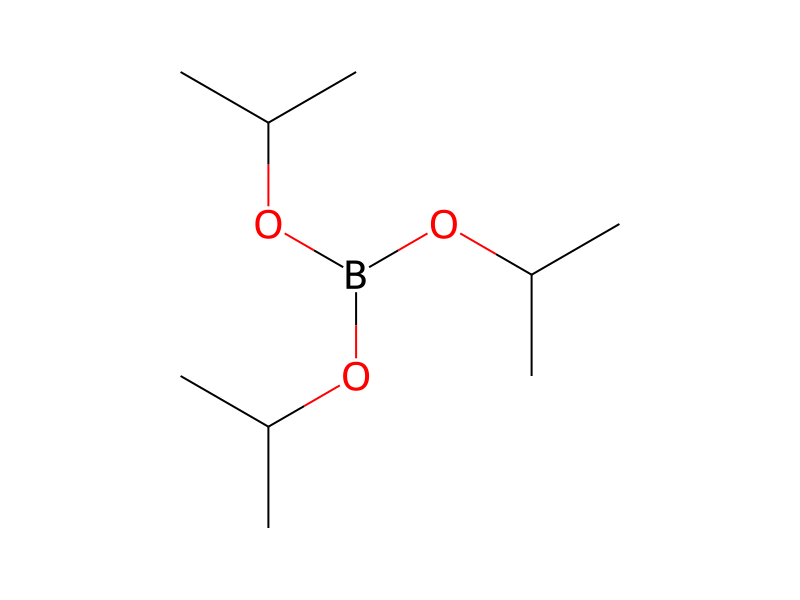
[F:1][CH:2]([F:10])[O:3][C:4]1[CH:5]=[CH:6][CH:7]=[CH:8][CH:9]=1.C([O:14][B:15](OC(C)C)[O:16]C(C)C)(C)C.C([Li])CCC.Cl>O1CCCC1>[F:1][CH:2]([F:10])[O:3][C:4]1[CH:9]=[C:8]([B:15]([OH:16])[OH:14])[CH:7]=[CH:6][CH:5]=1Participants





Procedure
A solution of 3-(difluoromethoxy)benzene (3.0 g) and triisopropoxyborane (2.78 g) in tetrahydrofuran (15 ml) was cooled to −78° C. under argon atmosphere, and thereto was added a solution of n-butyl lithium (1.59 M hexane solution, 9.3 ml). The mixture was stirred at same temperature for 10 minutes, warmed, and further stirred at room temperature overnight. Thereto was added 3N aqueous hydrochloric acid solution (10 ml), and the mixture was stirred at room temperature for 5 minutes. The mixture was extracted with ethyl acetate. The extract was washed with brine, and dried over sodium sulfate. The solvent was evaporated under reduced pressure. The residue was crystallized from hexane to give 3-difluoromethoxybenzeneboronic acid (1.6 g) as colorless crystals.
Workup
- temperaturewarmed
- stirringfurther stirred at room temperature overnight
- stirringthe mixture was stirred at room temperature for 5 minutes
- extractionThe mixture was extracted with ethyl acetate
- washThe extract was washed with brine
- dry with materialdried over sodium sulfate
- customThe solvent was evaporated under reduced pressure
- customThe residue was crystallized from hexane
Sources & evidence
- ORD record
- ord-2aebbf4912fb413ab7d61811ad636a20
- Source dataset
- uspto-grants-2014_07
- Patent number
- US08785403B2
Reaction notes
Loading…