Indole → 1-(3-Bromo-4-methoxy-benzyl)-1H-indole
Reaction equation

[NH:1]1[C:9]2[C:4](=[CH:5][CH:6]=[CH:7][CH:8]=2)[CH:3]=[CH:2]1.[H-].[Na+].[Br:12][C:13]1[CH:18]=[C:17]([CH2:19]Br)[CH:16]=[CH:15][C:14]=1[O:21][CH3:22].[Cl-].[NH4+]>CN(C=O)C.ClCCl>[Br:12][C:13]1[CH:18]=[C:17]([CH:16]=[CH:15][C:14]=1[O:21][CH3:22])[CH2:19][N:1]1[C:9]2[C:4](=[CH:5][CH:6]=[CH:7][CH:8]=2)[CH:3]=[CH:2]1Participants
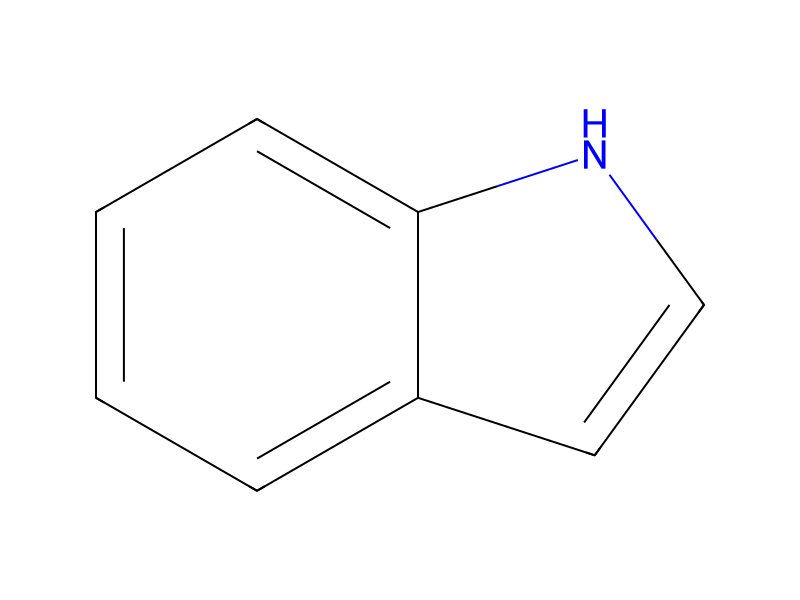






Procedure
A solution of indole (250 mg, 2.14 mmol) in DMF (15 mL) was cooled in an ice bath. To this solution was added sodium hydride (64.3 mg, 2.68 mmol), followed by 2-Bromo-4-bromomethyl-1-methoxy-benzene (500 mg, 1.79 mmol). The reaction was warmed to room temperature and stirred overnight. To the reaction was added saturated aqueous ammonium chloride (75 mL) and the layers separated. The organic extract was washed with saturated aqueous ammonium chloride (2×75 mL), water (3×75 mL) and brine (50 mL). The extract was dried over sodium sulfate, and the solvent removed under reduced pressure. To residue was purified by flash silica gel column chromatography eluting with 1:3 hexanes: dichloromethane to give the title compound (I-107, X═CH) (490 mg, 87% yield) which was taken into further reactions.
Workup
- customthe layers separated
- extractionThe organic extract
- washwas washed with saturated aqueous ammonium chloride (2×75 mL), water (3×75 mL) and brine (50 mL)
- dry with materialThe extract was dried over sodium sulfate
- customthe solvent removed under reduced pressure
- customTo residue was purified by flash silica gel column chromatography
- washeluting with 1:3 hexanes
Sources & evidence
- ORD record
- ord-5b76cdd76b6443958353dc4b759f48e4
- Source dataset
- uspto-grants-2014_07
- Patent number
- US08791267B2
Reaction notes
Loading…