Isopropanol → 1-(o-Chlorophenoxy)-4-(4-phenyl-1-piperazinyl)-2-butanol
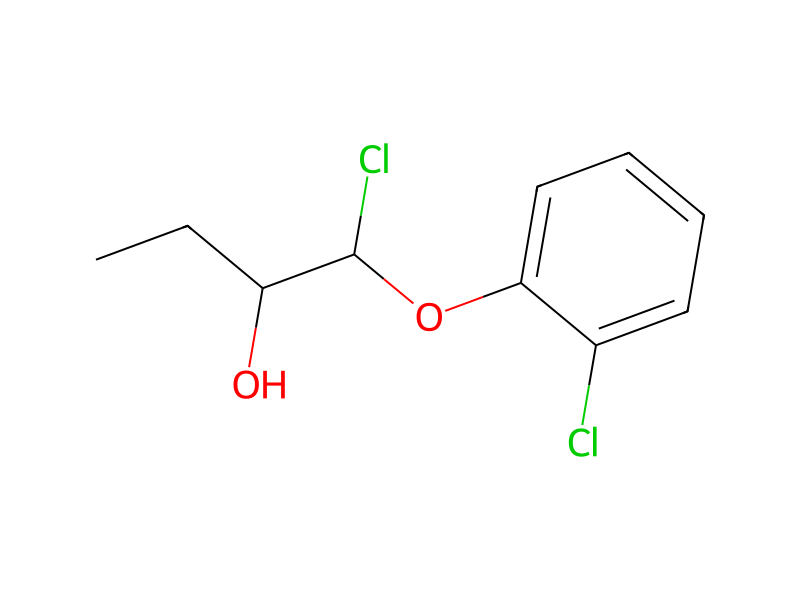
Reaction equation

[Cl:1][C:2]1[CH:14]=[CH:13][CH:12]=[CH:11][C:3]=1[O:4][CH:5](Cl)[CH:6]([OH:9])[CH2:7][CH3:8].[C:15]1([N:21]2[CH2:26][CH2:25][NH:24][CH2:23][CH2:22]2)[CH:20]=[CH:19][CH:18]=[CH:17][CH:16]=1.CC(O)C.[OH-].[Na+]>Cl>[Cl:1][C:2]1[CH:14]=[CH:13][CH:12]=[CH:11][C:3]=1[O:4][CH2:5][CH:6]([OH:9])[CH2:7][CH2:8][N:24]1[CH2:25][CH2:26][N:21]([C:15]2[CH:20]=[CH:19][CH:18]=[CH:17][CH:16]=2)[CH2:22][CH2:23]1Participants
6





Procedure
A mixture of 35.1 g (0.15 mole) of 1-(o-chlorophenoxy)-2-hydroxybutyl chloride, 32.6 g (0.2 mole) of N-phenylpiperazine and 400 ml of 2-propanol was heated at reflux for 48 hr. The resulting reaction mixture was allowed to stand in a refrigerator overnight and filtered. The filtrate was treated with ethereal hydrogen chloride and precipitated with ether. Upon filtering, a white crystalline solid formed which was dissolved in dilute hydrochloric acid and the mixture was then neutralized with aqueous sodium hydroxide producing a crystalline precipitate. This was recrystallized with isopropanol yielding 36 g of the free base, m.p. 100°-101.5° C.
Workup
- temperaturewas heated
- temperatureat reflux for 48 hr
- customThe resulting reaction mixture
- customto stand in a refrigerator overnight
- filtrationfiltered
- additionThe filtrate was treated with ethereal hydrogen chloride
- customprecipitated with ether
- filtrationUpon filtering
- customa white crystalline solid formed which
- customThis was recrystallized with isopropanol yielding 36 g of the free base, m.p. 100°-101.5° C.
Sources & evidence
- ORD record
- ord-633d4877f7c74007851f781356d8dbb4
- Source dataset
- uspto-grants-1989_11
- Patent number
- US04882330
Reaction notes
Loading…