Hydrochloric Acid → Silane, (4-methoxyphenyl)dimethyl-
Reaction equation

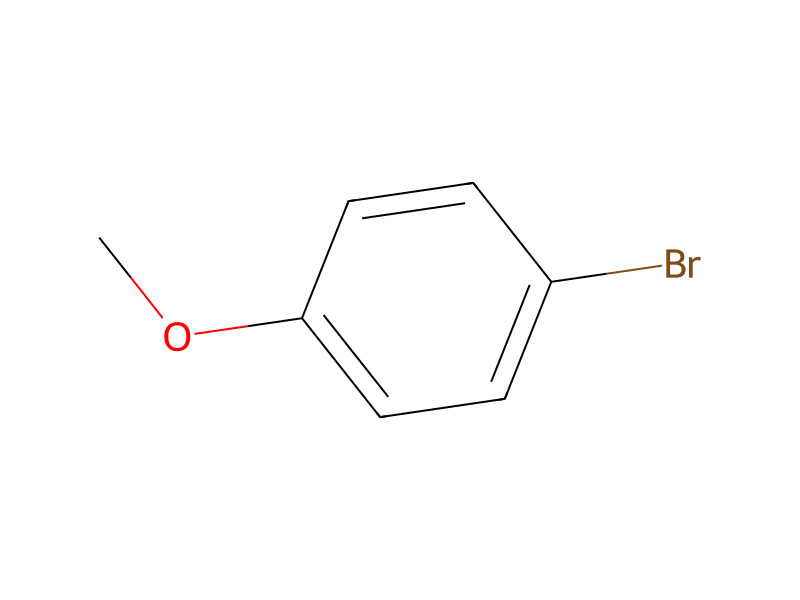
[Mg].[CH3:2][O:3][C:4]1[CH:9]=[CH:8][C:7](Br)=[CH:6][CH:5]=1.[CH3:11][SiH:12]([CH3:14])Cl.Cl>BrCCBr.O1CCCC1>[CH3:2][O:3][C:4]1[CH:9]=[CH:8][C:7]([SiH:12]([CH3:14])[CH3:11])=[CH:6][CH:5]=1Participants






Procedure
In a flask under a nitrogen atmosphere were placed 2.54 g (0.104 mole) of magnesium metal and approximately 25 mL of dry tetrahydrofuran. To this mixture was added a few drops of 1,2-dibromoethane. This was followed by the slow addition of a solution of 19.54 g (0.104 mole) of 4-methoxybromobenzene in 30 mL of tetrahydrofuran. After completion of addition, this reaction mixture was heated at reflux for one hour and was then cooled to room temperature. Slowly 9.89 g (0.105 mole) of dimethylchlorosilane was added to the reaction mixture which was then heated at reflux for one hour. To this was added 50 mL of 1 N hydrochloric acid, and the organic and aqueous phases were separated. The aqueous phase was extracted three times with 50 mL of diethyl ether, and these washes were combined with the organic phase. The combined extracts were then washed with 200 mL of a saturated, aqueous solution of sodium chloride and were dried over anhydrous sodium sulfate. The solvent was evaporated under reduced pressure, leaving a residue. Distillation of this residue yielded 14.4 g of (4-methoxyphenyl)dimethylsilane as a clear, yellow liquid, b.p. 80-90° C. at 9 mm of Hg. The proton nmr and ir spectra were consistent with the proposed structure.
Workup
- customIn a flask under a nitrogen atmosphere were placed
- additionAfter completion of addition
- temperaturethis reaction mixture was heated
- temperatureat reflux for one hour
- temperaturewas then heated
- temperatureat reflux for one hour
- customthe organic and aqueous phases were separated
- extractionThe aqueous phase was extracted three times with 50 mL of diethyl ether
- washThe combined extracts were then washed with 200 mL of a saturated, aqueous solution of sodium chloride
- dry with materialwere dried over anhydrous sodium sulfate
- customThe solvent was evaporated under reduced pressure
- customleaving a residue
- distillationDistillation of this residue
Sources & evidence
- ORD record
- ord-5a7ed0fd3e8943fd85100321492444cd
- Source dataset
- uspto-grants-1989_11
- Patent number
- US04883789
Reaction notes
Loading…