Benzoic Acid → Biphenyl
Reaction equation

[C:1](O)(=O)[C:2]1[CH:7]=[CH:6][CH:5]=[CH:4][CH:3]=1>[Pd]>[C:2]1([C:1]2[CH:6]=[CH:7][CH:2]=[CH:3][CH:4]=2)[CH:7]=[CH:6][CH:5]=[CH:4][CH:3]=1Participants
Reactant 1
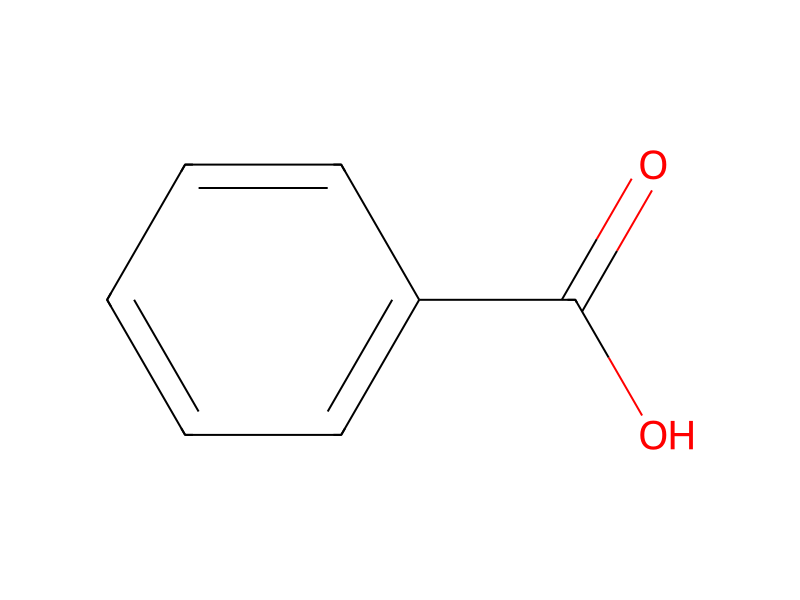
Product 1

Reagents, catalysts & solvents 1

Procedure
In step 1 of Scheme A, nitrobenzoic acid a is subject to iodination under sulfuric acid conditions to afford iodo-nitrobenzoic acid b. Benzoic acid compound b is reacted with arylboronic acid compound c in the presence of tetrakis-triphenylphosphine)palladium catalyst to afford biphenyl acid compound d. The acid group of biphenyl acid d is protected by esterification in step 3 to form biphenyl acid methyl ester e. Biphenyl ester e is then subject to reduction to form biphenylamine f in step 4. An iodination reaction is carried out in step 5 by treating biphenylamine f with methylene iodide or like iodination reagent to afford iodo compound g. In step 6 iodo compound g is treated with thiadiazole h in the presence of palladium catalyst to give thiadiazole ester compound i. Compound i then undergoes base-catalyzed hydrolysis in step 7 to give the corresponding carboxylic acid compound j. Compound j is then reacted with amine k to provide thiazole amide compound m, which is a compound of formula I in accordance with the invention.
Sources & evidence
- ORD record
- ord-78e94c3b46c645fab52099c6294e323a
- Source dataset
- uspto-grants-2012_02
- Patent number
- US08119644B2
Reaction notes
Loading…