3-Hydroxybenzaldehyde → 3-Propoxybenzaldehyde
Reaction equation

[OH:1][C:2]1[CH:3]=[C:4]([CH:7]=[CH:8][CH:9]=1)[CH:5]=[O:6].[CH2:10](I)[CH2:11][CH3:12].C(=O)([O-])[O-].[K+].[K+]>CC(=O)CC>[CH2:10]([O:1][C:2]1[CH:3]=[C:4]([CH:7]=[CH:8][CH:9]=1)[CH:5]=[O:6])[CH2:11][CH3:12]Participants
5
Reactant 3
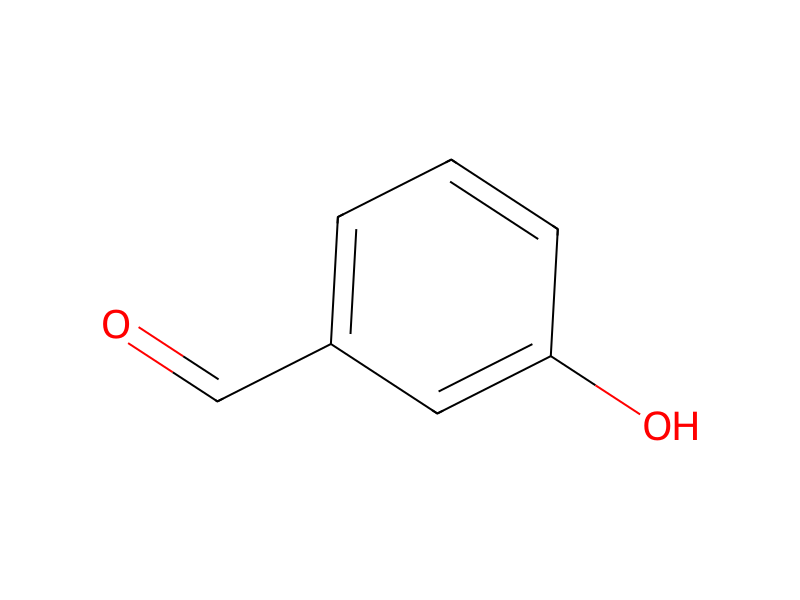

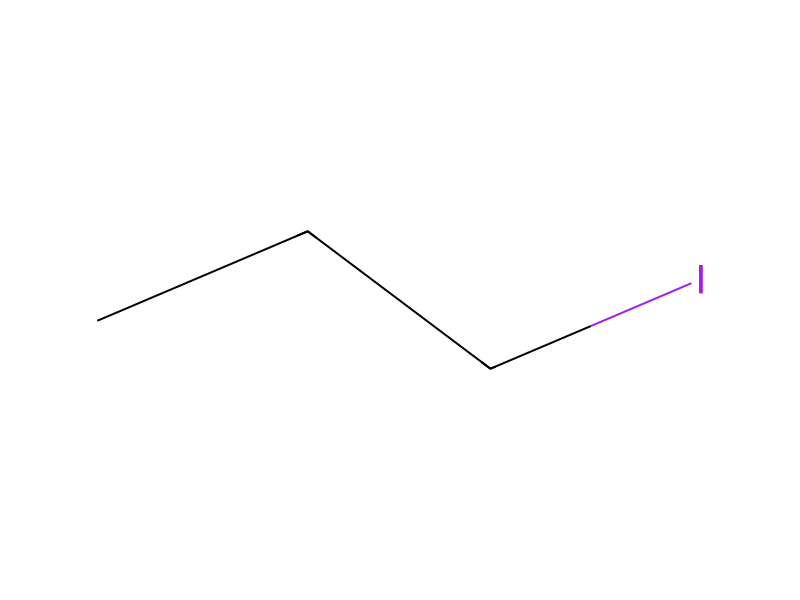
Product 1

Reagents, catalysts & solvents 1

Procedure
Combine 3-hydroxybenzaldehyde (7.50 gm; 61.4 mmol), n-propyl iodide (17.3 gm; 102 mmol), and potassium carbonate (16.90 gm; 122 mmol) in 2-butanone (100 mL) and reflux. After 17 h, allow the mixture to cool to room temperature, decant the solution and concentrate by rotary evaporation. Partition the residue between diethyl ether (150 mL) and water (150 mL), separate the layers and extract the aqueous layer with diethyl ether (2×100 mL). Combine organic layers and wash with water, 1 N NaOH, and then water, dry over MgSO4, and concentrate to give a residue. Distill the residue to give the title compound: bp: 122-125° C. (15 mm); TLC (10% Et2O/hexanes; Rf 0.35).
Workup
- customdecant the solution
- concentrationconcentrate by rotary evaporation
- customPartition the residue between diethyl ether (150 mL) and water (150 mL)
- customseparate the layers
- extractionextract the aqueous layer with diethyl ether (2×100 mL)
- washCombine organic layers and wash with water, 1 N NaOH
- dry with materialwater, dry over MgSO4
- concentrationconcentrate
- customto give a residue
- distillationDistill the residue
Sources & evidence
- ORD record
- ord-1968699b6a8345658918b29877af5067
- Source dataset
- uspto-grants-2011_10
- Patent number
- US08044090B2
Reaction notes
Loading…