Veratraldehyde → (3,4-Dimethoxyphenyl)(hydroxy)acetonitrile
Reaction equation

[CH3:1][O:2][C:3]1[CH:4]=[C:5]([CH:8]=[CH:9][C:10]=1[O:11][CH3:12])[CH:6]=[O:7].OS([O-])=O.[Na+].[C-:18]#[N:19].[K+]>C(OCC)(=O)C.O>[CH3:1][O:2][C:3]1[CH:4]=[C:5]([CH:6]([OH:7])[C:18]#[N:19])[CH:8]=[CH:9][C:10]=1[O:11][CH3:12]Participants
6
Reactant 3
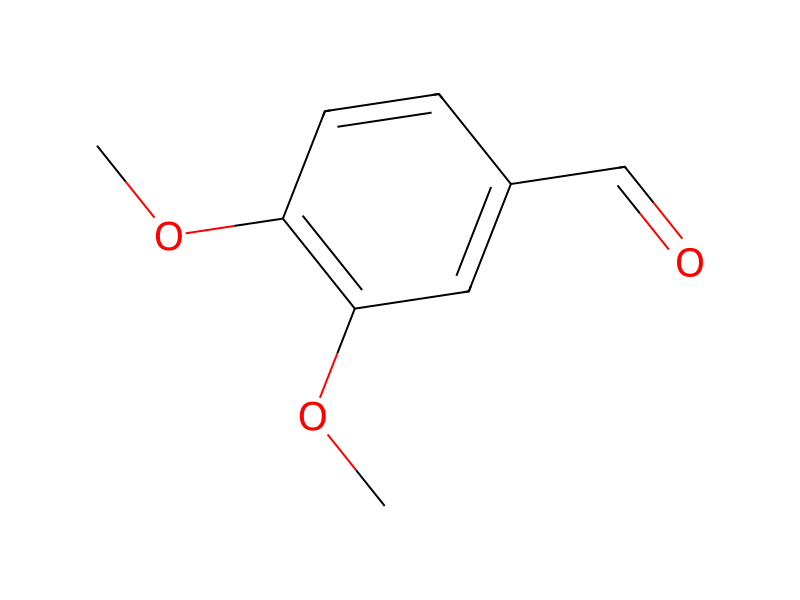


Product 1

Reagents, catalysts & solvents 2


Procedure
To 3,4-dimethoxybenzaldehyde (1.66 g, 10 mmol) in ethyl acetate (20 mL) was added NaHSO3 (5.2 g, 50 mmol) in water (20 mL), followed by potassium cyanide (3.26 g, 50 mmol) in water (20 mL). The mixture was stirred overnight at rt, then warmed to 50° C. for 6 h. The reaction was cooled to rt, diluted with ethyl acetate, and the layers were separated. The organic layer was washed with brine, dried (Na2SO4), filtered and concentrated. The resulting residue was purified via silica gel chromatography (0-50% ethyl acetate/hexanes) to provide 6A (1.25 g, 65%) and starting material, 3,4-dimethoxybenzaldehyde (0.52 mg). 6A: LC-MS: 176.22 (M−H2O)+.
Workup
- temperaturewarmed to 50° C. for 6 h
- temperatureThe reaction was cooled to rt
- customthe layers were separated
- washThe organic layer was washed with brine
- dry with materialdried (Na2SO4)
- filtrationfiltered
- concentrationconcentrated
- customThe resulting residue was purified via silica gel chromatography (0-50% ethyl acetate/hexanes)
Sources & evidence
- ORD record
- ord-731031f828874284a19153d7662ad15e
- Source dataset
- uspto-grants-2011_10
- Patent number
- US08044242B2
Reaction notes
Loading…