Isopropyl iodide → 2-isopropoxy-5-nitrobenzaldehyde
Reaction equation

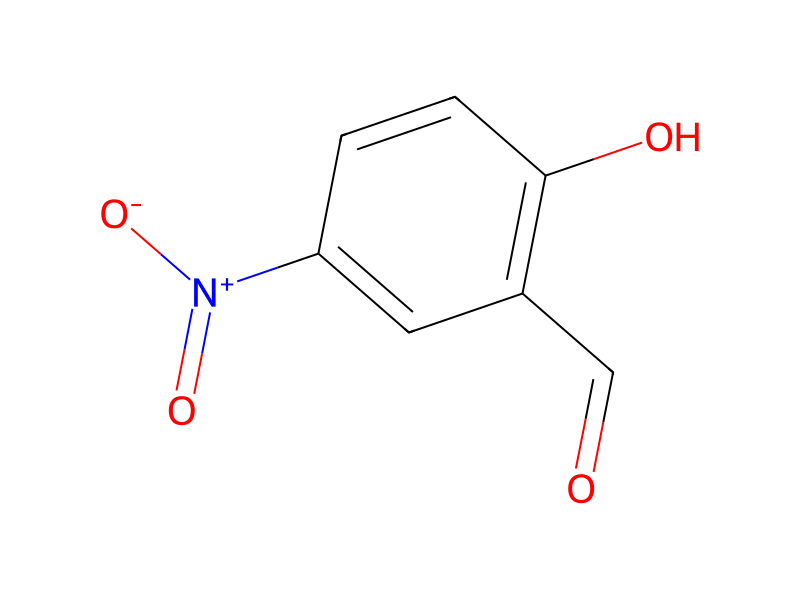
[OH:1][C:2]1[CH:9]=[CH:8][C:7]([N+:10]([O-:12])=[O:11])=[CH:6][C:3]=1[CH:4]=[O:5].[CH:13](I)([CH3:15])[CH3:14].C(=O)([O-])[O-].[K+].[K+]>CN(C=O)C.C(OCC)(=O)C>[CH:13]([O:1][C:2]1[CH:9]=[CH:8][C:7]([N+:10]([O-:12])=[O:11])=[CH:6][C:3]=1[CH:4]=[O:5])([CH3:15])[CH3:14]Participants
6
Reactant 3


Product 1

Reagents, catalysts & solvents 2


Conditions
- Temperature
- 95 °C
Procedure
To commercially available 2-hydroxy-5-nitrobenzaldehyde (500 mg, 3.0 mmol) in DMF (10 mL) in a sealable tube was added isopropyl iodide (1.02 g, 6.0 mmol) and potassium carbonate (1.7 g, 12 mmol). The tube was sealed and heated to 95° C. overnight. After cooling to rt, the reaction was diluted with ethyl acetate. The layers were separated, and the organic layer was washed with brine, then concentrated and purified via silica gel chromatography (10-20% ethyl acetate/hexane) to provide 8A (560 mg, 89%). 1H NMR (400 MHz, CDCl3) δ ppm 1.48 (d, J=6.15 Hz, 6H) 4.69-4.96 (m, 1H) 7.10 (d, J=9.23 Hz, 1H) 8.40 (dd, J=9.23, 3.08 Hz, 1H) 8.70 (d, J=3.08 Hz, 1H) 10.46 (s, 1H).
Workup
- customThe tube was sealed
- temperatureAfter cooling to rt
- customThe layers were separated
- washthe organic layer was washed with brine
- concentrationconcentrated
- custompurified via silica gel chromatography (10-20% ethyl acetate/hexane)
Sources & evidence
- ORD record
- ord-8ad9475e022c416f8f4c94d37fe3ab68
- Source dataset
- uspto-grants-2011_10
- Patent number
- US08044242B2
Reaction notes
Loading…