Hydrochloric Acid → L-Ascorbic Acid
Reaction equation

[CH2:1]([OH:13])[C@H:2]([OH:12])[C@@H:3](O)[C@H:4]([OH:10])[C:5]([C:7]([OH:9])=[O:8])=[O:6].Cl.O>[Cl-].C[N+](C)(C)CCCCCCCCCCCCCCCC.C(OC(C)C)(C)C>[O:8]=[C:7]1[O:9][C@H:3]([C@H:2]([CH2:1][OH:13])[OH:12])[C:4]([OH:10])=[C:5]1[OH:6]Participants
Reactant 3



Product 1
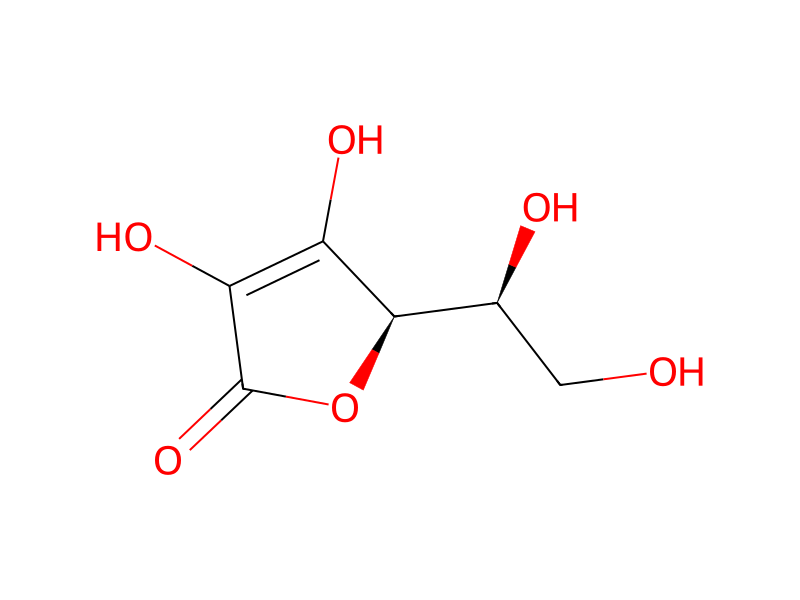
Reagents, catalysts & solvents 2

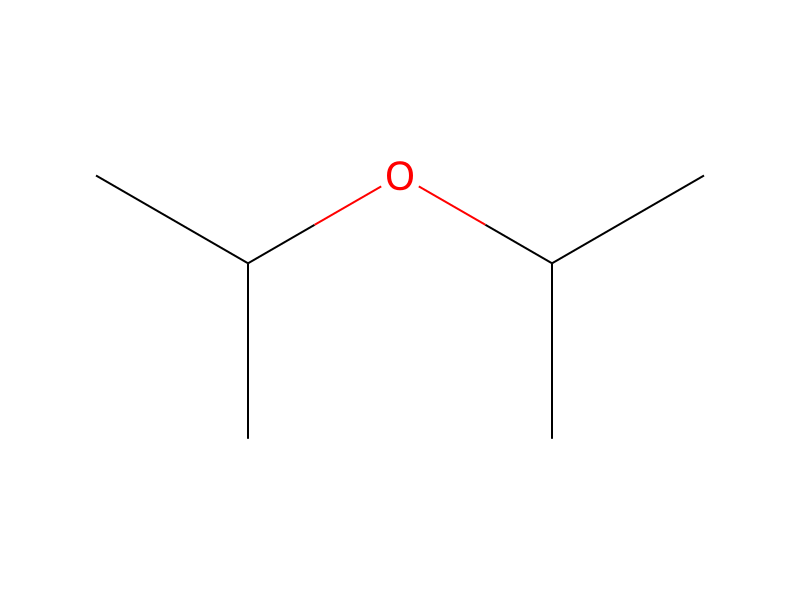
Conditions
- Temperature
- 60 °C
Procedure
A mixture of 2-keto-L-gulonic acid (125 g, 0.584 mol, content: 90.7%, water: 8.5%) and trimethylcetylammonium chloride (0.084 g) was stirred in diisopropyl ether (500 ml), and 36% conc. hydrochloric acid (18.0 g) was added. At this time, the amount of water in the reaction system was calculated as 2.1 mol per mol of 2-keto-L-gulonic acid. This mixture was stirred at 60° C. for 1 hour, a solution of hydrogen chloride gas (17.2 g) in diisopropyl ether (88 g) was added, and the mixture was stirred at the same temperature for 5 hours. Then, about 900 g of the solvent was distilled away under reduced pressure while continuously introducing diisopropyl ether (1000 ml). The residue was filtered to give crude crystals of L-ascorbic acid. The crude crystals were dissolved in water. Quantitative analysis of the solution by HPLC showed that the solution contained L-ascorbic acid (95.8 g, yield: 93.1%) and 2-keto-L-gulonic acid (0.9 g, residual ratio: 0.8%). Quantitative analysis of diisopropyl ether in the distillate and filtrate showed that the recovery ratio was not less than 99%.
Workup
- stirringthe mixture was stirred at the same temperature for 5 hours
- distillationThen, about 900 g of the solvent was distilled away under reduced pressure while continuously introducing diisopropyl ether (1000 ml)
- filtrationThe residue was filtered
Sources & evidence
- ORD record
- ord-d692cac574a54aab95de38fdfec7affb
- Source dataset
- uspto-grants-1997_06
- Patent number
- US05637734
Reaction notes
Loading…