Diisopropylethylamine → 2-(5-bromo-2-chloro-pyrimidin-4-ylamino)-3-fluoro-N-methyl-benzamide
Reaction equation

[NH2:1][C:2]1[C:11]([F:12])=[CH:10][CH:9]=[CH:8][C:3]=1[C:4]([NH:6][CH3:7])=[O:5].[Br:13][C:14]1[C:15](Cl)=[N:16][C:17]([Cl:20])=[N:18][CH:19]=1.C(N(CC)C(C)C)(C)C>CN1CCCC1=O>[Br:13][C:14]1[C:15]([NH:1][C:2]2[C:11]([F:12])=[CH:10][CH:9]=[CH:8][C:3]=2[C:4]([NH:6][CH3:7])=[O:5])=[N:16][C:17]([Cl:20])=[N:18][CH:19]=1Participants
5
Reactant 3

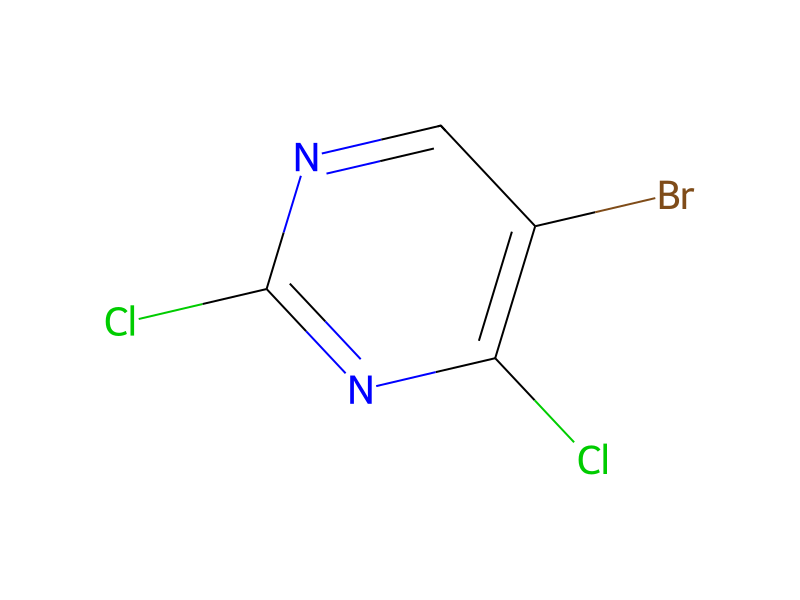

Product 1

Reagents, catalysts & solvents 1

Procedure
A solution of 2-amino-3-fluoro-N-methyl-benzamide (625 mg, 3.72 mmol), 5-bromo-2,4-dichloro-pyrimidine (1025 mg, 4.498 mmol), and N,N-diisopropylethylamine (1250 uL, 7.18 mmol) in N-methylpyrrolidinone (10.0 mL) was heated at 100° C. overnight. Solvent was removed by rotary evaporation and the residue was triturated with DCM to afford 2-(5-bromo-2-chloro-pyrimidin-4-ylamino)-3-fluoro-N-methyl-benzamide as a yellow solid (381 mg, 28%) that had the following properties: 1H-NMR (DMSO-d6, 400 MHz): δ 9.74 (s, 1H), 8.61 (m, 1H), 8.51 (s, 1H), 7.51-7.44 (m, 3H), 2.73 (d, J=4.4, 3H).
Workup
- customSolvent was removed by rotary evaporation
- customthe residue was triturated with DCM
Sources & evidence
- ORD record
- ord-288df800808f4f1b98692fc6c066517b
- Source dataset
- uspto-grants-2012_04
- Patent number
- US08148391B2
Reaction notes
Loading…