3-Hydroxybenzaldehyde → Benzaldehyde, 3-(2-hydroxyethoxy)-
Reaction equation

CS(C)=O.[OH:5][C:6]1[CH:7]=[C:8]([CH:11]=[CH:12][CH:13]=1)[CH:9]=[O:10].C1(=O)O[CH2:17][CH2:16][O:15]1.C(=O)([O-])[O-].[K+].[K+]>C(OC(C)C)(=O)C.O>[OH:15][CH2:16][CH2:17][O:5][C:6]1[CH:7]=[C:8]([CH:11]=[CH:12][CH:13]=1)[CH:9]=[O:10]Participants
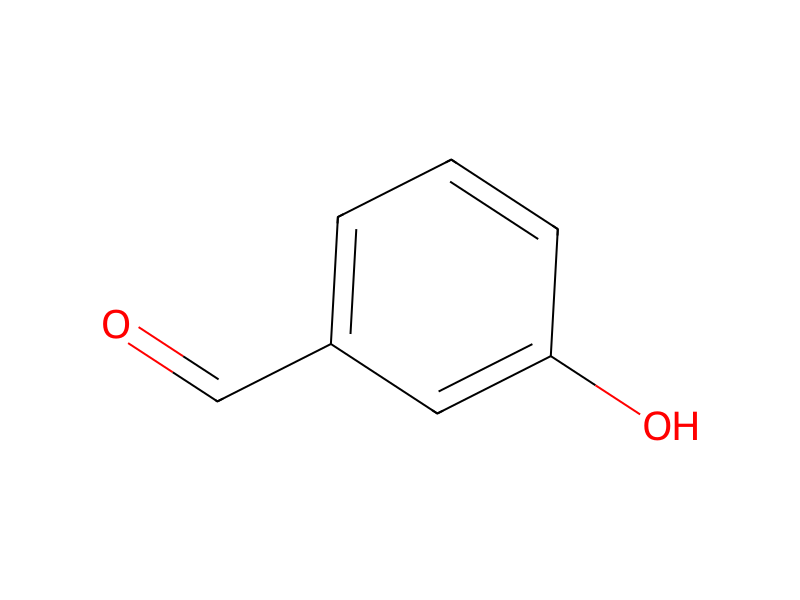






Procedure
To a 5 L flask equipped with an internal temperature probe and a mechanical stirrer was added dimethyl sulfoxide (500 mL), 3-hydroxybenzaldehyde (100.0 g, 0.819 mol), ethylene carbonate (108 g, 1.23 mol), and potassium carbonate (136 g, 0.983 mol). The resulting mixture was stirred at 110 to 125° C. until all 3-hydroxybenzaldehyde starting material was consumed. (Additional portions of ethylene carbonate may be added to drive the reaction to completion). The reaction mixture was then cooled to below 25° C. and diluted with isopropyl acetate (1.0 L) and water (1.5 L). The mixture was stirred until the residual potassium carbonate was completely dissolved. The layers were separated and the organic layer was washed with an additional portion of water (1.5 L). Additional isopropyl acetate was added (1.0 L), and then distilled off to leave a final volume of ˜1 L of dry organic solution of 3-(2-hydroxyethoxy)benzaldehyde.
Workup
- customTo a 5 L flask equipped with an internal temperature probe and a mechanical stirrer
- customwas consumed
- addition(Additional portions of ethylene carbonate may be added
- customthe reaction to completion)
- temperatureThe reaction mixture was then cooled to below 25° C.
- dissolutionwas completely dissolved
- customThe layers were separated
- washthe organic layer was washed with an additional portion of water (1.5 L)
- additionAdditional isopropyl acetate was added (1.0 L)
- distillationdistilled off
Sources & evidence
- ORD record
- ord-b28ff023406e419abc81a762dcaa3962
- Source dataset
- uspto-grants-2012_04
- Patent number
- US08158796B2
Reaction notes
Loading…