1-Ethyl-3-(3'-dimethylaminopropyl)carbodiimide → 1,4-Dihydroquinoline
Reaction equation

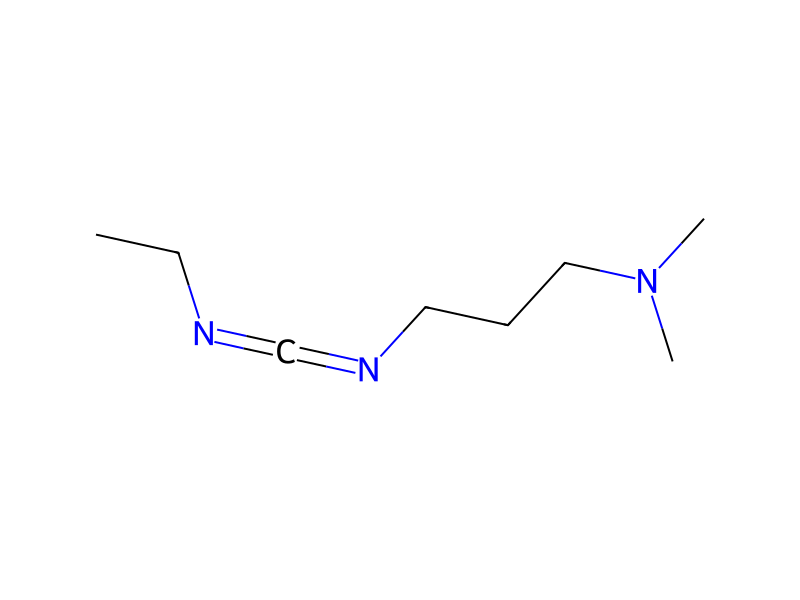
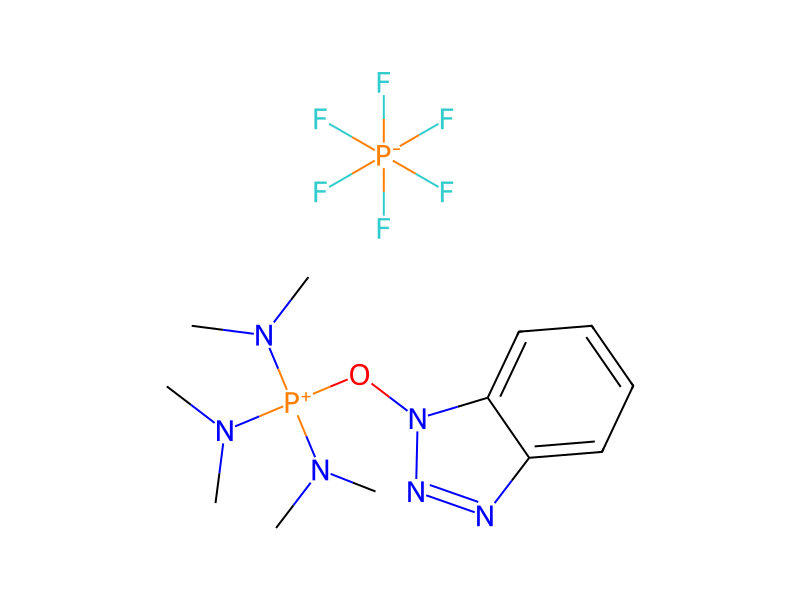
CCN=C=N[CH2:6][CH2:7][CH2:8][N:9]([CH3:11])C.F[P-](F)(F)(F)(F)F.N1(O[P+](N(C)C)(N(C)C)N(C)C)[C:23]2[CH:24]=[CH:25]C=[CH:27][C:22]=2N=N1.C(N(C(C)C)CC)(C)C>O1CCCC1>[NH:9]1[C:8]2[C:23](=[CH:22][CH:27]=[CH:6][CH:7]=2)[CH2:24][CH:25]=[CH:11]1Participants



Procedure
In Step A, a substituted benzaldehyde is condensed with a substituted acetophenone or 1-pyridin-3-yl-ethanone (V), in the presence of an inorganic base such as NaOH, in a polar protic solvent such as MeOH, to give the corresponding α,β-unsaturated ketone of formula (VI). This product can be reduced to the corresponding saturated ketone by hydrogenation in presence of a catalyst, such as platinum (IV) oxide, in a mixture of polar solvents, such as ethanol and EtOAc, as described in Step B. When R1 or R2 are chloro, this moiety can simultaneously be reduced using palladium on carbon as a catalyst instead of platinum (IV) oxide. In step C, the aniline (VII) can be acylated by heating at reflux in the presence of an acyl chloride such as methyl oxalyl chloride in an apolar solvent such as toluene. The amide (VIII) can cyclize by heating at reflux in a polar protic solvent, such as methanol, in the presence of an inorganic base, such as potassium carbonate, as described in Step D to afford the corresponding 1,4-dihydroquinoline. When R1 is a carboxylic ester moiety in the coupling Step A, both the ester and corresponding carboxylic acid can be formed by hydrolysis; the acid can then be coupled with an amine NHR9R10 in the presence of coupling agents such as EDCI and BOP and an organic base such as diisopropylethylamine in a polar solvent such as tetrahydrofuran. The amide of generic formula (IX) can undergo the same Steps described above from B to D to give the corresponding 1,4-dihydroquinoline.
Sources & evidence
- ORD record
- ord-2035207e27d149ceb2e0dff32161059f
- Source dataset
- uspto-grants-2012_04
- Patent number
- US08163906B2
Reaction notes
Loading…