Calcium hypochlorite → 7774-34-7
Reaction equation

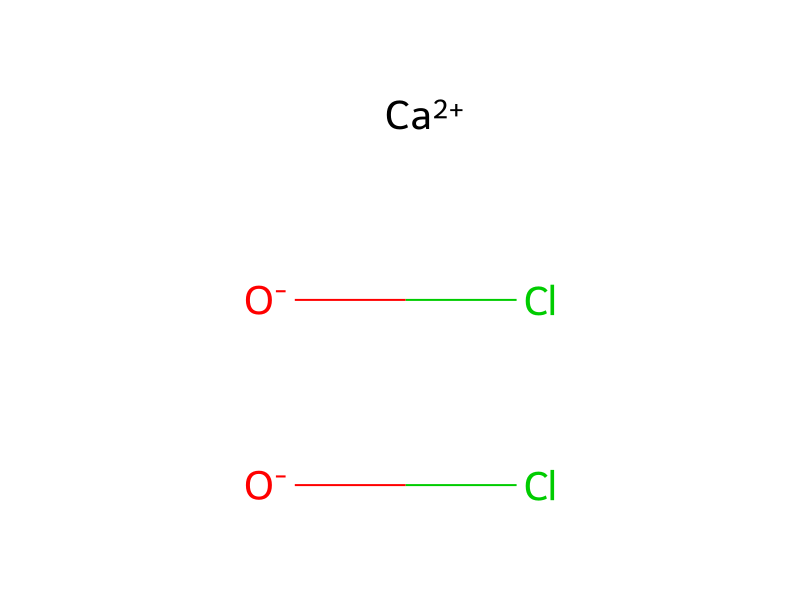
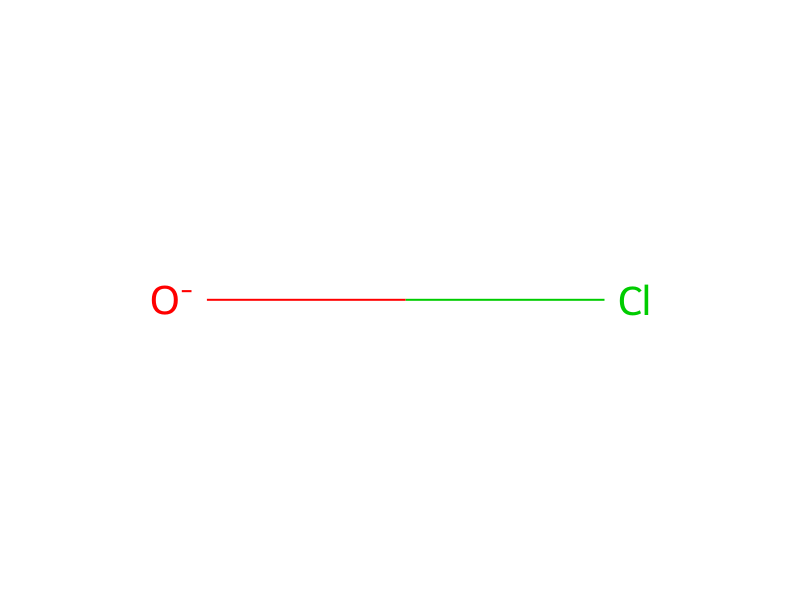
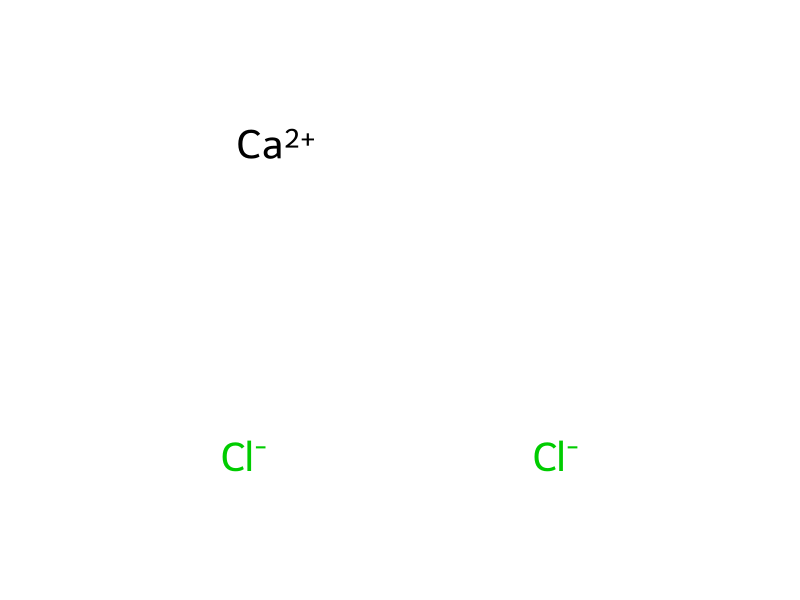
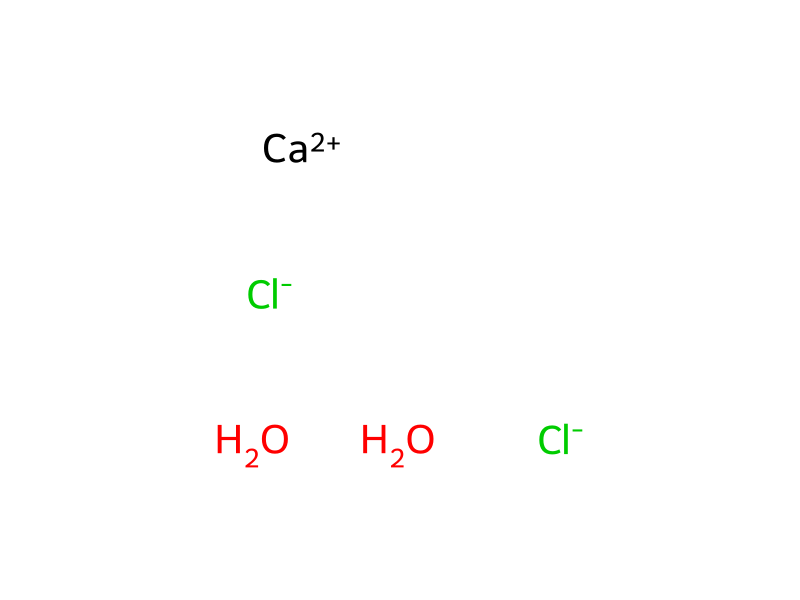
[Cl:1][O-:2].[Cl-].[Ca+2:4].[Cl-].Cl[O-].[Ca+2].Cl[O-].[Cl:11]([O-])(=O)=[O:12].[Ca+2].[Cl:16]([O-])(=O)=[O:17]>>[OH2:12].[OH2:17].[Cl-:11].[Ca+2:4].[Cl-:16].[OH2:2].[OH2:12].[OH2:12].[OH2:12].[Cl-:1].[Ca+2:4].[Cl-:11].[OH2:12].[OH2:12].[OH2:12].[OH2:12].[OH2:12].[OH2:12].[Cl-:11].[Ca+2:4].[Cl-:11]Participants



Procedure
In the flow diagram represented in FIG. 1, an aqueous filtrate from a hemibasic hypochlorite or dibasic hypochlorite process comprised of calcium chloride, calcium hypochlorite, and minor amounts of calcium chlorate is fed through line 7 to blender 8 where it is blended with calcium chlorate mother liquor fed to blender 8 through line 33. The blended solution passes through line 9 to first evaporative crystallizer 12. Crystallizer 12 is operated under vacuum and temperature conditions which produce crystalline calcium chloride dihydrate, calcium chloride tetrahydrate, or calcium chloride hexahydrate or mixtures thereof. The crystalline calcium chloride hydrate is separated from a first mother liquor and recovered through line 13. The first mother liquor is fed through line 29 to second evaporative crystallizer 30. Second evaporative crystallizer 30 is operated under vacuum and temperature conditions which will produce anhydrous crystalline calcium chlorate or crystalline calcium chlorate dihydrate or mixtures thereof. Crystals of the calcium chlorate product are separated from a second mother liquor and recovered through line 31. The second mother liquor is fed to blender 8 through line 33.
Sources & evidence
- ORD record
- ord-d1c7cb17b1a64f8a8e527a63ff1fd510
- Source dataset
- uspto-grants-1982_09
- Patent number
- US04348371
Reaction notes
Loading…