Triethylamine → HCID 20525820, compound
Reaction equation

Br.[Br:2][CH2:3][CH2:4][CH2:5]N.Cl.[CH2:8]([NH:24][C:25]1[CH:30]=[CH:29][C:28]([CH2:31][C:32](Cl)=[O:33])=[CH:27][CH:26]=1)[CH2:9][CH2:10][CH2:11][CH2:12][CH2:13][CH2:14][CH2:15][CH2:16][CH2:17][CH2:18][CH2:19][CH2:20][CH2:21][CH2:22][CH3:23].C([N:37](CC)CC)C>CN(C)C1C=CN=CC=1.C(COC)OC>[Br:2][CH2:3][CH2:4][CH2:5][CH:31]([C:28]1[CH:29]=[CH:30][C:25]([NH:24][CH2:8][CH2:9][CH2:10][CH2:11][CH2:12][CH2:13][CH2:14][CH2:15][CH2:16][CH2:17][CH2:18][CH2:19][CH2:20][CH2:21][CH2:22][CH3:23])=[CH:26][CH:27]=1)[C:32]([NH2:37])=[O:33]Participants
6





Procedure
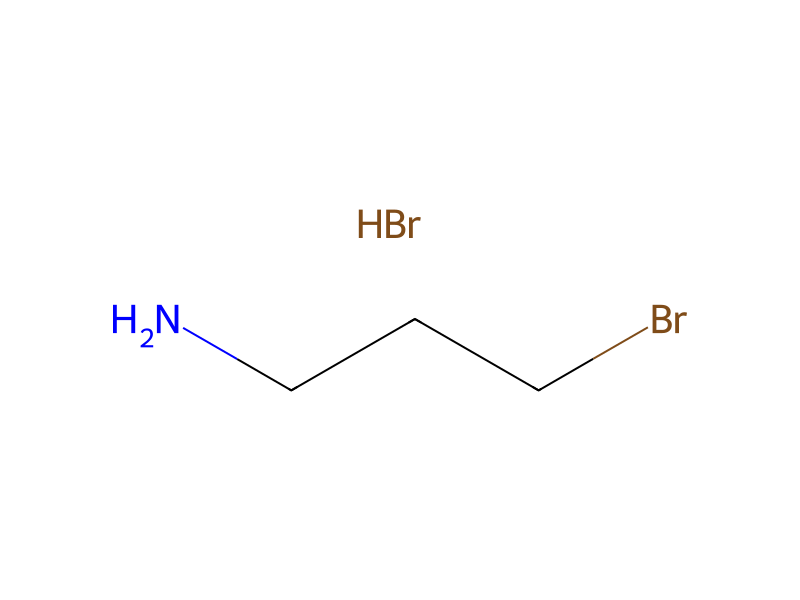
To a slurry of 21.80 g. of 3-bromopropylamine hydrobromide in 200 ml. of glyme at 3° C. is added a solution of 23.96 g. of 4-(hexadecylamino)phenylacetyl chloride hydrochloride in 65 ml. of glyme, concurrently with 26 ml. of triethylamine diluted to 39 ml. with glyme. The solution is warmed to reflux and 0.2 g. of 4-dimethylaminopyridine is added. The solution is heated for four hours and cooled overnight. The solid is removed and the mother liquor diluted with 200 ml. of water giving 12.94 g. The solid is recrystallized from cyclohexane and is then chromatographed on silica gel by elution with chloroform. The largest component is recrystallized from acetronitrile.
Workup
- temperatureThe solution is warmed
- temperatureto reflux
- temperatureThe solution is heated for four hours
- temperaturecooled overnight
- customThe solid is removed
- additionthe mother liquor diluted with 200 ml
- customThe solid is recrystallized from cyclohexane
- customis then chromatographed on silica gel by elution with chloroform
- customThe largest component is recrystallized from acetronitrile
Sources & evidence
- ORD record
- ord-b4132e12d95c49e5aad2cfc9076e34f1
- Source dataset
- uspto-grants-1982_09
- Patent number
- US04348399
Reaction notes
Loading…