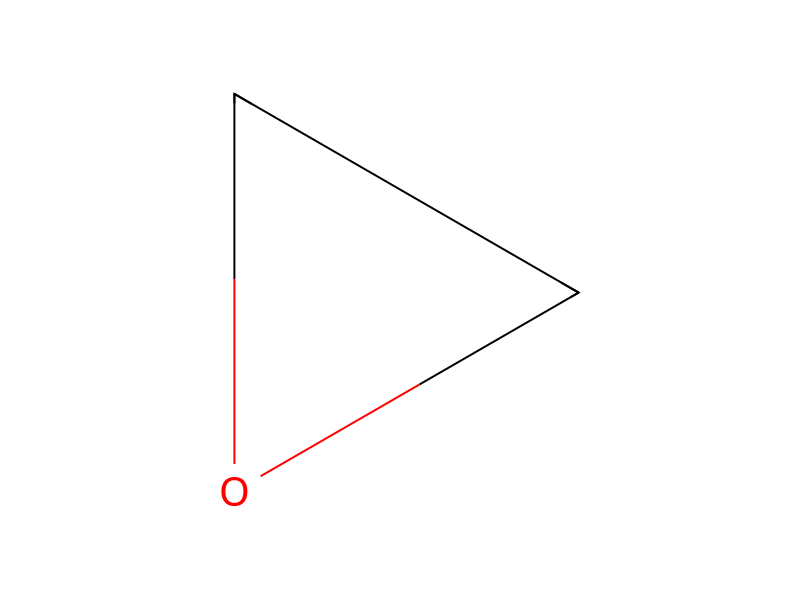
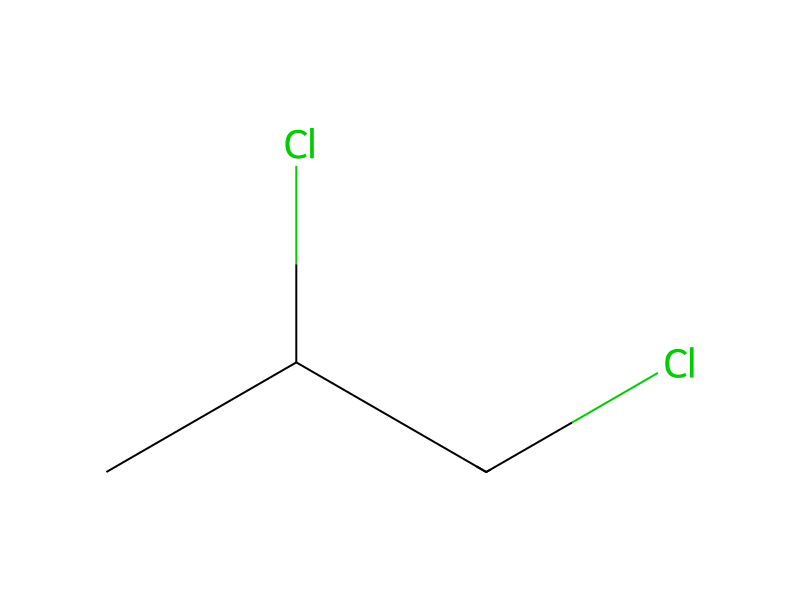
Ethylene Oxide → 1,2-Dichloropropane
Reaction equation

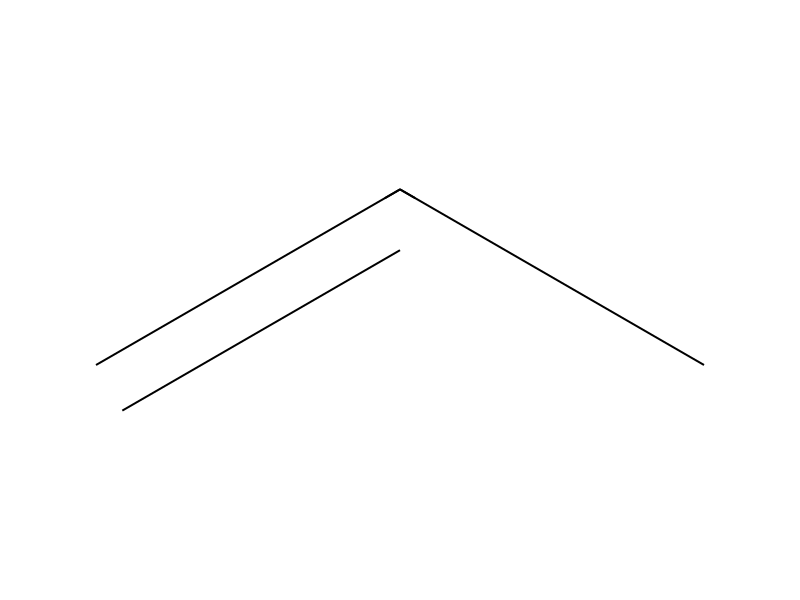
[C:1](=[O:11])([O:6][CH:7]([CH3:10])[CH2:8][Cl:9])[O:2][CH2:3][CH2:4][Cl:5].C1(=O)OCCO1.C=CC.[Cl:21]Cl.C(=O)([O-])[O-].C1OC1C.C1OC1>[Br-].C([P+](CCCC)(CCCC)CCCC)CCC.ClCCCl.C(Cl)(Cl)Cl>[C:1](=[O:11])([O:6][CH:7]([CH3:10])[CH2:8][Cl:9])[O:2][CH2:3][CH2:4][Cl:5].[Cl:9][CH2:8][CH:7]([Cl:21])[CH3:10]Participants
Reactant 7





Product 2
Reagents, catalysts & solvents 3



Conditions
- Temperature
- -60 °C
Procedure
A mixture of 3.02 g (0.015 g mole) of 2-chloroethyl 1-chloro-2-propyl carbonate and 0.051 g (0.00015 g mole) of tetrabutylphosphonium bromide was heated at 190° C.-192° C. in a 10 ml reaction flask equipped with magnetic stirrer and a distillation head connected to a receiver containing 11.9 g of chloroform cooled to -60° C. The 2-chloroethyl 1-chloro-2-propyl carbonate starting material was prepared by reacting 1.5 moles of ethylene carbonate with about two moles each of propylene and chlorine at about room temperature as shown in Japanese Pat. No. 46,921/78. After 3 hours of heating, a residue of 0.20 g remained in the reaction flask and the receiver had gained 2.15 g in total weight. Nuclear magnetic resonance spectroscopic and chromatographic analyses of the reaction products indicated that 97 percent of the starting carbonate had been converted to a mixture of 83 percent of the theoretical quantity of propylene oxide and 6 percent of the theoretical amount of ethylene oxide together with corresponding yields of 1,2-dichloroethane and 1,2-dichloropropane, respectively.
Workup
- temperaturewas heated at 190° C.-192° C. in a 10 ml reaction flask
- customequipped with magnetic stirrer
- customat about room temperature
- temperatureAfter 3 hours of heating
Sources & evidence
- ORD record
- ord-3c06c236c09641bb820173e81b824005
- Source dataset
- uspto-grants-1982_09
- Patent number
- US04349482
Reaction notes
Loading…