Ethanol → 4-Hydroxybenzaldehyde
Reaction equation

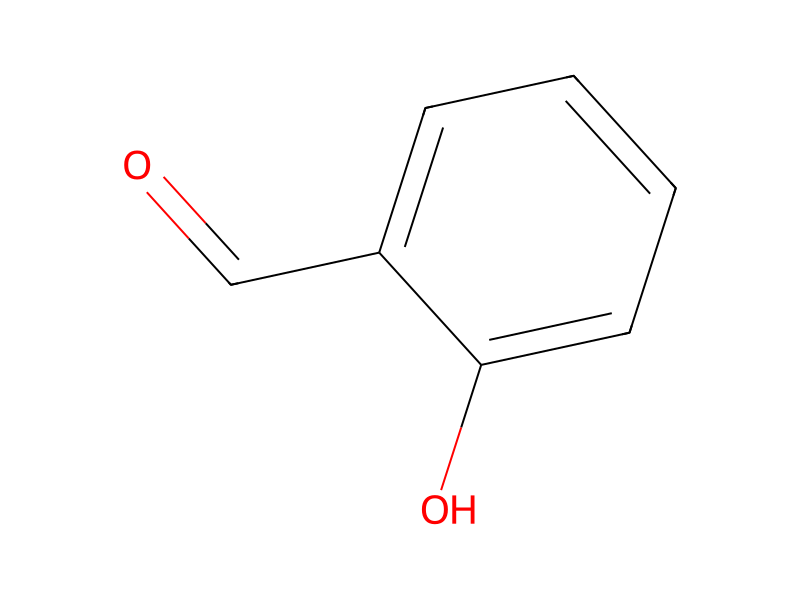
C(Cl)(Cl)Cl.[C:5]1([OH:11])[CH:10]=[CH:9][CH:8]=[CH:7][CH:6]=1.[OH-].[Na+].[CH2:14]([OH:16])C>>[CH:14](=[O:16])[C:6]1[C:5](=[CH:10][CH:9]=[CH:8][CH:7]=1)[OH:11].[OH:11][C:5]1[CH:10]=[CH:9][C:8]([CH:14]=[O:16])=[CH:7][CH:6]=1Participants
6





Procedure
Sen et al J. Indian Chem. Soc. 9 173 (1932) state that the use of chloroform in an ethyl alcohol solution in the Reimer-Tiemann reaction increases the yield of aldehyde. However, the only example describing the reaction of phenol with chloroform and sodium hydroxide in aqueous ethyl alcohol shows a combined yield for salicylaldehyde and p-hydroxybenzaldehyde of only 33%, based on the phenol reacted. The proportion of salicylaldehyde to p-hydroxybenzaldehyde in the product is about five to one, the same as for the conventional aqueous reaction.
Sources & evidence
- ORD record
- ord-7fc6fb7987b64c39b04f5870873d42c4
- Source dataset
- uspto-grants-1982_09
- Patent number
- US04351962
Reaction notes
Loading…