Cesium carbonate → 5-(6-(2,4-Difluorophenyl)imidazo[2,1-b]oxazol-5-yl)-3-isopropylbenzo[d]isoxazole
Reaction equation

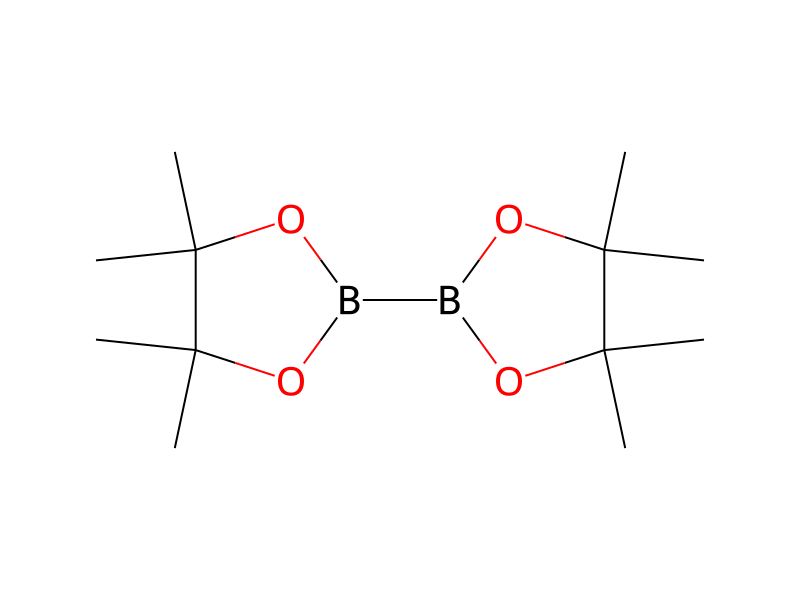
Br[C:2]1[CH:3]=[CH:4][C:5]2[O:9][N:8]=[C:7]([CH:10]([CH3:12])[CH3:11])[C:6]=2[CH:13]=1.B1(B2OC(C)(C)C(C)(C)O2)OC(C)(C)C(C)(C)O1.C([O-])(=O)C.[K+].C(=O)([O-])[O-].[Cs+].[Cs+].[F:43][C:44]1[CH:49]=[C:48]([F:50])[CH:47]=[CH:46][C:45]=1[C:51]1[N:52]=[C:53]2[N:57]([C:58]=1I)[CH:56]=[CH:55][O:54]2>CN(C=O)C.O1CCOCC1.O.C1C=CC(P(C2C=CC=CC=2)[C-]2C=CC=C2)=CC=1.C1C=CC(P(C2C=CC=CC=2)[C-]2C=CC=C2)=CC=1.Cl[Pd]Cl.[Fe+2].Cl[Pd](Cl)([P](C1C=CC=CC=1)(C1C=CC=CC=1)C1C=CC=CC=1)[P](C1C=CC=CC=1)(C1C=CC=CC=1)C1C=CC=CC=1>[F:43][C:44]1[CH:49]=[C:48]([F:50])[CH:47]=[CH:46][C:45]=1[C:51]1[N:52]=[C:53]2[N:57]([C:58]=1[C:2]1[CH:3]=[CH:4][C:5]3[O:9][N:8]=[C:7]([CH:10]([CH3:12])[CH3:11])[C:6]=3[CH:13]=1)[CH:56]=[CH:55][O:54]2Participants
Reactant 5




Product 1

Reagents, catalysts & solvents 5





Conditions
- Temperature
- 90 °C
Procedure
5-Bromo-3-isopropylbenzo[d]isoxazole (0.120 g, 0.500 mmol), bis(pinacolato)diboron (0.130 g, 0.512 mmol), potassium acetate (0.098 g, 0.99 mmol) and PdCl2(dppf) (0.033 g, 0.045 mmol) in DMF (3 mL) was heated to about 90° C. for about 2 h then cooled, evaporated, triturated with DCM then filtered. The filtrate was concentrated under reduced pressure to give a dark oil which was dissolved in 1,4-dioxane (3 mL) and water (0.5 mL). Cesium carbonate (0.405 g, 1.24 mmol), PdCl2(PPh3)2 (0.035 g, 0.050 mmol) and 6-(2,4-difluorophenyl)-5-iodoimidazo[2,1-b]oxazole (0.173 g, 0.500 mmol; Example #2, step A) were added and the mixture was heated to about 90° C. oil bath for about 16 h. The solvents were evaporated and the material was purified by reverse phase chromatography (Table 1, Method c). Evaporation of the fractions with the desired product resulted in a precipitate which was collected by filtration to give the title compound (0.012 g, 6.33% yield) as a tan solid: LC/MS (Table 1, Method a) Rt, =3.08 min; MS m/z: 380.1 (M+H)+.
Workup
- temperaturethen cooled
- customevaporated
- customtriturated with DCM
- filtrationthen filtered
- concentrationThe filtrate was concentrated under reduced pressure
- customto give a dark oil which
- customThe solvents were evaporated
- customthe material was purified by reverse phase chromatography (Table 1, Method c)
- customEvaporation of the fractions with the desired product
- customresulted in a precipitate which
- filtrationwas collected by filtration
Sources & evidence
- ORD record
- ord-fc3ad397889f4a128ea303c822a2f245
- Source dataset
- uspto-grants-2010_09
- Patent number
- US07790741B2
Reaction notes
Loading…