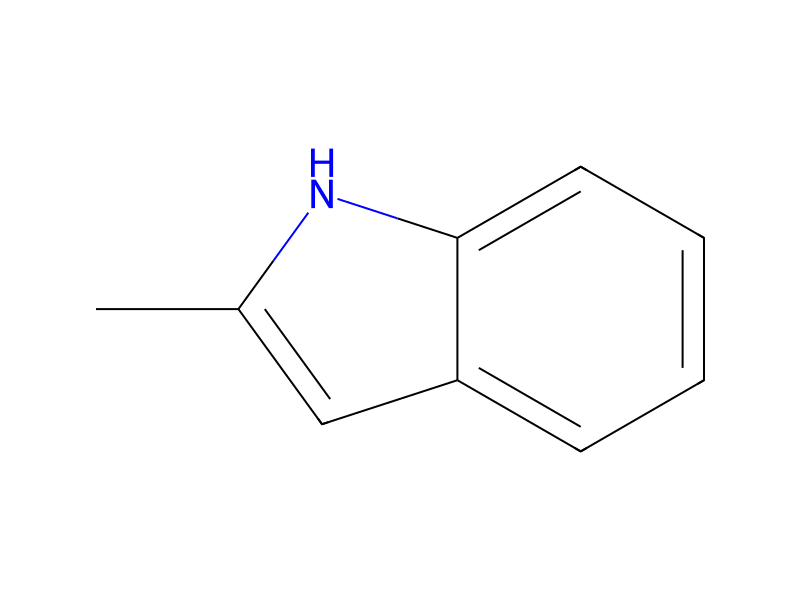
2-Methylindole → HCID 68503489, compound
Reaction equation

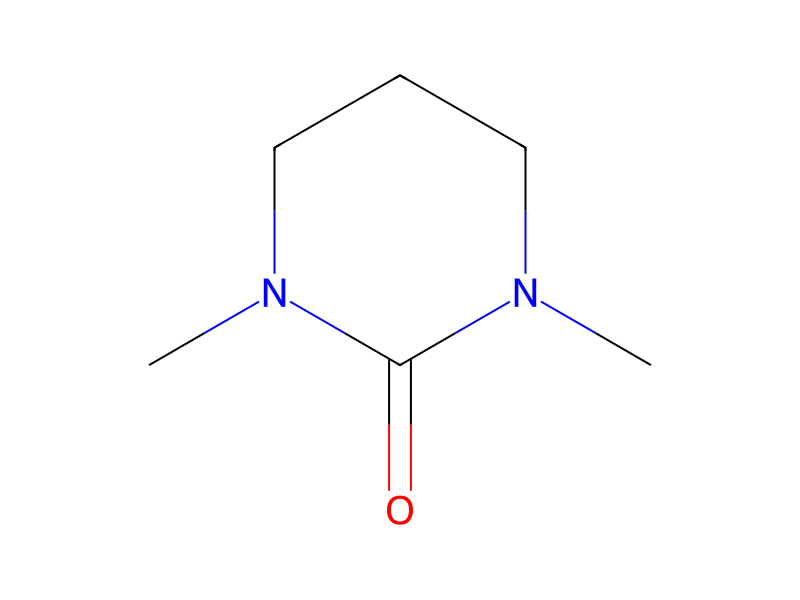
C[C:2]1[NH:3][C:4]2[C:9]([CH:10]=1)=[CH:8][CH:7]=[CH:6][CH:5]=2.[H-].[Na+].[Br:13][CH2:14][CH2:15][CH2:16][CH2:17]Br.CN1C(=O)N(C)C[CH2:22][CH2:21]1>[I-].C([N+](CCCC)(CCCC)CCCC)CCC>[Br:13][CH2:14][CH2:15][CH2:16][CH2:17][N:3]1[C:4]2[C:9](=[CH:8][CH:7]=[CH:6][CH:5]=2)[C:10]([CH2:21][CH3:22])=[CH:2]1Participants




Procedure
The solution of 5.0 g of 2-methylindole in 70 ml of DMPU is admixed with stirring at 0° C. with 3.30 g of sodium hydride dispersion (60%) and stirred at room temperature over 2 hours. Subsequently, 20 ml of 1,4-dibromobutane and 1.40 g of tetrabutylammonium iodide are added (exothermic reaction). The mixture is stirred at room temperature over 20 hours. The reaction mixture is poured onto water (200 ml) and extracted with tert-butyl methyl ether (2×200 ml). The organic phases are washed successively with water (4×200 ml) and brine (1×200 ml), dried over sodium sulphate, filtered and concentrated by evaporation. The excess of 1,4-dibromobutane is evaporated out of the residue under high vacuum and the title compound is obtained as a slightly yellowish oil by means of flash chromatography (SiO2 60F). Rf=0.79 (1:1 EtOAc-heptane); Rt=5.43.
Workup
- custom(exothermic reaction)
- stirringThe mixture is stirred at room temperature over 20 hours
- additionThe reaction mixture is poured onto water (200 ml)
- extractionextracted with tert-butyl methyl ether (2×200 ml)
- washThe organic phases are washed successively with water (4×200 ml) and brine (1×200 ml)
- dry with materialdried over sodium sulphate
- filtrationfiltered
- concentrationconcentrated by evaporation
- customThe excess of 1,4-dibromobutane is evaporated out of the residue under high vacuum
Sources & evidence
- ORD record
- ord-10d573f80fac4f54b2ea815175be8196
- Source dataset
- uspto-grants-2010_09
- Patent number
- US07790715B2
Reaction notes
Loading…