Ammonium Chloride → 5-bromo-1H-indole-2-carboxamide
Reaction equation

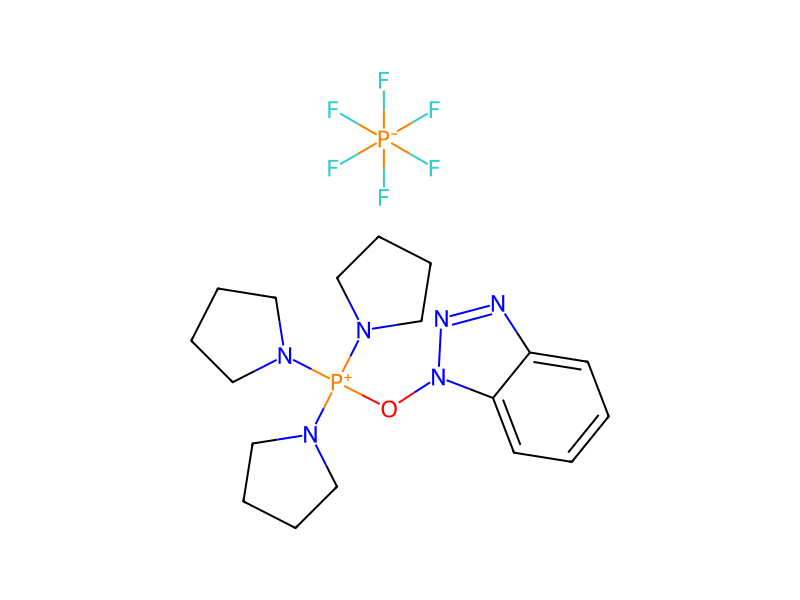
[Br:1][C:2]1[CH:3]=[C:4]2[C:8](=[CH:9][CH:10]=1)[NH:7][C:6]([C:11]([OH:13])=O)=[CH:5]2.C([N:17](C(C)C)CC)(C)C.C1CN([P+](ON2N=NC3C=CC=CC2=3)(N2CCCC2)N2CCCC2)CC1.F[P-](F)(F)(F)(F)F.C1C=CC2N(O)N=NC=2C=1.[NH4+].[Cl-]>CN(C=O)C>[Br:1][C:2]1[CH:3]=[C:4]2[C:8](=[CH:9][CH:10]=1)[NH:7][C:6]([C:11]([NH2:17])=[O:13])=[CH:5]2Participants






Procedure
To a solution of 5-bromo-1H-indole-2-carboxylic acid (4 g, 16.7 mmol) in DMF (50 ml) at room temperature was added diisopropylethylamine (DIPEA) (5.71 ml, 32.8 mmol), PyBOP (13 g, 25.0 mmol) and HOBT (3.39 g, 25.0 mmol). After stirring the mixture for 30 minutes, NH4Cl (1.75 g, 32.8 mmol) was added and the resulting yellow suspension was stirred at room temperature for 6 hours. The reaction was quenched by addition of H2O. The yellow foamy precipitate was discarded and the mother liquor was extracted with EtOAc. The organic layers were combined, washed with NaOH (1M) and brine, dried over Na2SO4, filtered and concentrated. The residue was then dissolved in EtOAc and washed with HCl (1 M) and brine, dried over Na2SO4, filtered and concentrated. The oily residue was triturated with DCM affording, after filtration, 5-Bromo-1H-indole-2-carboxylic acid amideC as a light yellow solid (2.12 g, 53% yield).
Workup
- stirringthe resulting yellow suspension was stirred at room temperature for 6 hours
- customThe reaction was quenched by addition of H2O
- extractionthe mother liquor was extracted with EtOAc
- washwashed with NaOH (1M) and brine
- dry with materialdried over Na2SO4
- filtrationfiltered
- concentrationconcentrated
- dissolutionThe residue was then dissolved in EtOAc
- washwashed with HCl (1 M) and brine
- dry with materialdried over Na2SO4
- filtrationfiltered
- concentrationconcentrated
- customThe oily residue was triturated with DCM affording
Sources & evidence
- ORD record
- ord-f09187a0db224fdeb616f49a38549f85
- Source dataset
- uspto-grants-2010_09
- Patent number
- US07803830B2
Reaction notes
Loading…