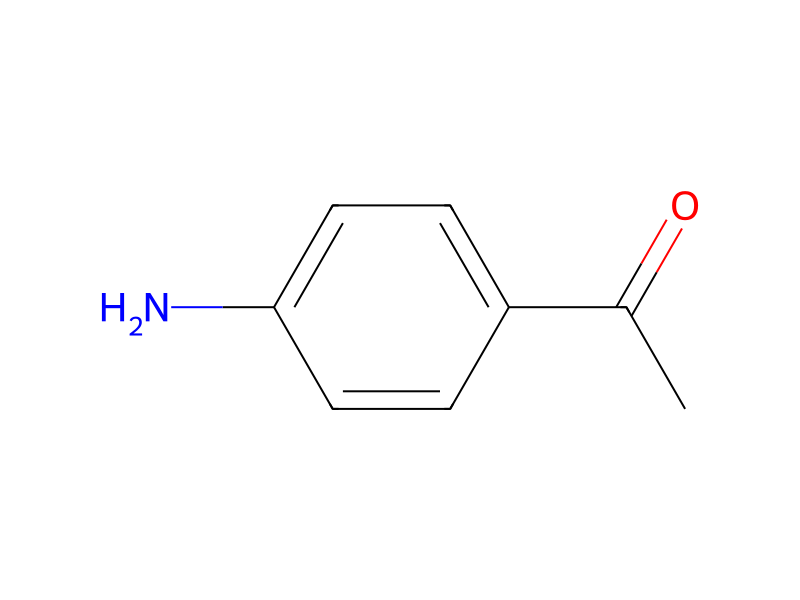
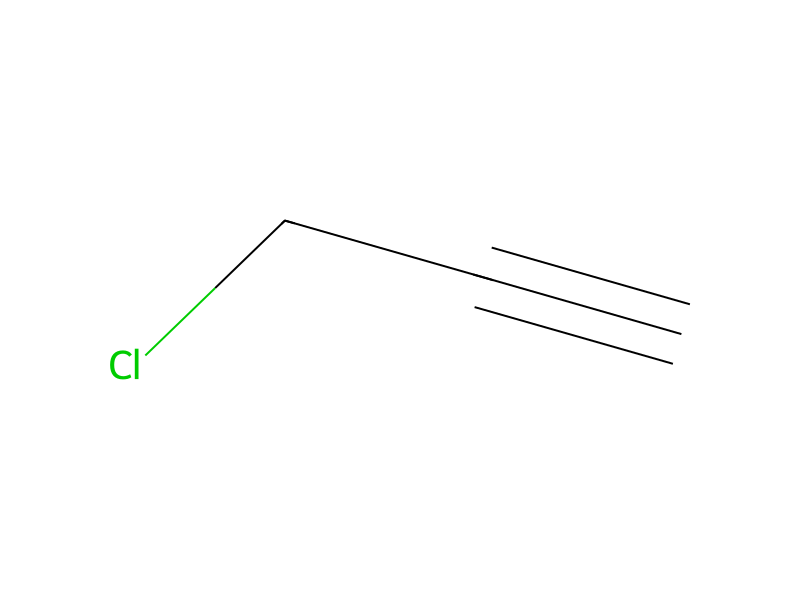
p-Aminoacetophenone → Ethanone, 1-[4-(2-propynylamino)phenyl]-
Reaction equation

[CH3:1][C:2]([C:4]1[CH:9]=[CH:8][C:7]([NH2:10])=[CH:6][CH:5]=1)=[O:3].[CH2:11](Cl)[C:12]#[CH:13].C(N(C(C)C)CC)(C)C.C(=O)(O)[O-].[Na+]>C1(C)C=CC=CC=1>[CH2:13]([NH:10][C:7]1[CH:8]=[CH:9][C:4]([C:2](=[O:3])[CH3:1])=[CH:5][CH:6]=1)[C:12]#[CH:11]Participants
6
Reactant 4


Product 1

Reagents, catalysts & solvents 1

Conditions
- Temperature
- 60 °C
Procedure
A mixture of 25 g (0.185 mol) of 4-aminoacetophenone, 12.7 ml (0.176 mol) of propargyl chloride, and 35 ml of diisopropylethylamine in 500 ml of dry toluene is stirred at 60° C. for eight hours then at 90° C. for twenty-four hours. The reaction is cooled to room temperature and poured into a saturated sodium bicarbonate solution. The organic portion is separated and concentrated in vacuo to an orange oil. The oil is chromatographed on silica gel eluting with a gradient of 20-50% ethyl acetate in hexane. The appropriate fractions are concentrated to leave a pale yellow solid. The solid is recrystallized from ethanol to give two crops of the desired product, 14.99 g (49% yield); mp 97°-100° C.
Workup
- waitat 90° C. for twenty-four hours
- temperatureThe reaction is cooled to room temperature
- customThe organic portion is separated
- concentrationconcentrated in vacuo to an orange oil
- customThe oil is chromatographed on silica gel eluting with a gradient of 20-50% ethyl acetate in hexane
- concentrationThe appropriate fractions are concentrated
- customto leave a pale yellow solid
- customThe solid is recrystallized from ethanol
Sources & evidence
- ORD record
- ord-a05ca1d42dad4340929cc91936ca8f1e
- Source dataset
- uspto-grants-1989_08
- Patent number
- US04857530
Reaction notes
Loading…