1-Bromopropane → 2-[4-(5-[Propyloxy]-1-pentyl)phenyl]-5-hydroxypyridine
Reaction equation

C[Si](C)(C)[O:3][C:4]1[CH:5]=[CH:6][C:7]([C:10]2[CH:15]=[CH:14][C:13]([CH2:16][CH2:17][CH2:18][CH2:19][CH2:20][OH:21])=[CH:12][CH:11]=2)=[N:8][CH:9]=1.[H-].[Na+].Br[CH2:27][CH2:28][CH3:29]>O1CCCC1>[OH:3][C:4]1[CH:5]=[CH:6][C:7]([C:10]2[CH:15]=[CH:14][C:13]([CH2:16][CH2:17][CH2:18][CH2:19][CH2:20][O:21][CH2:27][CH2:28][CH3:29])=[CH:12][CH:11]=2)=[N:8][CH:9]=1Participants
5
Reactant 3
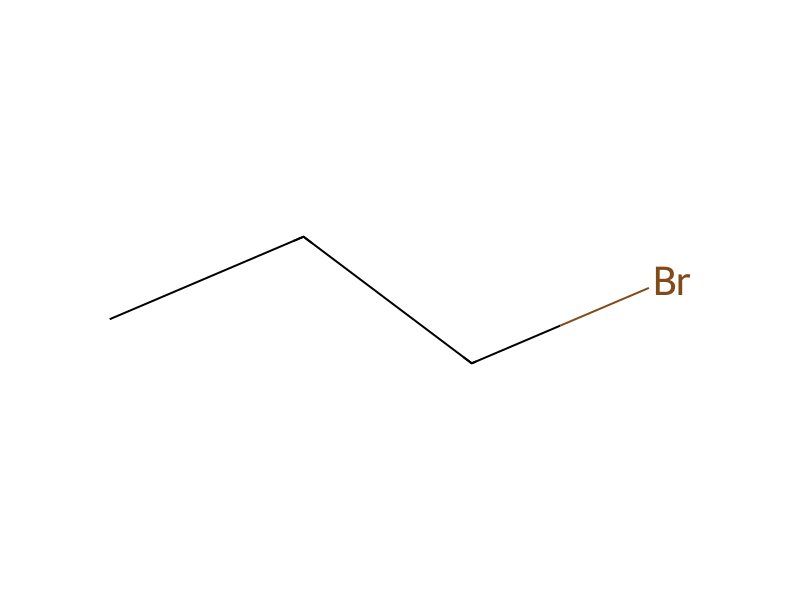


Product 1

Reagents, catalysts & solvents 1

Procedure
5.1 g of 5-trimethylsilyloxy-2-(4-[5-hydroxy-1-pentyl]phenyl)pyridine, 0.7 g of sodium hydride (60-65 wt. %), 2.5 g of 1-bromopropane and 100 ml of tetrahydrofuran were reacted analogously to Example 1(f) to give 3.6 g of 5-hydroxy-2-(4-[5-(propyloxy)-1-pentyl]phenyl)pyridine.
Sources & evidence
- ORD record
- ord-b127a732fd8541039c9eb3adb7943cfb
- Source dataset
- uspto-grants-1994_07
- Patent number
- US05326497
Reaction notes
Loading…