Triethylamine → 1H-Pyrazole-4-carboxamide, 5-chloro-1-(3-chlorophenyl)-N-methyl-
Reaction equation

[Cl:1][C:2]1[N:6]([C:7]2[CH:12]=[CH:11][CH:10]=[C:9]([Cl:13])[CH:8]=2)[N:5]=[CH:4][C:3]=1[C:14]([OH:16])=O.[C:17](N1C=CN=C1)([N:19]1C=CN=C1)=O.Cl.CN.C(N(CC)CC)C>CN(C=O)C>[Cl:1][C:2]1[N:6]([C:7]2[CH:12]=[CH:11][CH:10]=[C:9]([Cl:13])[CH:8]=2)[N:5]=[CH:4][C:3]=1[C:14]([NH:19][CH3:17])=[O:16]Participants
6





Procedure
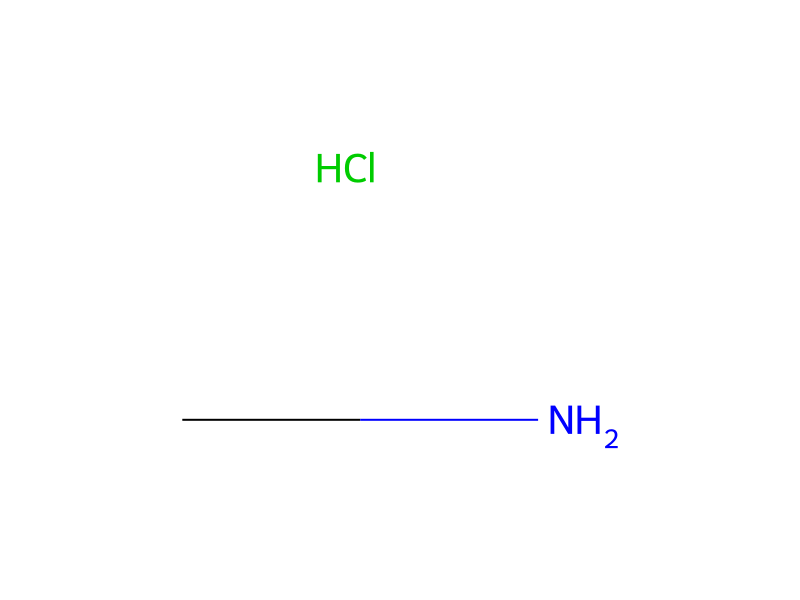
A solution of 5.7 g of 5-chloro-1-(3-chlorophenyl)-1H-pyrazole-4-carboxylic acid and 5.4 g of carbonyldiimidazole in 150 ml DMF was stirred at room temperature for 20 minutes. Next, 3.0 g of methylamine hydrochloride and 4.4 g of triethylamine were added and the mixture was stirred at room temperature for 20 hours. The mixture was poured into ice water and the precipitated solid was collected by filtration and dried. The solid was recrystallized from toluene to provide 3.1 g of 5-chloro-1-(3-chlorophenyl)-N-methyl-1H-pyrazole-4-carboxamide. Yield 50%. mp=163°-165° C.
Workup
- filtrationthe precipitated solid was collected by filtration
- customdried
- customThe solid was recrystallized from toluene
Sources & evidence
- ORD record
- ord-e00aaf0af2574905b4080e1f0c6ed877
- Source dataset
- uspto-grants-1986_11
- Patent number
- US04620865
Reaction notes
Loading…