Hydrochloric Acid → (S)-2-[[(S)-2-(4-Hydroxy-1-oxobutyl)-1-pyrrolidinyl]carbonyl]-N-(phenylmethyl)-1-pyrrolidinecarboxamide
Reaction equation

Cl.C(O[C:7]([N:9]1[CH2:13][CH2:12][CH2:11][C@H:10]1[CH:14]([OH:26])[CH2:15][CH2:16][CH2:17][O:18]CC1C=CC=CC=1)=[O:8])(C)(C)C.[NH:27]1[CH2:34][CH2:33][CH2:32][C@H:28]1C(O)=O.[CH2:35]([N:42]=[C:43]=[O:44])[C:36]1[CH:41]=[CH:40][CH:39]=[CH:38][CH:37]=1>CN(C=O)C.C(N(CC)CC)C>[OH:18][CH2:17][CH2:16][CH2:15][C:14]([C@@H:10]1[CH2:11][CH2:12][CH2:13][N:9]1[C:7]([C@@H:34]1[CH2:33][CH2:32][CH2:28][N:27]1[C:43]([NH:42][CH2:35][C:36]1[CH:41]=[CH:40][CH:39]=[CH:38][CH:37]=1)=[O:44])=[O:8])=[O:26]Participants
7
Reactant 4


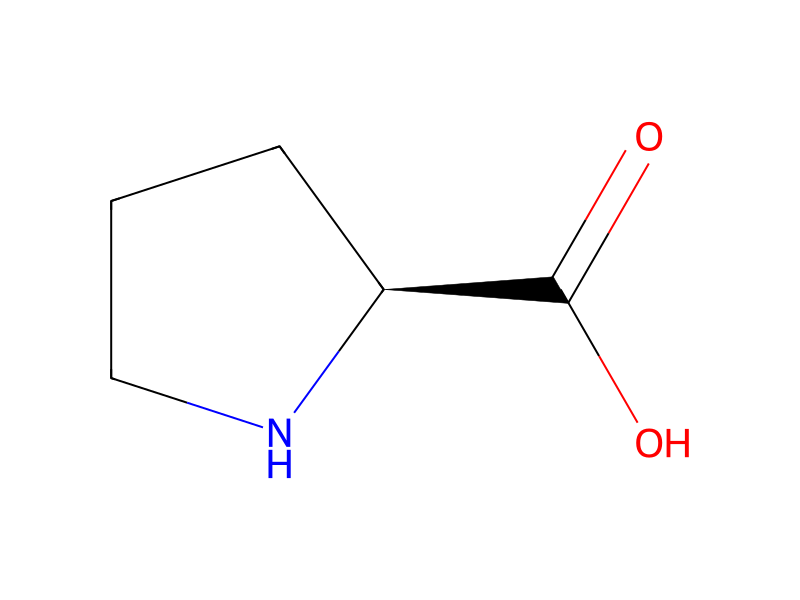

Product 1

Reagents, catalysts & solvents 2


Procedure
4N Hydrochloric acid (1,4-dioxane solution, 20 ml) was added to (S)-1-(tert-butoxycarbonyl)-2-[1-hydroxy-4(phenylmethyloxy)butyl]pyrrolidine (high polar isomer, 3.00 g) and the mixture was allowed to stand at room temperature for 30 minutes. The reaction mixture was concentrated and the residue was reacted with N-(benzylamincarbonyl)-L-proline obtained by stirring L-proline (0.99 g), benzyl isocyanate (0.97 g) and triethylamine (0.87 g) in DMF (10 ml) at room temperature for 1 hour, in the same manner as in Example 5-b), to give the title compound (2.20 g).
Workup
- concentrationThe reaction mixture was concentrated
- customthe residue was reacted with N-(benzylamincarbonyl)-L-proline
- customobtained
Sources & evidence
- ORD record
- ord-1ad2442966b24a8d9d95dcbb32e1e2eb
- Source dataset
- uspto-grants-1996_07
- Patent number
- US05536737
Reaction notes
Loading…