Ethanol → HCID 11687291, compound
Reaction equation

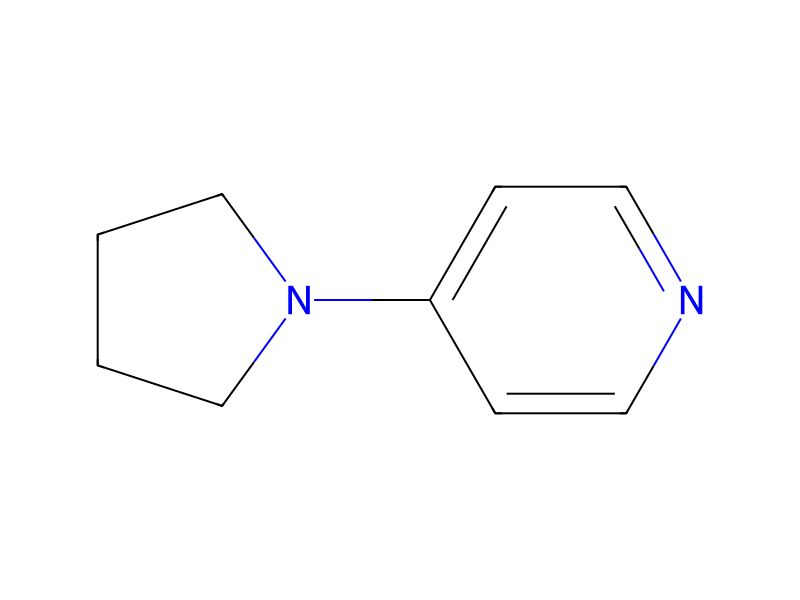
[Cl:1][C:2]1[CH:7]=[CH:6][CH:5]=[C:4]([Cl:8])[C:3]=1[CH2:9][C:10]([OH:12])=[O:11].[CH2:13](N(CC)CC)[CH3:14].Cl.C(N=C=NCCCN(C)C)C.N1(C2C=CN=CC=2)CCCC1.C(O)C>ClCCl>[Cl:1][C:2]1[CH:7]=[CH:6][CH:5]=[C:4]([Cl:8])[C:3]=1[CH2:9][C:10]([O:12][CH2:13][CH3:14])=[O:11]Participants
Reactant 5




Product 1

Reagents, catalysts & solvents 1

Procedure
To a solution of 2,6-dichlorophenyl acetic acid (6.7 g, 0.033 mol) in dichloromethane (170 ml) was added triethylamine (5.9 ml, 0.043 mol), 1-ethyl-3-(3-dimethylaminopropyl)carbodiimide hydrochloride (8.1 g, 0.043 mol) and 4-pyrrolidinopyridine (0.58 g, 0.004 mol). Ethanol (2.5 ml, 0.043 mol) was added dropwise and the solution stirred overnight at room temperature. After this time the mixture was washed with water (2×100 ml), 1M HCl (2×100 ml), aq. K2CO3 (sat.; 2×100 ml) and brine (100 ml). The organic phase was separated, dried (Na2SO4) and evaporated. The residue was chromatographed on silica, using petrol:ether (10:1) as the eluant, to give the ester (7.2 g, 94%) as a colourless oil which solidified on standing at 0° C. 1H NMR (360 MHz, d6 -DMSO) δ 1.26 (3H, t, J=7.1 Hz), 4.01 (2H, s), 4.18 (2H, q, J=7.1 Hz), 7.15 (1H, t, J=8.6 Hz), 7.32 (2H, d, J=8.6 Hz).
Workup
- washAfter this time the mixture was washed with water (2×100 ml), 1M HCl (2×100 ml), aq. K2CO3 (sat.; 2×100 ml) and brine (100 ml)
- customThe organic phase was separated
- dry with materialdried (Na2SO4)
- customevaporated
- customThe residue was chromatographed on silica
Sources & evidence
- ORD record
- ord-f24831eb3c9548cf915cc7d1780bcf72
- Source dataset
- uspto-grants-1999_10
- Patent number
- US05973156
Reaction notes
Loading…