Triphenylphosphine → 2-Pyridinecarbonitrile, 3-chloro-5-(2,2-difluoroethoxy)-
Reaction equation

[Cl:1][C:2]1[C:3]([C:9]#[N:10])=[N:4][CH:5]=[C:6]([OH:8])[CH:7]=1.[F:11][CH:12]([F:15])[CH2:13]O.C1(P(C2C=CC=CC=2)C2C=CC=CC=2)C=CC=CC=1.CC(OC(/N=N/C(OC(C)C)=O)=O)C>C1COCC1>[Cl:1][C:2]1[C:3]([C:9]#[N:10])=[N:4][CH:5]=[C:6]([O:8][CH2:13][CH:12]([F:15])[F:11])[CH:7]=1Participants
6




Conditions
- Temperature
- 0 °C
Procedure
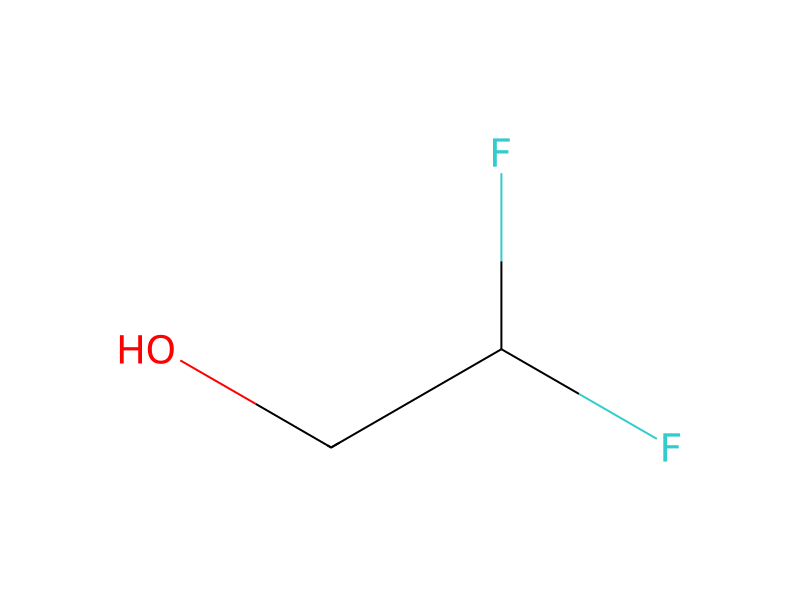
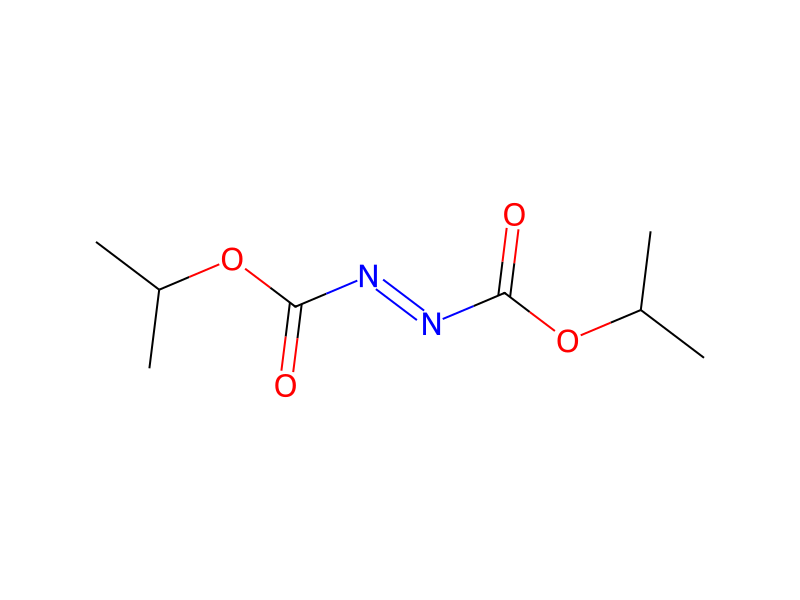
To a solution of 3-chloro-5-hydroxy-pyridine-2-carbonitrile [1262860-70-7] (0.200 g, 1.23 mmol) in THF (15 ml) was added at 0° C. 2,2-difluoro-ethanol (0.123 g, 1.48 mmol) and triphenylphosphine (0.484 g, 1.84 mmol). After stirring for 10 min at 0° C. DIAD (0.373 g, 1.84 mmol) was added and the reaction mixture was stirred for 2 h at 0° C. followed by 16 h at 25° C. The reaction mixture was concentrated and the title compound was obtained after CombiFlash chromatography on silica gel (hexane/EtOAc 20:1 to 1:1) as a colorless oil.
Workup
- stirringthe reaction mixture was stirred for 2 h at 0° C.
- waitfollowed by 16 h at 25° C
- concentrationThe reaction mixture was concentrated
Sources & evidence
- ORD record
- ord-77cd79e50ff748e3af1993e6f96b6e9a
- Source dataset
- uspto-grants-2015_10
- Patent number
- US09163011B2
Reaction notes
Loading…